


Prince Harry, Concerned About Hair Loss, Reportedly Considering a Transplant
After watching his brother, Prince William, lose more and more hair over the years, Prince Harry is said to be taking a more… proactive approach.
According to sources close to the royal, Harry is planning to undergo a hair transplant following his wedding to Meghan Markle in May.
His inner circle has reportedly sworn to secrecy regarding his plans. However, everyone seems to agree that his fiancée, Meghan Markle, is the driving force behind this decision and fully supports him.
A close source revealed:
“Harry is well aware that, given his genetic background, he’s likely to experience significant hair loss in the coming years.
His brother William has already lost much of his hair — as did their father, Prince Charles, and grandfather, Prince Philip
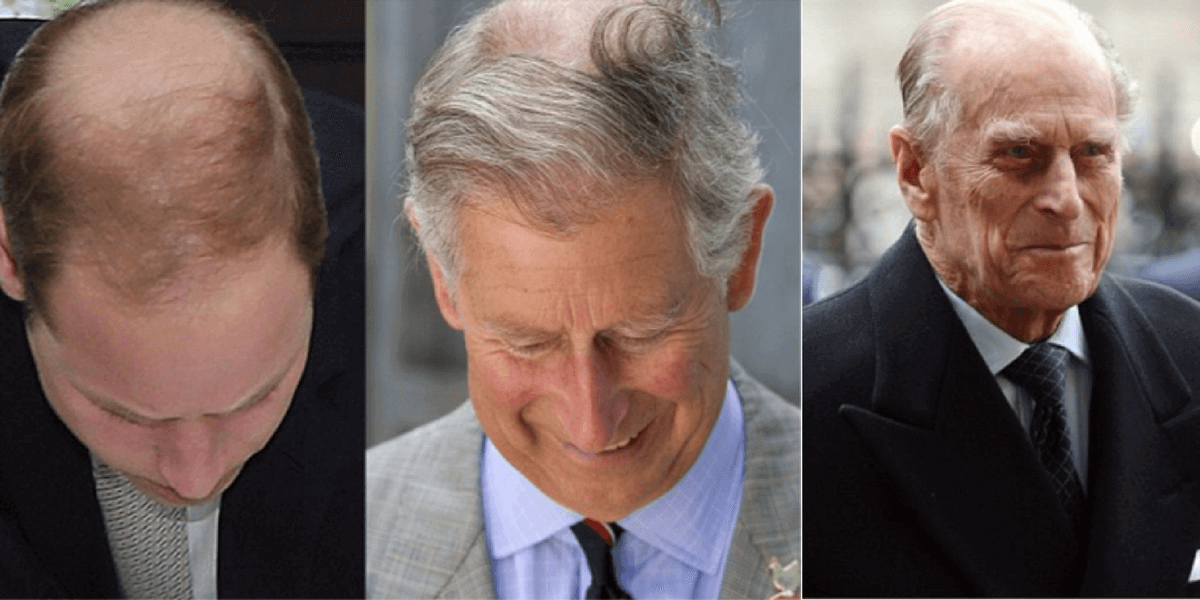
“Harry has noticed that the thinning at the crown of his scalp has become increasingly visible during his public appearances with Meghan,” a source revealed.
“He’s a modern prince and wants to maintain as youthful an appearance as possible.”
They added: “Meghan fully supports his decision. She’s seen dozens of her male friends in Hollywood turn to specialist doctors for hair transplants with excellent results. She personally connected Harry with a top surgeon in the field, so it’s very likely the procedure will move forward within the year.
Hair Transplant for Prince Harry
Prince William made headlines two weeks ago when he decided to completely shave his head. But Harry seems to be taking a very different approach when it comes to his hair. Given the rate of thinning he’s experiencing, he may need more than one procedure over the coming years to maintain a consistently natural look.
A source stated:
“Harry knows his decision will draw a lot of attention, but he feels that at 33, he’s still young and shouldn’t be made to feel bad for wanting to address his hair loss.”
According to experts, Harry may need to obtain official permission from the Palace before undergoing a hair transplant.
However, reports suggest that “Harry is planning to proceed with the procedure after the wedding, once the media frenzy around the event—scheduled for May 2018—has died down.”
The cost of the transplant, which is likely to take place in the UK, is rumored to reach £50,000—approximately €57,000.
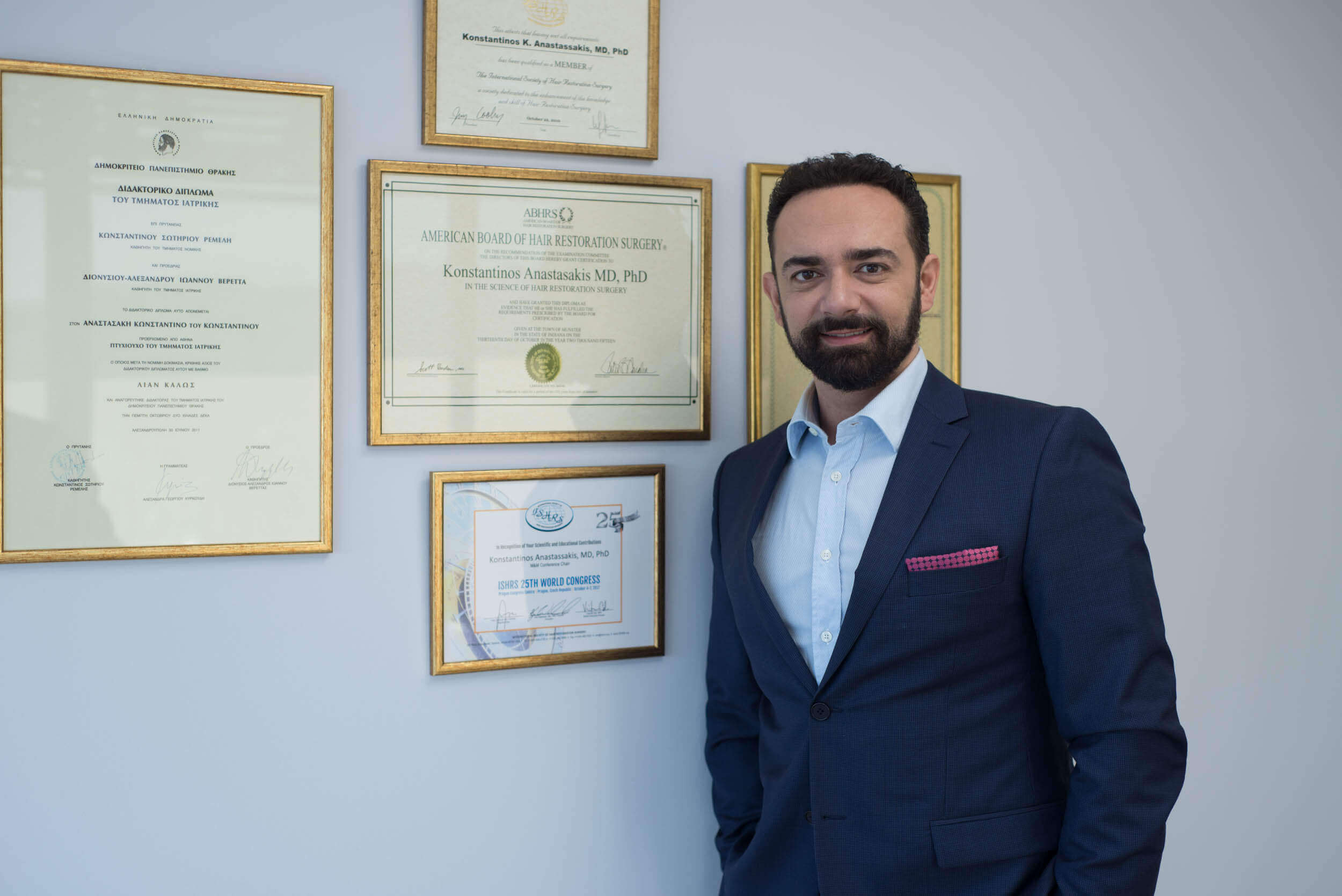
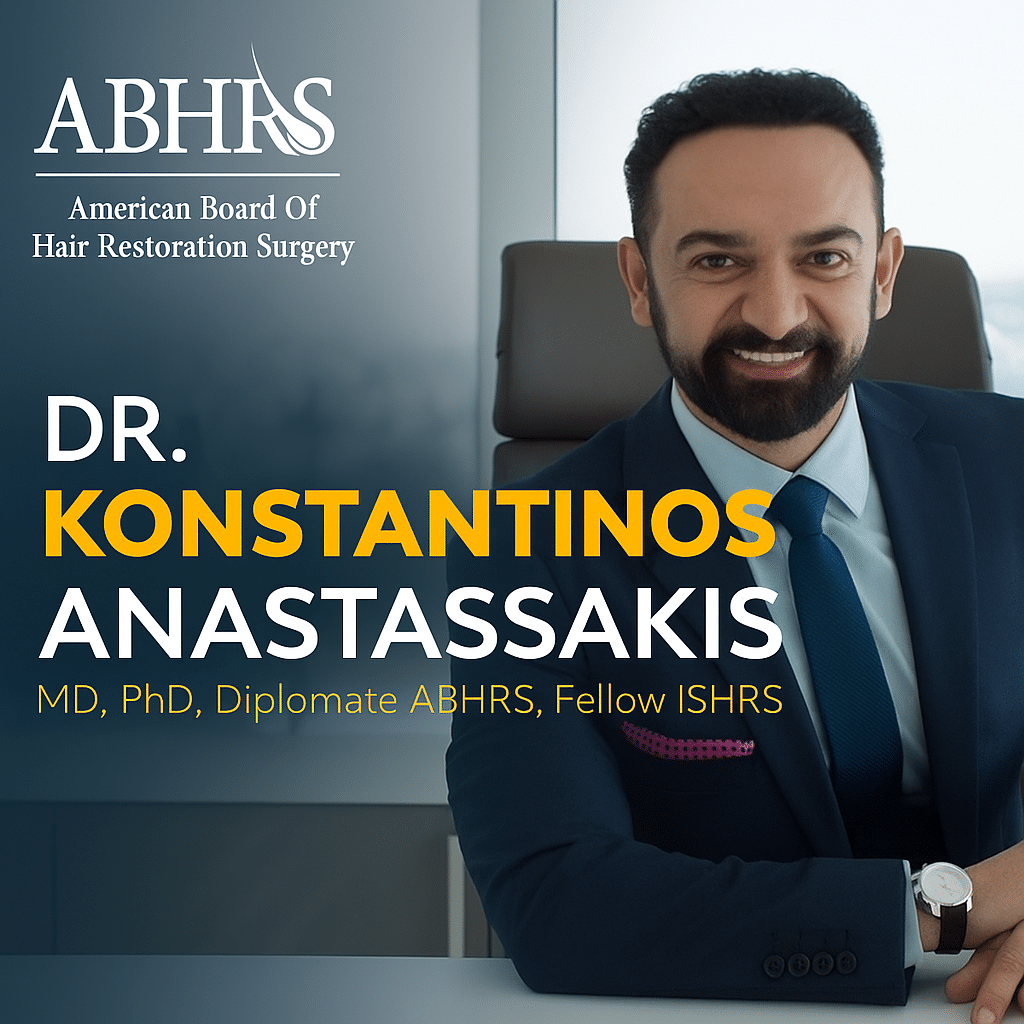
On the matter that continues to attract increasing public attention, Dr. Konstantinos Anastassakis, MD, PhD, ABHRS, comments:
“If I had the chance to meet Harry, I would speak to him with the same honesty and directness I offer all my patients, and I would say:
Harry, don’t do it—at least not yet. A hair transplant may not be the right solution for you at this particular moment.
To many, the price he’s reportedly been quoted may seem outrageous, but my concern isn’t financial—it’s based on medical reasoning.
It’s important for people to understand that, in the UK and the US, such a price for a hair transplant is not unheard of. However, that cost assumes the procedure is being carried out by a board-certified hair transplant surgeon—certified by the American Board of Hair Restoration Surgery (ABHRS)—who is also a member of the International Society of Hair Restoration Surgery (ISHRS), with proven experience and peer-recognized excellence.
It also assumes the surgery will take place in a fully equipped medical facility, using state-of-the-art instruments and technology, supported by a skilled, trusted, and well-coordinated medical team.”
What Prince Harry Should Know Before Undergoing a Hair Transplant
By Dr. Konstantinos Anastassakis, MD, PhD, ABHRS
With the growing media attention surrounding Prince Harry’s rumored interest in hair transplantation, I believe it’s the perfect opportunity to shed light on a common but often misunderstood reality: not everyone is an ideal candidate for hair transplant surgery—at least not at the time they initially desire it.
This is something I frequently explain to many of my younger patients, whose situations bear remarkable similarity to that of Prince Harry.
Harry vs. William: Genetics and the Advantage of Delay
Unlike his older brother, Prince William, Harry holds some unique advantages when it comes to his hair loss journey. For one, his thinning became visible much later. And I use the word visible intentionally—because the process had likely begun years earlier but remained hidden.
There are two main reasons for this delayed visibility:
- Genetic Influence: Harry appears to have inherited a pattern of androgenetic alopecia similar to his father, Prince Charles, whose hair loss developed later in life. William, by contrast, began losing hair before age 30. Just look at photos of Charles from his wedding to Princess Diana—thick, shiny black hair. Harry may have had better genetic luck, but even he couldn’t avoid the inevitable.
- Hair and Skin Contrast: Harry’s fair skin, red hair, and curly texture make thinning much harder to detect in early stages. When scalp color closely matches hair color, the visible signs of thinning take longer to appear. Conversely, in individuals like Prince Charles—pale skin and dark, straight hair—the contrast makes even mild thinning stand out early.
Curly hair also provides natural camouflage, as the intertwined strands create the illusion of fullness.
In short, Harry has been losing hair for years, but only recently has it become noticeable and harder to conceal.
Hair Transplant Is Not Always the Next Step
Despite what many may believe, hair transplant surgery is not the next logical step after thinning becomes visible.
Until now, Harry has managed the issue through hairstyling, strategic haircuts, and possibly cosmetic concealers. That’s perfectly valid. But just because these methods are no longer sufficient doesn’t automatically mean transplant surgery is the right move—especially not right now.
Even if Harry chooses to move forward with a transplant, his case must be approached with extreme care—not because he’s a prince, but because he’s a very specific type of patient.
The Economics of Hair Follicles: A Limited Resource
In hair transplantation, the donor area—the back and sides of the scalp—is the patient’s “capital.” It’s where we harvest healthy follicles to redistribute to balding areas.
The problem? You only get what you were born with. Donor follicles do not regenerate.
This is your genetic inheritance, and it must be managed wisely—because if you use it poorly, you won’t get a second chance.
Here’s where it gets more complicated for Harry:
- Redheads have 20–25% fewer follicular units than brunettes, and 30–40% fewer than blondes. That means Harry starts from a disadvantage.
- On the bright side, his curly texture enhances visual density—this is a major plus for transplant results.
Still, while some patients can donate 7,000–8,000 follicular units (15,000–20,000 hairs) over a lifetime, Harry may only have around 5,000 units (9,000–10,000 hairs). That’s a significant limitation.
Front vs. Crown: Where Should You Invest?
When it comes to aesthetic impact, the frontal hairline (the “hairline”) is far more important than the crown. People see us from the front or side—not from above or behind.
Someone with a strong hairline but thinning crown is rarely perceived as bald. But the opposite? A full crown with no hairline? Think Donald Trump—and the elaborate efforts to compensate.
Currently, Harry has a strong hairline and thinning at the crown. That’s exactly why a transplant right now would be premature and potentially harmful in the long term.If he uses most of his limited donor supply on the crown now, what will be left when he starts losing hair in the front? That’s exactly what happened to Trump, who acted too early and was left with suboptimal results when it really mattered.
Medical Therapies: The Smarter First Step
For men like Harry—young, with crown thinning but an intact hairline—medical treatment should be the first line of action, not surgery.
There are two FDA-approved medications that have been clinically proven to:
- Slow down hair loss in 9 out of 10 patients
- In many cases, regrow hair lost in the past 2–4 years
In addition, Low-Level Laser Therapy (LLLT) is another FDA-cleared treatment that stimulates follicular activity and improves density.
When combined, these three approaches can produce additive effects and help preserve hair longer, delaying or minimizing the need for surgery.
And yes, all three primarily target the crown area—which just so happens to be Harry’s current concern.
The Royal Dilemma: When Fame Gets in the Way
Ironically, Harry’s real problem may not be hair loss—but his fame.
Being a prince, a public figure, and extremely wealthy means he’s at risk of rushed, poorly informed decisions made by others on his behalf—agents, friends, family doctors, or PR consultants.
While one might assume that celebrities always get the best care, in reality, they often end up in the hands of the most popular clinic—not necessarily the most competent one.Some clinics may even push for unproven treatments like stem cells, PRP, adipose-derived injections, or whatever’s trending on social media for the next six months—most of which are scientifically baseless.
Final Thoughts: Hair Loss Requires a Long-Term Strategy
The issue isn’t that Harry is losing hair. It’s that he’s famous and may be pressured into fast fixes instead of scientifically sound, long-term solutions.
When I see younger patients who believe surgery is their only option, I always remind them: A hair transplant is only the right solution when all others have failed.
As someone who is both a hair transplant surgeon and a former hair loss patient who has undergone three transplants myself, I can confidently say that timing is everything.
In Harry’s case—and for many young men—the transplant should be a later step, not the next step.
Start with the right diagnosis.
Preserve as many follicles as possible using approved, evidence-based therapies.
Monitor progress.
When and only if necessary, proceed with a hair transplant—performed by a certified and experienced surgeon, not a marketing-savvy “celebrity doctor.”
In the world of hair loss, the stakes are high—even for princes.
But with the right strategy, the outcome can be royally successful.

A Personal Message to Prince Harry – From One Hair Loss Patient to Another
If Prince Harry were my patient, this is what I would tell him:
“Harry, it’s not about the money. You’ve got money—and plenty of it.
But what you don’t have is hair follicles to waste.
No matter how wealthy you are, even as a Prince of England, your hair follicles are a finite resource.
They’re your biological inheritance—and once you misuse or exhaust them, there’s no amount of money in the world that can buy them back.
So no matter how much you may want a transplant right now, you must understand:
When the time comes that you truly need those grafts, they may no longer be available.”
That’s why I would urge him to first do his own research, and seek guidance from a certified hair restoration physician—someone who can properly assess his condition and help him slow down or even reverse the hair loss process using scientifically proven methods.
Only after a proper course of medical therapy, with documented progress and follow-up, should surgery be considered—if it’s still necessary.
And if I were speaking not just to a man, but to Prince Harry himself, I would add:
“If you were in Greece, I would personally perform your transplant—
at the same cost I offer to any patient with your condition.
And no, you wouldn’t get special treatment—because every single patient who walks through my door receives royal treatment from the very first consultation.
It’s the least I can offer in return for the trust they place in me.”
 0
0