

Are You a Suitable Candidate for a Hair Transplant?
A hair transplant is a highly effective solution for addressing hair thinning. In fact, it is considered one of the most transformative procedures in aesthetic surgery—no other intervention can alter a person’s appearance as dramatically as a successful, dense, and completely natural-looking hair transplant.
But who truly qualifies as an ideal candidate for hair transplantation? And how do both physical and mental health factors influence not only the process itself but also the final outcome?
The answer depends on perspective—there is the medical perspective of the doctor, and there is the personal perspective of the patient.
Who Is Considered a Suitable Candidate for a Hair Transplant — From the Doctor’s Perspective?
From a medical standpoint, the ideal candidate for a hair transplant is someone who has strong donor characteristics, limited recipient area needs, and is at an age where future hair loss patterns are more predictable—typically 35, 40 years old or older.

Who Is Considered a Suitable Candidate for a Hair Transplant — From the Doctor’s Perspective?
While age, donor characteristics, and recipient needs are key initial considerations, a truly comprehensive evaluation by the doctor involves a range of more specialized and significant criteria, such as:
Key Medical Criteria:
- Patient’s Age
Older patients (typically 35–40+) have more stable hair loss patterns. - Donor-to-Recipient Area Ratio
The balance between available donor hair and the area requiring coverage is critical. - Patient’s Goals and Expectations
Realistic expectations greatly influence both the planning and satisfaction with results. - Physical Health
A healthy body supports optimal healing and graft survival. - Mental Health
Emotional stability is essential to cope with the results and recovery process. - Hair Characteristics
Factors such as thickness, texture, color contrast with scalp, and curl affect the visual density and transplant strategy. - Skill of the Surgeon and Medical Team
The outcome heavily depends on the experience and expertise of the professionals performing the procedure. - Family History and Hair Loss Progression
Predicting future hair loss patterns helps in planning a sustainable long-term result.
Secondary Considerations:
- Scalp Thickness
Influences graft handling and implantation depth. - Scalp Elasticity and Mobility
A more flexible scalp is easier to work with during extraction and implantation. - Skull Anatomy (size, shape, contours)
Affects aesthetic design and coverage strategy. - Temporal Hair Presence
Hair in the temple area contributes to a more natural-looking frame for the face. - Overall Suitability for Surgery (psychologically, financially, etc.)
Patients must be mentally prepared and able to support the financial commitment. - Use of Hair Loss Medication Pre-Surgery
Ongoing treatments like minoxidil or finasteride can improve outcomes. - Hairstyle Preferences
Desired hair length and style may influence the transplant design. - Budget
Affects how extensive the procedure can be, especially if multiple sessions are needed. - Tolerance to Appearance Changes Between Sessions
Some patients may struggle with the transitional phases. - Alternative Hair Coverage Methods Available
Wigs, concealers, or SMP may be preferable or complementary in some cases.
Who Is a Suitable Candidate for a Hair Transplant — From the Patient’s Perspective?
From the patient’s point of view, a suitable candidate for a hair transplant is someone who has truly come to terms with the fact that their hair loss is affecting them — and that the solution lies in seeking help from a qualified and specialized medical professional who can address the issue once and for all.
If a person has reached this stage of personal maturity — meaning they’ve acknowledged that hair thinning genuinely bothers them, and are no longer trying to downplay or ignore it — and if they understand that the problem won’t resolve on its own and needs to be actively addressed, then that person is ready.
In other words, when the emotional acceptance meets the readiness to take responsible, informed action, that is when someone becomes a true candidate for a hair transplant.

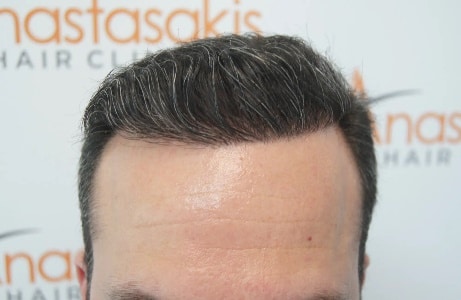
“A perfectly natural and dense hairline with 3,500 FUE grafts.”


“Result of a hair transplant with 3,500 follicular units.”


“Hair transplantation is a highly effective solution for addressing hair thinning.”
He is a suitable candidate because he has reached a point where he is truly ready to accept the help of a specialist — someone who can not only transform his appearance, but also uplift his self-confidence.
And genuinely, without exaggeration, this decision can mark a turning point — a change that has the power to improve his quality of life moving forward.
How Important Are the Patient’s Physical and Mental Health?
A hair transplant candidate must meet certain physical health criteria. It is essential for doctors to consider any medical conditions or underlying factors that may contribute to hair loss. Patients with pre-existing health issues must be carefully evaluated, as some conditions can serve as red flags, potentially compromising the success or safety of the procedure.
Physical health affects not only the body’s ability to heal and respond to treatment, but also the long-term viability of the transplant. For this reason, a thorough medical history and health assessment are critical parts of the preoperative process.
Equally important is the patient’s mental health. Before undergoing surgery, a candidate should be in a stable psychological state — emotionally prepared to go through the process with realistic expectations and confidence.
Concerns, motivations, and expectations should be openly discussed with the physician. Psychological factors must be carefully evaluated, as emotional instability, body image disorders, or unrealistic demands can negatively impact both the patient’s satisfaction and the overall outcome.
In short, a successful hair transplant begins with a healthy body and a balanced mind.
Why Is Selecting the Right Candidate for a Hair Transplant So Important?
The ability of the physician to accurately determine who is — and who isn’t — a suitable candidate for a hair transplant is arguably the most critical factor in the entire process.
It is essential that this assessment is made independently of the patient’s personal desire to undergo the procedure. Just because someone wants a hair transplant does not automatically mean they are a good candidate for one.
A misjudged candidate selection — paired with poor surgical planning — are two of the leading causes of unsuccessful or unsatisfactory transplant outcomes.
Choosing the wrong patient or proceeding with a transplant when the medical criteria aren’t met can result in unnatural results, wasted donor resources, and significant emotional and financial disappointment.
That’s why careful evaluation, honest communication, and ethical decision-making are key to ensuring not just the success of the procedure — but also the long-term satisfaction and well-being of the patient.
The Right Hair Transplant Candidate — Based on Each Patient’s Individual Needs
A responsible physician must be able to identify cases where a hair transplant is not the right solution. For all other patients — those who are suitable candidates — it is essential to strike a careful balance between their personal desires (or even fantasies) and what is medically and aesthetically achievable.
Ultimately, the doctor must never forget that performing surgery on a patient with an underlying psychological disorder carries a psychological cost — both for the patient and the physician — and can seriously damage the doctor’s reputation, far outweighing any short-term financial gain.
At Anastasakis Hair Clinic, we are committed to providing high-quality, medically responsible hair transplants to candidates who are truly suited for the procedure.
Are you ready to regain your confidence and take control of your hair loss?

Contact us today to book an in-person or online consultation and find out if you are a suitable candidate for a hair transplant.
 0
0