

Donor Area Density: Key Concepts
-
The hair transplant surgeon must fully understand the overall donor area density, which is not simply the number of hairs per square centimeter of scalp, but rather the combined effect of anatomical and visual parameters that together determine coverage.
-
While the number of follicular units (FUs) per cm² is relatively similar among individuals, some patients naturally have a higher proportion of multi-hair FUs, thicker hair shafts, lower hair-to-skin color contrast, or curly hair. These favorable characteristics allow for impressive coverage with significantly fewer grafts compared to patients without such advantages.
-
For optimal hair restoration planning, the surgeon must carefully measure the detailed characteristics of the donor area in order to accurately estimate the graft yield and design a precise strategy for recipient site coverage before surgery.
-
Successful and natural-looking coverage can be achieved even with graft densities of less than 50% of the original donor density, since the human eye cannot easily perceive the difference. In fact, with favorable hair characteristics, densities as low as 20–30% can still create the appearance of full scalp coverage.
Despite the continuous evolution of surgical techniques, improvements in surgeon expertise, and the growing role of advanced medical technology, one factor remains unchanged in hair transplantation: the finite number of donor follicles. No matter how high the donor supply may be, it is never infinite—and it is almost always significantly lower than what would be required to restore every balding area on the patient’s scalp.
How Important Is Donor Area Density?
The density of the donor area is one of the most critical parameters that determine the success or failure of a hair transplant. However, when we refer to the term “density,” it does not simply mean the number of hairs per square centimeter on the scalp.
Other contributing factors must also be considered, such as hair shaft thickness, hair color, the contrast between hair and underlying scalp skin, and hair shape (straight, wavy, or curly). These elements collectively define the concept of coverage, which is the most important descriptive term in hair restoration surgery.
Ultimately, true donor density is not just a numerical measurement but a combination of anatomical and visual factors that together dictate how natural and full the final result will appear after a follicular unit transplantation (FUT or FUE) procedure.
Anatomy Lesson: Understanding the Follicular Unit
In a landmark 1984 publication titled “Transverse Microscopic Anatomy of the Human Scalp”, Headington was the first to introduce the term Follicular Unit (FU). According to Headington, the FU is not merely an anatomical structure but represents the natural grouping of hair follicles in the human skin and scalp (Fig. 1,2).
A single follicular unit typically consists of the following components:
-
1–4 terminal hair follicles
-
1 (rarely 2) vellus hair follicles
-
The associated sebaceous glands
-
The attached arrector pili muscles, which may sometimes be fused
-
The perifollicular vascular plexus
-
The perifollicular neural plexus
-
A surrounding collagen bundle that encapsulates the entire structure in a hexagonal shape
This anatomical discovery laid the foundation for modern hair transplant surgery, as the follicular unit became recognized as the fundamental and indivisible unit of hair restoration.
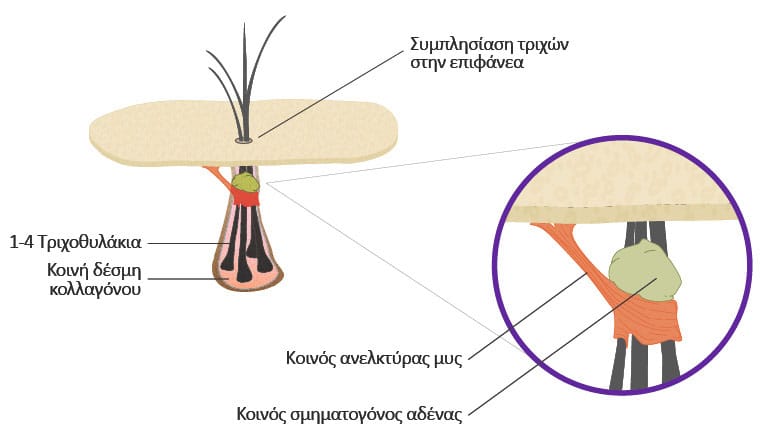
Fig. 1: A Follicular Unit (FU) with its common arrector pili muscle.
This illustration shows a complete follicular unit (FU), highlighting the shared arrector pili muscle that connects the hair follicles. Such details are essential in hair follicle anatomy and provide insight into the structural integrity of the scalp.

Fig. 2: Separation of Follicular Units (FUs) in the deeper dermis as they converge.

Fig. 3: At the epidermal level, the hair follicles of the Follicular Units (FUs).
The follicular unit (FU) has the shape of an inverted bouquet of flowers, with the hairs located very close to each other (Fig. 2), while the dermal papillae “spread out” in different directions in the deeper dermis (Fig. 3).
The discovery of the follicular unit laid the foundation for the development of modern hair transplant techniques, namely Follicular Unit Transplantation (FUT) and Follicular Unit Excision (FUE). These methods represent the most advanced approaches in hair restoration, allowing surgeons to achieve natural, dense, and permanent results.
Another critical aspect of this discovery is that, for the first time, it became possible not only to accurately assess the density of the donor area, but also to evaluate the quality and type of grafts that each patient’s donor zone can provide. From now on, these factors are determined by Nature itself, rather than by the surgeon or the assistant preparing the grafts. This ensures greater predictability, safety, and effectiveness in every hair transplant procedure.
Donor Area Density
The overall donor area density is the result of a combination of different anatomical and physiological parameters. It is not defined solely by the number of hairs per square centimeter but rather by a set of characteristics that collectively determine the true density of the donor zone.
In the following sections, we will analyze in detail the specific factors that make up the total donor density, which plays a critical role in the outcome of any hair transplant procedur
Follicular Density in Hair Transplantation
The term follicular density refers to the number of follicular units (FUs) per cm², expressed as an average. In Headington’s landmark study, it was reported that the human scalp has an average follicular density of about 1 FU/mm² (≈100 FU/cm²), with a range of 80–120 FU/cm² (Fig. 4–5). This benchmark value has been widely cited in subsequent research on donor area density and hair transplant planning.
However, many modern hair restoration experts argue that these figures were somewhat exaggerated. Specifically, Cole has stated that the true follicular density is significantly lower. Supporting studies by other specialists have reported the following ranges of follicular density:
-
Bernstein: 80–100 FU/cm²
-
Devroye: 55–110 FU/cm²
-
Jimenez: 65–85 FU/cm²
These variations highlight the importance of accurate measurement of follicular unit density in each patient before proceeding with a hair transplant procedure.
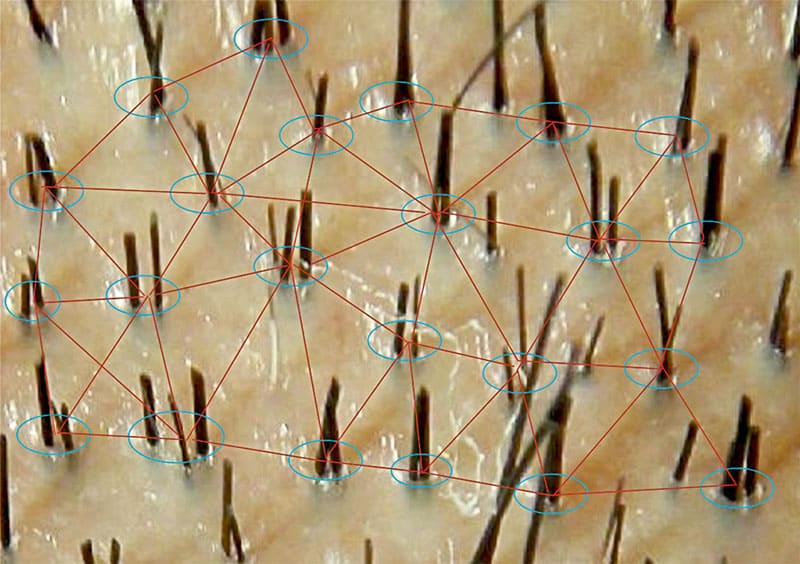
According to data from the above studies, follicular units (FUs) are located approximately 1 mm apart (ranging from 0.4–1.2 mm depending on the exact point of the donor area), arranged randomly (Fig. 4) rather than in a straight “row.” Consequently, the follicular density remains relatively constant among individuals, and its value contributes only minimally to the differences observed in the overall donor area density between different patients in hair transplantation.
Calculated Density
The precise density of the scalp, when examined at the microscopic level, does not depend on the density of follicular units (FUs) or the distance between them. These two parameters are almost constant and interdependent. Instead, it depends on the composition of each FU—specifically, how many of them contain 1, 2, 3, 4 or more terminal hair follicles. This value is defined as the calculated density.
For example, when the density is reported as 2.1/mm², it means that, on average, each FU contains 2.1 follicles. In other words, the calculated density measures the follicular content of each FU. While follicular density remains relatively stable (≈1 FU/mm²), the follicle density within FUs (calculated density) is variable, ranging from <1.0/mm² to >3.0/mm². Any given calculated density value can result from a different “composition” of follicular units, but once the total number of follicles is divided by the total number of FUs, the result defines the calculated density.
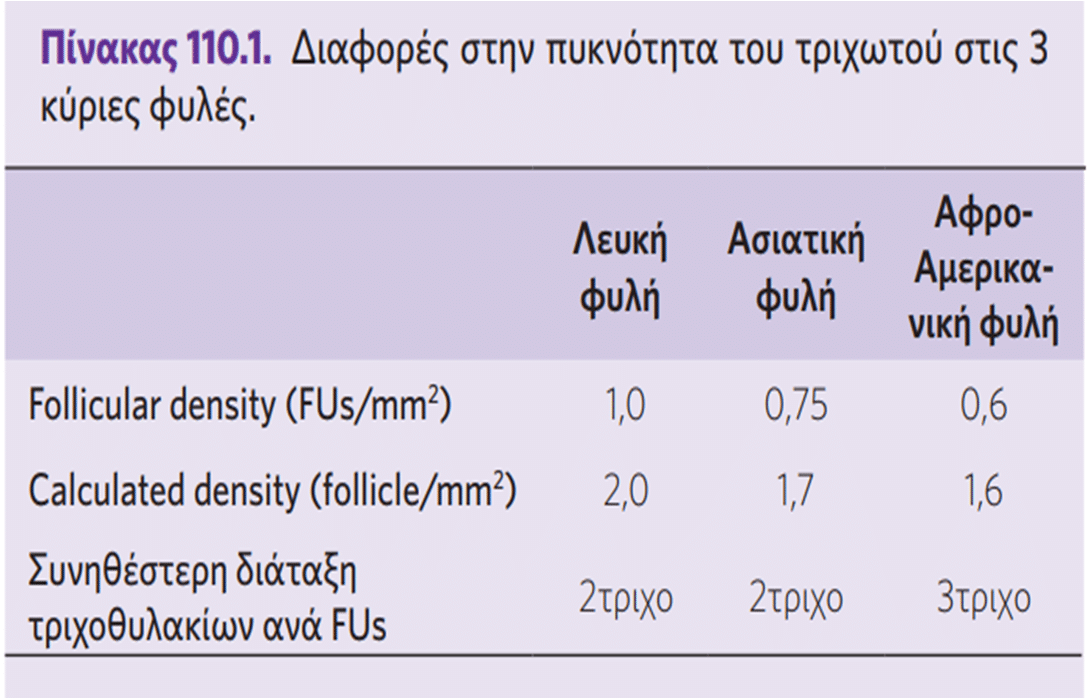
In Caucasian males, the average calculated density ranges from 2.1–2.3/mm². Higher values are considered excellent (maximum ≈3.5), values between 1.8–2.0/mm² are considered good, 1.4–1.7/mm² moderate, 1.0–1.3/mm² low, and values <1.0/mm² are classified as very poor and unsuitable for hair transplantation (Fig. 5). Density values in other ethnic groups differ (Table 1).
A Mathematical Approach to Hair Density in Hair Transplantation
As we have already mentioned, the concept of the Follicular Unit (FU) differs from the concept of the “custom-cut” graft, whether minigrafts or micrografts. With the use of FUs, it is essential to make a precise preoperative assessment of the donor area in order to calculate the exact size of the strip graft that will be harvested during each hair transplant session.
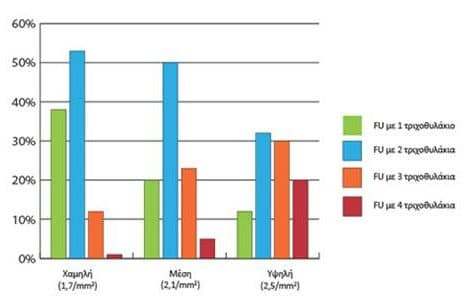
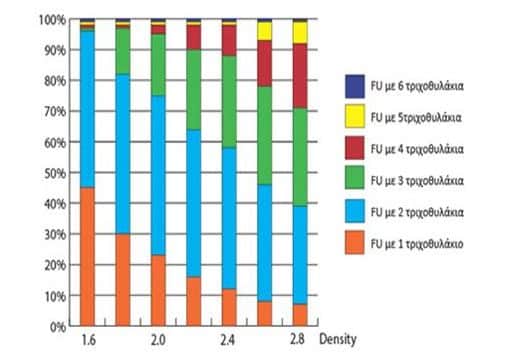
Studies show that the most frequent FU configuration is the one containing two hair follicles, regardless of whether the overall hair density is low, average, or high (see Graph 2).
For example, when harvesting a strip graft measuring 1 cm x 20 cm from a patient with a calculated density of 2.1 hairs per FU, the graft will consist of approximately 2,000 FUs (200 mm length × 10 mm width × 1 FU/mm²). The approximate distribution will be as follows:
-
400 grafts containing 1 follicle
-
1,000 grafts containing 2 follicles
-
500 grafts containing 3 follicles
-
100 grafts containing 4 follicles
If a smaller strip graft of 1 × 5 cm is extracted from the same patient, the distribution will remain the same, but the total number of grafts will be divided by four, and so forth.
But why are these numbers important in hair transplantation?
In the transition zone of the hairline, only single-hair follicular units (FUs) are transplanted in order to create a natural, soft look that mimics a physiological hairline. On average, a natural-looking hairline requires between 200–300 single-hair FUs for proper coverage.
However, when extracting a 5 cm strip from the donor area, the surgeon has access to only around 100 single-hair FUs, which is insufficient for full hairline reconstruction. Similarly, to create adequate density in the frontal forelock, approximately 400–500 multi-hair FUs (containing 3–4 hairs each) are needed — a graft yield that a 5 cm strip alone cannot provide.
The calculated density of the donor area allows the surgeon to estimate the available graft types with high accuracy. Patients with low calculated density typically have a higher proportion of single-hair FUs, making them suitable for hairline refinement. Conversely, patients with high calculated density possess fewer single-hair FUs but a greater number of 2-, 3-, and 4-hair FUs, ideal for placement behind the hairline to achieve coverage and density.
Surgeons must carefully calculate both the required graft composition and the strip dimensions based on these variables, guided by the percentage distribution of graft types (as shown in the charts).
It is important to note that in FUE hair transplantation, follicular units containing 3–4 hairs cannot be divided into single-hair grafts, as this would convert them into micrografts, which are no longer true FUs. Therefore, in high-density patients, obtaining the necessary number of single-hair FUs for the hairline may require harvesting a larger graft count overall — often leading to megasessions, since no grafts should go to waste.
On the other hand, patients with low donor density may have enough single-hair FUs for the hairline, but the surgeon will still need to harvest a larger graft area to secure sufficient density in the regions behind the hairline.
Donor Area Density Measurement Tools and Other Key Parameters
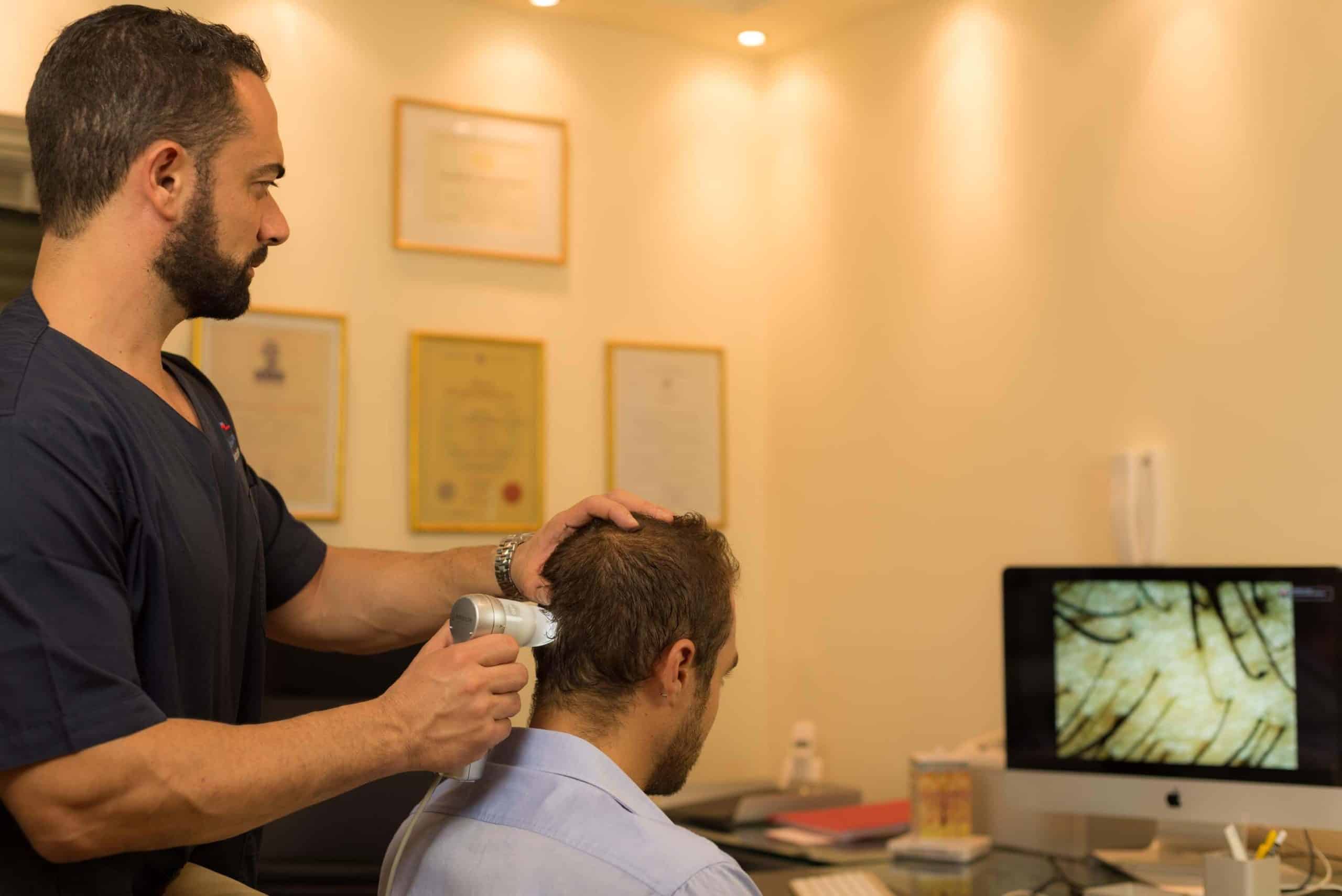
Many experienced hair transplant surgeons believe they can estimate donor area density simply by “eyeballing” or running their hand over the scalp. However, for precise and reliable results, a proper density measurement device is essential. Without it, the risk is high of harvesting either fewer or more grafts than required for each session.
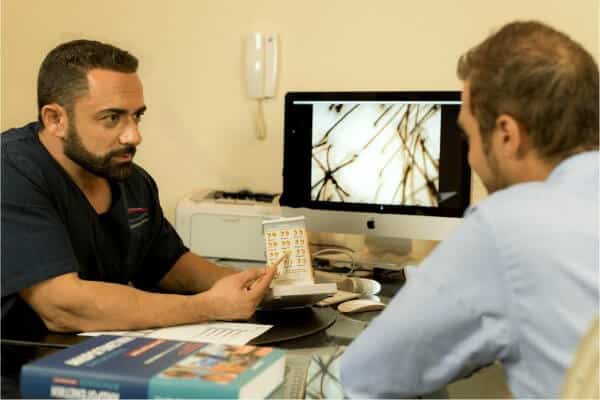
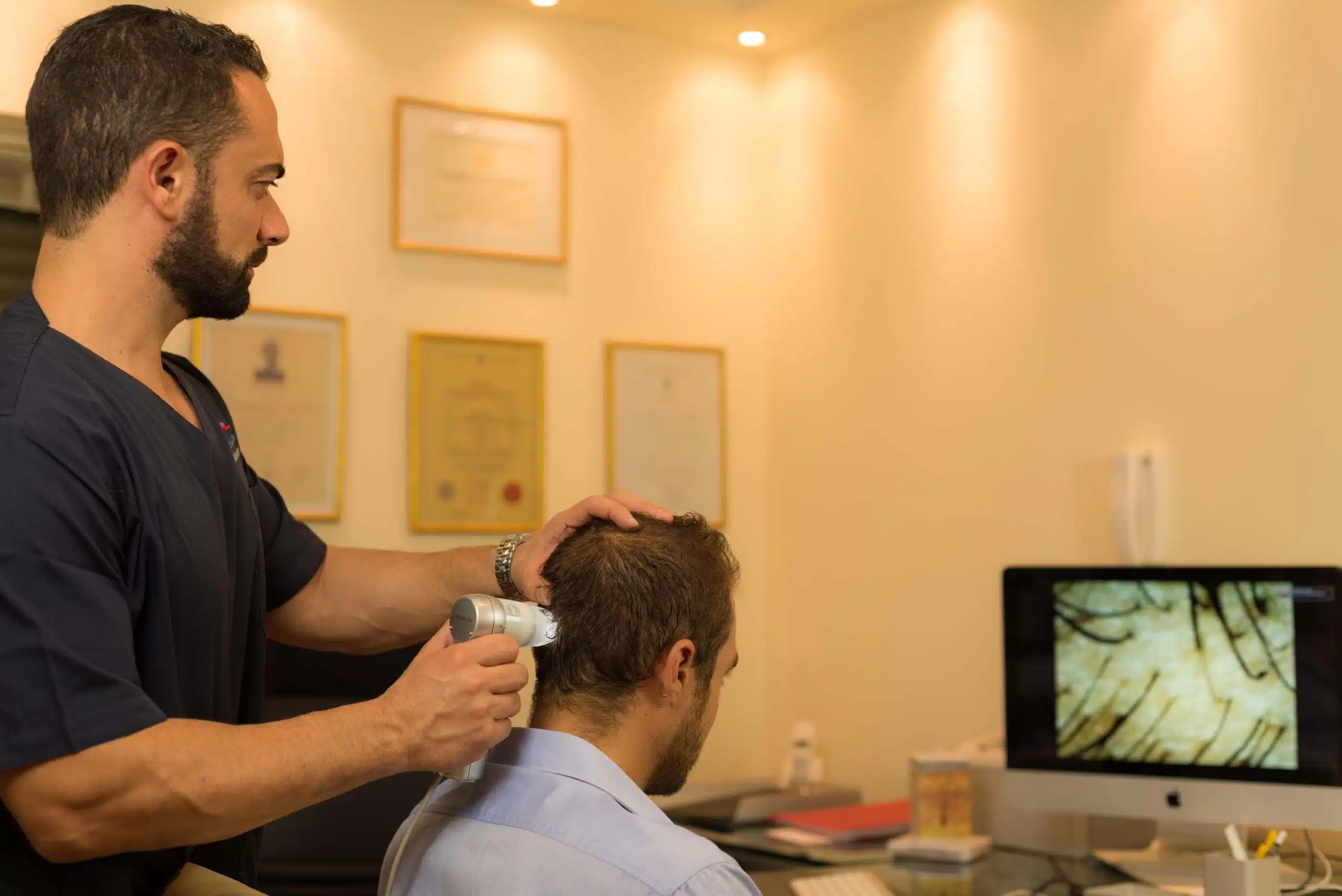
In addition, the patient experience is significantly enhanced when the surgeon relies not only on clinical expertise but also on diagnostic tools and algorithms. Showing the patient exactly what the surgeon sees in the donor area—through photos, digital records, or written reports—allows them to better understand their condition and even seek a second medical opinion if desired.
To ensure a safe and accurate donor area assessment, the following are crucial:
-
A user-friendly and reliable donor density measuring tool
-
Measurements taken at as many points as possible along the donor zone
-
Evaluating a large surface “frame,” ideally at least 30–50 mm², and if possible 100 mm² (1 cm²) for greater accuracy
.
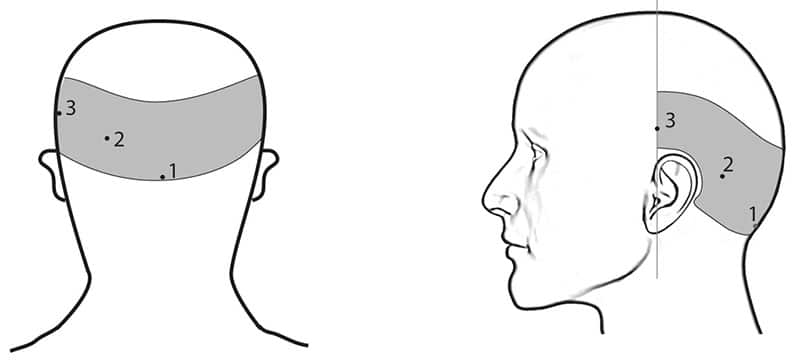
Fig. 8: The three key points where donor area density measurement must be performed using the Proscope® HR2 digital dermatoscope.
The density of the donor area is not uniform along its entire length. Clinical studies have shown that the highest follicular density (within the same patient) is typically located in the mid-occipital region, while the lowest density is usually found above the auricular area.
To accurately calculate the average donor area density, multiple measurements are taken from different points across the donor zone. The results are then added and divided by the total number of measurements.
If only a single measurement point is possible, the mid-mastoid region is considered the most reliable. However, for more precise and reproducible results, it is strongly recommended to take measurements from at least three donor regions (see Fig. 8).
The Most Widely Used Donor Area Density Measurement Devices
When it comes to hair transplant surgery, accurately measuring the density of the donor area is essential. Several devices have been developed over the years to assist surgeons in this evaluation. The most widely used are:
1. Hair Densitometer
Developed by Rassman in 1994, this device allows ×30 magnification and measures follicular units in a 10mm² area. The result is multiplied by 10 to calculate the density at the given point.
✅ Advantages: affordable, easy to use (especially for less experienced surgeons).
❌ Limitations: requires trimming the hair to 1–2mm length, has a small field of view, and real-time measurement (instead of photo capture) can lead to a higher margin of error.
2. Welch Allyn Trichoscope
A device similar to the Densitometer, with a slightly larger frame area of 3×4mm (12mm²).
✅ Advantages: user-friendly.
❌ Limitations: suffers from the same disadvantages as the Densitometer — small viewing field and no photo capture capabilities.
3. Proscope® HR2
First introduced by Devroye at the 2002 ESHRS Meeting in London. This digital dermatoscope is highly versatile:
-
Offers interchangeable lenses (×10, ×30 with polarized light, ×50, ×100, ×200, and ×400).
-
Captures high-resolution images at 1600×1200 pixels.
-
Includes built-in software that allows electronic measurement of hair shaft diameter.
-
Images are stored, can be reviewed later, and also shared with the patient.
👉 The Proscope® HR2 is widely considered the best value-for-money donor density measurement tool and has become an essential instrument for every modern hair transplant surgeon.
Apart from the donor area density, several other features of the hair follicles play a decisive role in the final aesthetic outcome of a hair transplant. These characteristics directly influence how natural and dense the transplanted hair will look once the follicles are placed in the recipient area.
Key Hair Characteristics in the Donor Zone
-
Hair Shaft Diameter
-
Thicker hairs provide greater coverage.
-
Hair diameter determines how “full” the result appears, even if the number of grafts remains the same.
-
-
Hair Length
-
Longer hairs create better scalp shading and enhance the visual impression of density.
-
-
Hair Shape
-
Curly or wavy hair gives the illusion of higher coverage compared to straight hair, as it covers a larger surface area.
-
-
Hair and Scalp Color Contrast
-
The smaller the contrast between hair color and scalp tone, the more natural and dense the result looks. For example, blonde hair on fair skin provides better visual coverage compared to dark hair on pale skin.
-
-
Hair Exit Angle
-
The natural angle at which hairs grow plays a crucial role in the overall appearance. Reproducing this angle correctly during the hair transplant procedure is key for achieving a natural look.
-
-
Hair Shine
-
Shinier hairs reflect light differently and contribute to a more vibrant, healthy appearance of the transplanted hair.
-
More specific:
Hair Shaft Diameter
While much discussion often focuses on hair density, in reality the diameter of the hair shafts plays an even more important role in the final outcome of a hair transplant and in achieving natural coverage. In fact, the hair shaft diameter is considered the most crucial factor for aesthetic results, and the reasons are purely geometric.
In 2001, Arnold introduced the terms hair mass and hair mass index.
-
Hair mass is defined as the total surface area of hair shafts emerging from 1cm² of scalp. It can range from 0.2mm² for fine hair up to 0.72mm² for coarse hair.
Hair classification based on diameter:
-
Vellus hair: <30μm
-
Intermediate hair: 30-60μm
-
Terminal hair: 60-140μm
-
Fine: 60-65μm
-
Medium: 65-80μm
-
Thick: >80μm
-
In modern follicular unit transplantation (FUT) and follicular unit excision (FUE), only follicular units (FUs) that contain terminal hair follicles are transplanted. Vellus and intermediate follicles are not used.
To understand the importance of hair diameter:
-
If we compare a fine hair with a diameter of 0.06mm to a thick hair of 0.12mm, the cross-sectional surface area of the thicker hair is 400% larger.
-
This translates into a fourfold increase in visual impact and coverage.
According to Cole, even a small increase in hair shaft diameter by just 0.01mm (10μm) can boost the perceived aesthetic hair volume by 36%.
Ένα ακόμα πιο σαφές παράδειγμα!
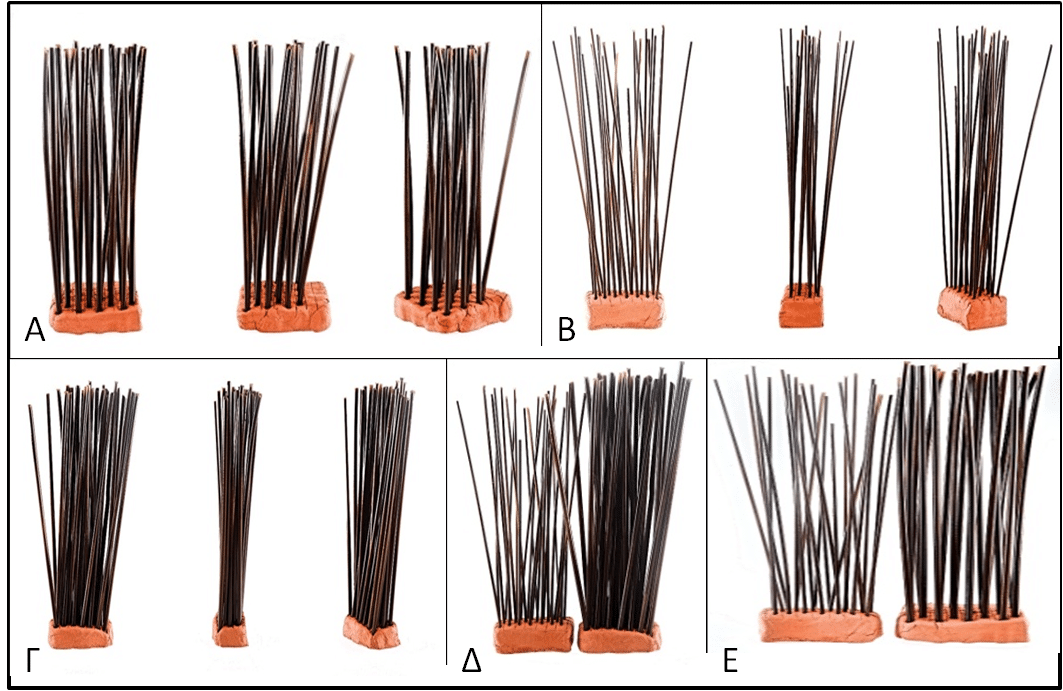
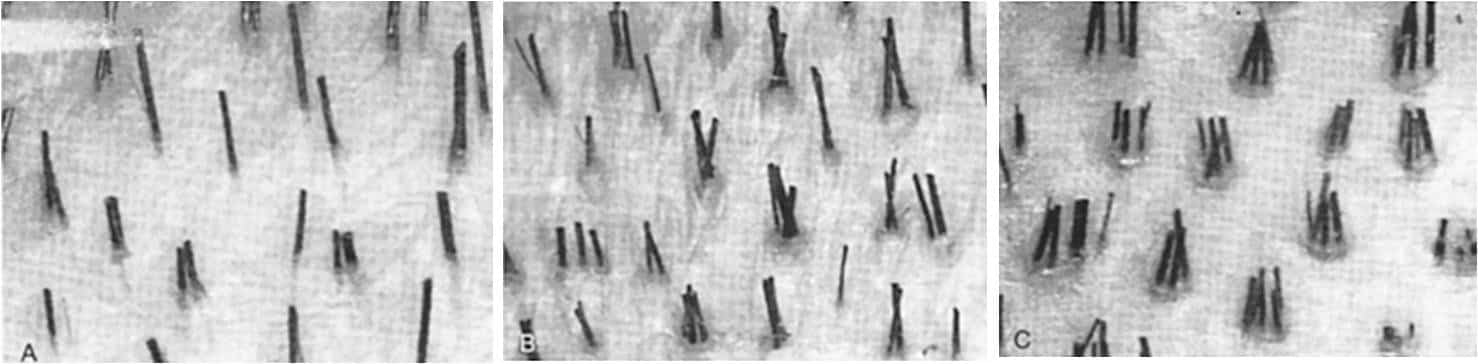
To highlight the aesthetic value of hair thickness compared to density, the following models were created. These models were made of clay, representing the scalp skin, and pasta of different diameters, painted brown, representing the hair (Fig. 12):
-
Model A: pasta with a diameter of 2.79 mm placed 1 cm apart.
-
Model B: pasta with a diameter of 4.81 mm placed 2 cm apart.
-
Model C: pasta with a diameter of 4.81 mm placed 1 cm apart.
The diameter of the thicker pasta is only 72% greater than that of the thinner one. However, as seen in the images, at the same density, the thicker pasta creates an impressive coverage effect. Even at half the density (2 cm spacing), the thicker pasta still provides a denser visual result.
The diameter of human hair can be measured accurately using digital micrometers, such as the Starret Digital Micrometer, with a precision of 1μm (Fig. 13). To calculate the average hair diameter in a given area, at least 20 hairs must be measured.
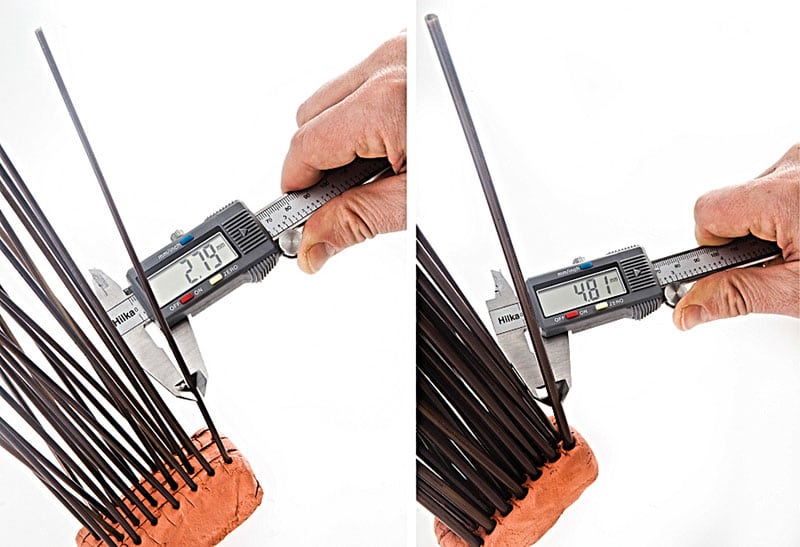
Εικ.13. Μέτρηση διαμέτρου με χρήση ηλεκτρονικού παχόμετρου, με ακρίβεια 0,01mm
According to Cole, within the same individual, the mastoid region contains the thickest hairs, while the mid-occipital region has the thinnest hairs, with the difference between the two being only about 10%.
In 2006, Cohen introduced the Digital Trichometer, a device that measures the Trichometric Index. This index is defined as:
Trichometric Index = Hair Density × Average Cross-Sectional Area of Each Hair
The measurement is performed over a 4 cm² scalp area, providing valuable data about the average hair thickness in each region.
In the table below, you can see the relative importance of these parameters in evaluating donor hair characteristics.
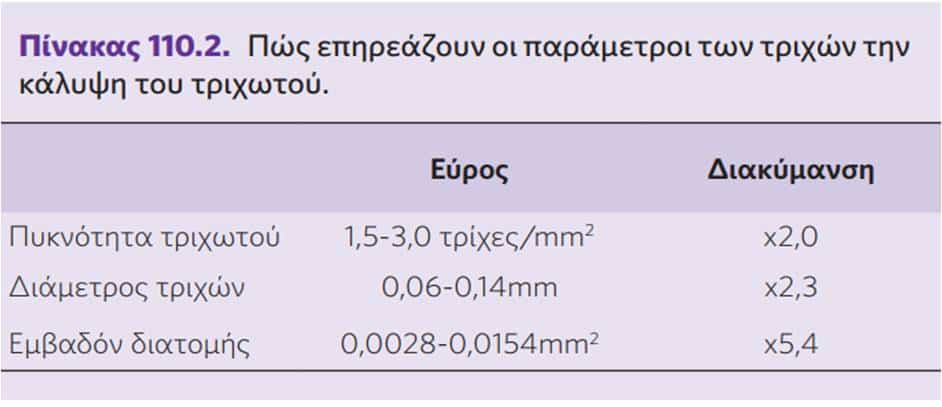
Specifically, the impact of hair shaft thickness is about 2.5 times greater than that of the absolute number of hairs in both the donor and the recipient area. Patients with a density <1.5 FU/mm² or with hair diameter <0.06 mm are not considered candidates for a hair transplant.
While the variability of hair density is approximately ×2, the variability of the cross-sectional area reaches ×5.4. Therefore, it is not an exaggeration to state that the importance of hair thickness is up to 2.7 times greater than density — and this parameter is what ultimately defines the aesthetic appearance of the scalp.
If we combine these findings with Table 2, some fascinating conclusions can be drawn. Consider the theoretical comparison of two patients:
A “lucky” patient with a density of 3 FU/mm² and a hair diameter of 0.14 mm.
An “unlucky” patient with a density of 1.5 FU/mm² and a hair diameter of just 0.06 mm.
The “lucky” patient can provide only twice the number of grafts, four times the number of hairs, but almost twenty times the coverage compared to the “unlucky” patient! (Fig. 14)
Even more interesting: if the “unlucky” patient in terms of density were “lucky” in hair diameter, and the “lucky” patient in density were “unlucky” in diameter, the first patient could essentially balance out the density disadvantage and might even achieve the appearance of better coverage than the second patient.
At this point, additional factors such as hair shape and hair-to-skin color contrast also come into play, further influencing the final aesthetic result.
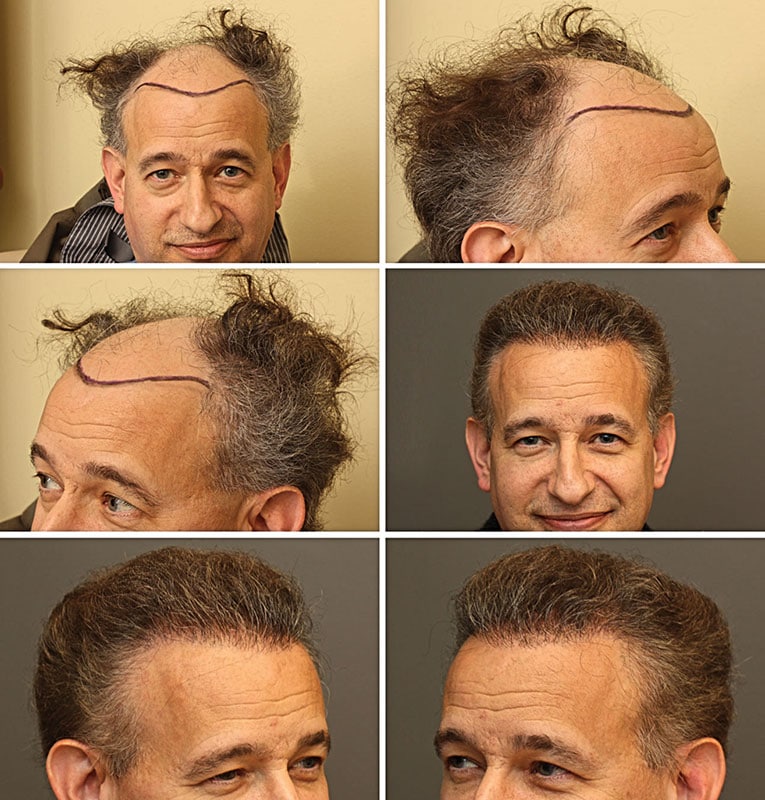 Fig. 14. Impressive result with only 2,781 FUs in a patient with ideal hair characteristics: thick, curly, and salt-and-pepper hair (photos courtesy of Robert M. Bernstein, MD).
Hair Length
When it comes to hair length, and considering that the ultimate goal is coverage in the recipient area, Geometry offers a clear explanation.
The volume V of a cylinder (and since a hair shaft — especially a cut hair — is almost a perfect cylinder) is calculated by the formula:
V = π × r² × h
where h represents the height of the cylinder, i.e., the length of the hair.
➡️ This means that when the hair length is doubled, the coverage effect in the scalp area also doubles.
Unlike other factors, hair length is the only coverage parameter that patients can directly control. It is considered the second most important factor for achieving visual density, as long as the hair is styled in a way that it overlaps and conceals the thinning areas
Hair Shape
Straight hair follows a linear path across the scalp, reflecting light directly along its length. This reflected light is what the human eye perceives as hair, and it plays a crucial role in the visual impression of coverage.
As the waviness or curliness of the hair increases, the light reflection becomes more diffused and scattered across a wider surface of the scalp.
➡️ This phenomenon explains the illusion of volume often seen in wavy or curly hair. Much like the dense branches of a tree that intertwine and block visibility, curly hairs overlap with each other, creating the appearance of a thicker, fuller barrier of hair (Fig. 15).
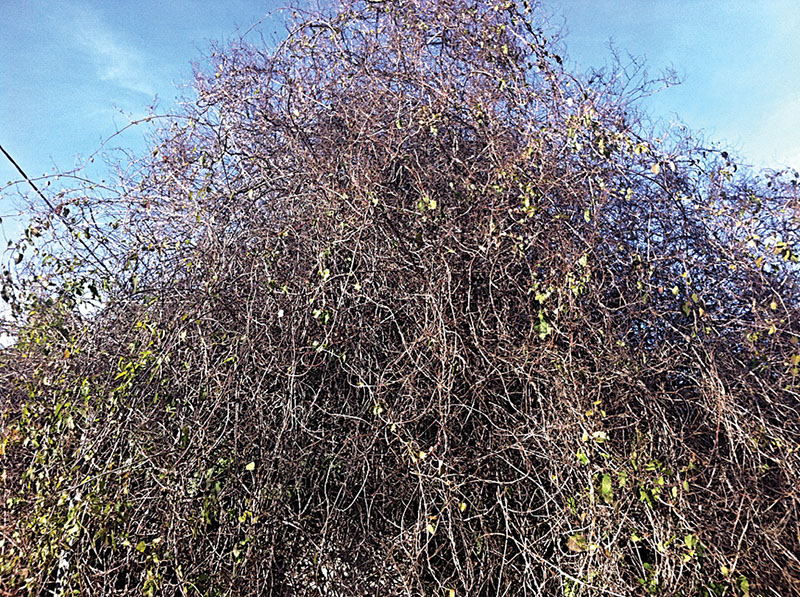 Fig. 15. Aesthetic analogy of curly hair. The branches are thin but create the impression of an impenetrable barrier. The human eye cannot see the sky through the branches in the center. Similarly, in individuals with curly hair, the scalp skin is not visible between the hairs!
When two or more curly hairs intertwine, they create a much stronger impression of coverage compared to two straight hairs, which can only cover the scalp directly beneath them.
The phenomenon of reduced coverage in straight hair is also explained by the fact that straight strands naturally “point” toward the skin. This allows the eye to follow their path more easily, making the scalp more visible. In contrast, curly hair blocks this direct line of sight.
➡️ For this reason, people with straight hair tend to show signs of hair thinning and hair loss much earlier than those with curly hair.
Overall, curly hair creates greater visual volume, which is especially evident in Afro-American hair types.
The only drawback of curly hair in hair transplant surgery is that the emergence angle of curly hairs from the scalp is often perpendicular. This may result in less effective scar coverage over the donor strip area. If a complication occurs and the scar is wider than usual, this effect becomes even more noticeable.
Hair Color and Scalp Contrast
When it comes to hair color—and especially its contrast with the underlying scalp color—the rule is simple:
-
The lower the contrast, the greater the visual sense of coverage. As a result, there is less need for high hair density or a large number of transplanted grafts to achieve a natural look.
👉 In the Caucasian population, where skin tone is usually light, patients with blonde, salt-and-pepper, or even white hair are considered ideal candidates for hair transplantation, since the contrast with the scalp is minimal.
Afro-American Hair Characteristics
An interesting observation:
-
In Afro-American patients, the follicular density is relatively low (around 0.6 FU/mm²). However, the unique curl pattern of the hair combined with the lack of contrast between hair and scalp creates the impression of very high density and coverage.
This means that Afro-American hair transplant patients can achieve full aesthetic coverage in the recipient area with far fewer grafts compared to Caucasian patients.
Hair Exit Angle
The axis of the hair follicle is embryologically oblique in relation to the skin surface, and therefore the hair always emerges at an angle. Hair follicles in each region of the scalp have different exit angles and directions. Specifically, in the donor area, hair follicles emerge at an angle of 25°–30° from the scalp, while in the midscalp the angle is 50°–60°, and at the hairline only 15°.
The acute angle provides more satisfactory coverage compared to vertically placed grafts. The angle of recipient sites must follow the angle of the hairs that may remain in the area, and even in fully bald areas, the direction of vellus hairs can be followed.
In the study by Yagyu et al., it was proven that in most individuals without hair loss, the exit direction of the follicles is perpendicular to the direction of the hairs, which follow an anterior–posterior orientation with a slight clockwise swirl, or more rarely, counter-clockwise.
For greater accuracy in creating recipient sites and placing grafts, the use of magnifying loupes ×2.5–3.5, combined with Xenon lighting, is necessary.
Hair Shine
The so-called “shine” of the hair is influenced by a variety of factors, including:
-
The lighting of the environment
-
The color of the hair
-
The smoothness of the hair surface
-
The morphology and structure of the hair shaft
-
The geometry of hair distribution on the scalp
-
The alignment of hairs with each other
Proper graft placement in the recipient area, avoiding additional damage to the hair caused by the use of inappropriate products, and selecting a flattering hair color (for patients who dye their hair) are often enough to create the impression of denser coverage and an overall better aesthetic outcome.
How Does Strip Excision Affect Donor Area Density?
Every time a strip excision is performed and a section of the donor area is removed, the surrounding scalp that is sutured back together undergoes a mechanical stretch. On a microscopic level, this means that the distance between the follicular units (FUs) increases. However, the composition of each FU remains constant – in other words, the calculated density (the average number of follicles per FU) does not change.
What decreases overall is the hair density, defined as the number of hairs per cm². For example, if a patient has a calculated density of 2.4 follicles/mm² and a follicular density of 1 FU/mm², after a strip excision the hair density may be reduced to 2.1 follicles/mm². Still, each FU will continue to contain an average of 2.4 follicles. The crucial difference is that the distance between FUs in the donor area increases due to stretching.
This distinction is important, because while the intrinsic quality and composition of the FUs remain stable, the visual impression of the donor area density can be reduced. Wider spacing between follicular units may diminish the appearance of fullness in the donor zone, even if the transplanted grafts themselves remain viable and high-quality.
When One Follicle Counts as Two: The “50% Rule”
In 1997, Limmer published a landmark study showing that in order to create the illusion of natural hair density, it is enough to transplant (and successfully grow) only 50% of the original follicular density. In simple terms, if the average natural density is about 100 FUs/cm², then achieving a natural-looking result requires only 50 FUs/cm². This finding was described as a unique “2-for-1 exchange” opportunity, something Limmer strongly emphasized.
At first, this claim caused significant debate among hair transplant surgeons. However, just two years later, Marritt confirmed Limmer’s theory with a brilliant experiment. Instead of focusing on transplantation, Marritt tested how much hair loss is actually perceptible to the human eye.
He studied a 22-year-old volunteer with adolescent-level hair density in the vertex area (219 follicles/cm²). He marked three adjacent 1cm² areas in the frontal scalp and began plucking hairs one by one. Even after removing 25%, 40%, and 50% of the hairs (leaving just 110 hairs), the visual density of the central square with 110 hairs appeared the same as the surrounding squares with 219 hairs.
The reason lies in the limitations of human vision. The human eye cannot detect reductions in density until the threshold of approximately 50% is surpassed. At a distance of 30 cm, normal visual acuity is 0.009 mm. If contrasting elements (like black hairs and white scalp) are placed closer than this, they blend visually into a single shade of gray.
This phenomenon is similar to how we don’t see individual pixels on a television screen (red, green, and blue) unless we stand very close. At ordinary social distances (1.2–2.4 m) or even within intimate distance (<50 cm), the “50% rule” still holds true.
And just to prove how easily our eyes can be deceived, look at the center of the following image for a few seconds (Fig.16).
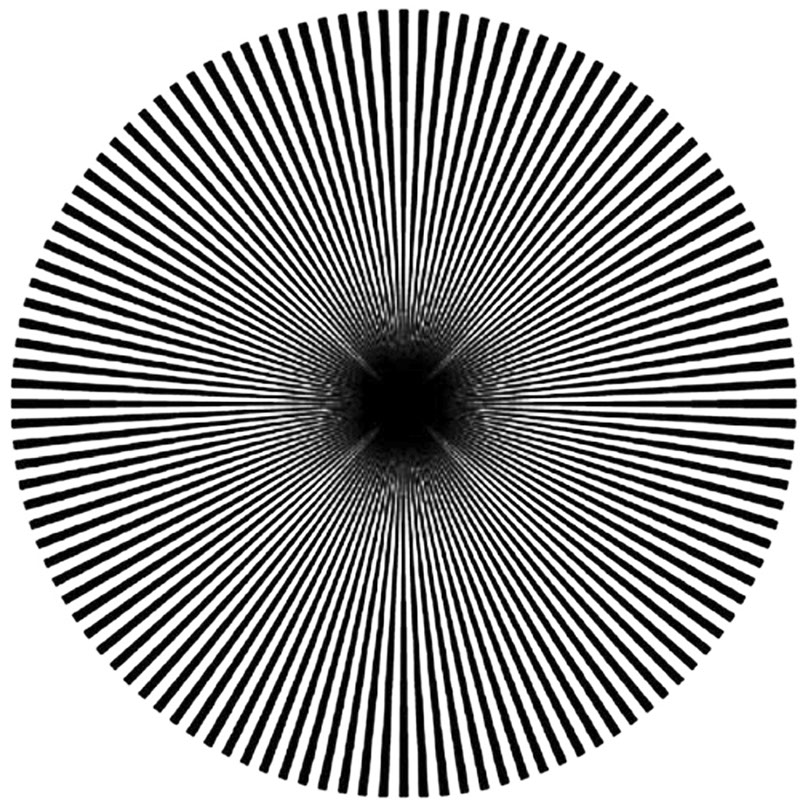
Look at the center of this image for 10 seconds. Does it appear to rotate?
If yes, then you can understand exactly why the “illusion of coverage” in a hair transplant (Hair Transplant Surgery – HT) is so successful.
Nature may have “given” us hair loss, but it also provided us with the inability to perceive it until it has already progressed significantly. This biological trait plays a key role in why hair thinning often goes unnoticed until later stages.
how many follicular units (FUs), follicles, and hairs can actually be transplanted?
This is the final mathematical issue to consider when evaluating both the donor area and the recipient area, since both are subject to the same biological rules.
In an average patient suffering from hair loss, the initial number of terminal follicular units across the scalp before thinning begins is approximately 50,000 FUs. Given that the scalp surface measures about 500–600 cm² and the follicular density is around 100 FUs/cm², this corresponds to about 100,000 hair follicles with a calculated density close to 2. The permanent donor zone makes up roughly 25% of the scalp surface, which translates into about 12,500 FUs. The remaining 37,500 FUs are vulnerable to loss as hair thinning progresses to stage VII.
Because the “50% rule” applies to the donor area as well, up to half of its follicular units can be harvested without causing visible thinning. This means that around 6,250 FUs (12,500 ÷ 2) are realistically available for hair transplantation. With these grafts, the surgeon must cover areas that could originally have contained up to 37,500 FUs.
It is crucial to understand the impact of donor density on surgical planning. For example, if a patient with a calculated density of 2 undergoes one or more transplant sessions, and the follicular density is reduced by 25% (from 1 FU/mm² to 0.75 FU/mm²), the hair density will drop to 1.5. At this point, the donor area has effectively lost 50% of its capacity.
In contrast, if a patient begins with a lower calculated density of 1.5, the same reduction in follicular density (from 1 FU/mm² to 0.75 FU/mm²) would quickly exhaust the donor supply. In that case, further transplants would not be possible, since the resulting density would equal 0.75 FU/mm² × 1.5 hairs/FU = 1 hair/mm².
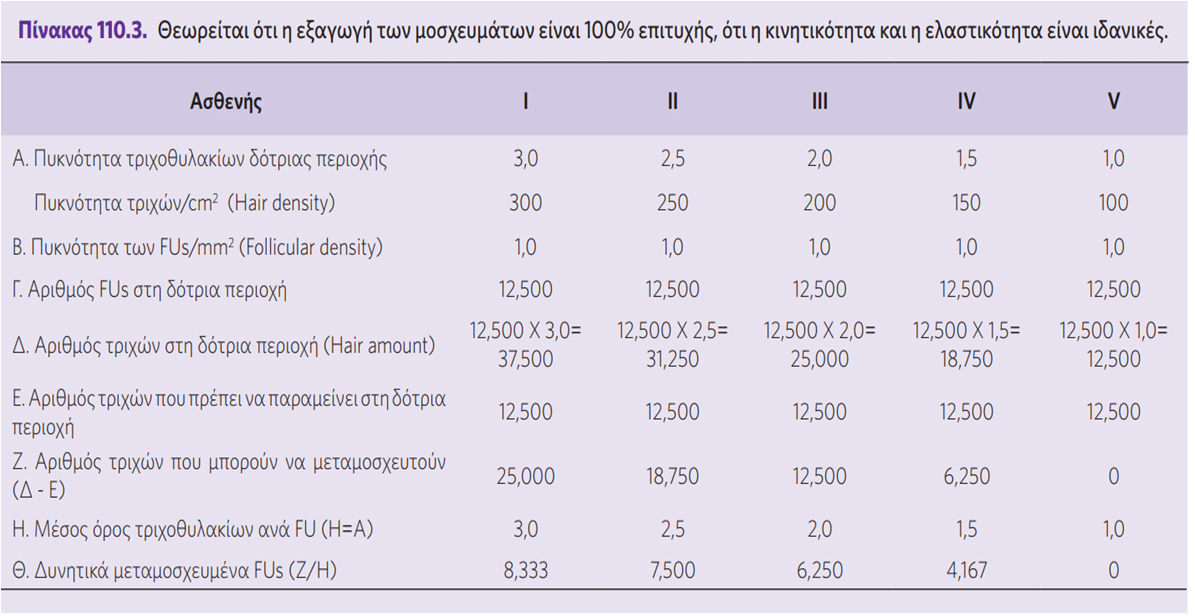
From the above table, we can see that a patient with a hair density of 3 theoretically has twice as many follicular units (FUs) available for transplantation compared to a patient with a hair density of 1.5. This translates into four times more hair follicles that can be transplanted.
Therefore, if we assume that the other hair characteristics—such as thickness, texture, and color—are similar, the patient with a density of 3 will require only one-quarter of the strip graft needed by a patient with a density of 1.5 to cover the exact same area.
Summary
While most patients focus on the density of the donor area and the number of grafts in the recipient area, an experienced hair transplant surgeon knows that other factors are far more critical. The most important descriptive term in modern hair transplantation procedures is coverage.
Coverage depends partly on the composition of follicular units (FUs)—whether they contain one or multiple hairs—but is mainly influenced by:
-
the diameter of the hairs,
-
their shape, and
-
their color.
Since the main goal for any hair transplant patient is to stop looking thin while using as few grafts as possible, the surgeon must carefully evaluate all these parameters before proceeding with surgery.
An essential diagnostic tool in the 21st century is the Proscope® HR2 video-dermatoscope, which allows highly accurate measurements. Even more importantly, it enables the surgeon to demonstrate and explain these details directly to the patient during the consultation.
 0
0