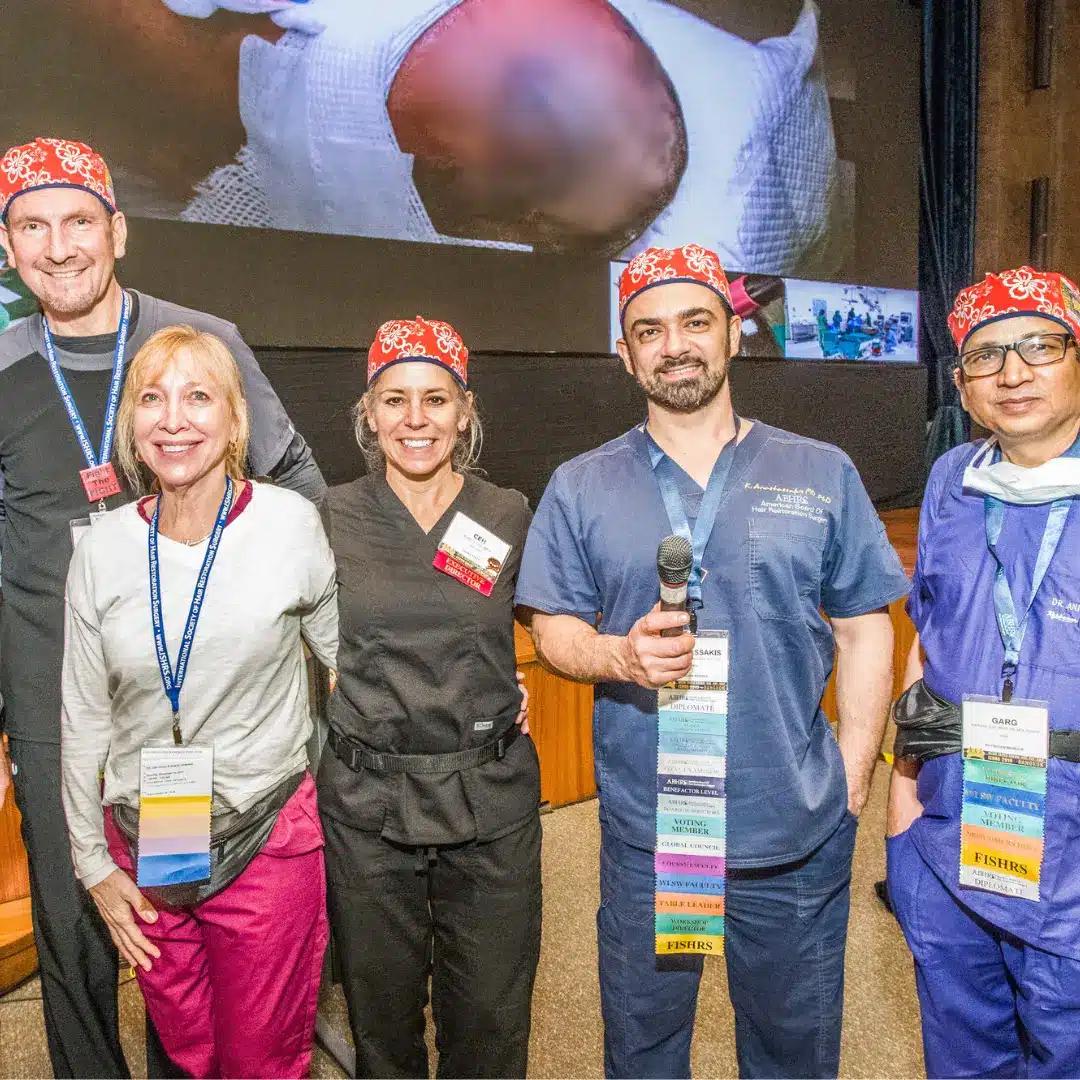


The International Society of Hair Restoration Surgery (ISHRS) recently released its annual global report on hair transplantation.
This comprehensive report compiles data from ISHRS members—medical professionals specialized in surgical hair restoration. The survey highlights global trends in hair transplantation, including its growing popularity, the most widely used techniques, patient motivations, and more.
Here are some key insights from the ISHRS 2020 Annual Report:
ISHRS 2020 Annual Report

How Popular Is Hair Transplant Surgery?
Hair transplantation is considered one of the most popular aesthetic procedures worldwide. In 2019 alone, more than 2,000,000 patients received treatment for hair restoration — marking a 157% increase since 2008. The excellent and natural-looking results now achievable through modern hair transplant techniques, combined with the high level of expertise of specialized physicians, have significantly improved public perception of what hair transplantation can truly offer.

Is Hair Transplantation Only for the Scalp?
Hair transplantation is not limited to restoring hair on the scalp—it is increasingly being used to restore hair growth on other areas of the body as well. According to the ISHRS 2020 Annual Report, 15% of all hair transplant procedures performed on men involved non-scalp areas, with 5% of these targeting the beard or mustache. Among women, 18% of procedures focused on other parts of the body, with 12% specifically involving eyebrow transplantation.
Which Hair Transplant Techniques Are Preferred?
Back in 2010, approximately 75% of hair transplant procedures were performed using the FUT (Follicular Unit Transplantation) technique, while only 25% opted for the FUE (Follicular Unit Extraction) method. Over the years, these figures have shifted significantly. According to the ISHRS 2019 Annual Report, around 60% of hair transplants are now performed using the FUE technique, while FUT accounts for roughly 35% of procedures.
At the same time, the Combo Technique—a combination of both FUE and FUT—has been gaining traction. This approach is typically indicated in very large cases, known as mega sessions, where more than 3,000 follicular units are required. In such instances, harvesting that quantity safely with only one method is often not feasible, and combining both extraction techniques allows for the most efficient use of the donor area.
Naturally, the success of this combined approach relies heavily on the surgeon’s expertise and the experience of their medical team in both FUE and FUT methods.
When it comes to FUE specifically, surgeons are increasingly using finer extraction tools. Today, 62% of doctors utilize punches with a diameter of 0.9 mm or smaller, compared to 52% in 2016. These more refined FUE procedures are typically performed only by highly specialized and experienced hair transplant surgeons. They are never carried out in black-market clinics, where unqualified personnel lacking basic medical knowledge and training perform procedures—often with disastrous results.

Repair Procedures for Failed Hair Transplants
The growing prevalence of illegal hair transplant clinics has become a serious concern in recent years—both for the medical community and for individuals considering hair restoration procedures. These so-called “clinics” rely heavily on low-cost offers to attract clients, often delivering hair transplant services performed by unlicensed, unqualified personnel in unsanitary and unsafe environments.
There have even been documented cases of patient deaths in such facilities. More commonly, however, thousands of patients are left with botched procedures, including minimal or no graft survival, irreversibly damaged donor areas, and unnatural-looking results.
In 2019, ISHRS member physicians reported a significant increase in the number of patients seeking corrective surgeries to repair the damage caused by these “black market” transplants performed by non-physicians or underqualified staff.
The expertise and specialization of ISHRS-affiliated surgeons remains a cornerstone of quality and safety in hair restoration. As of 2019, ISHRS members reported an average of 16 years of experience in the field. The rising demand for hair transplants has also led to a greater professional focus: over 55% of ISHRS physicians dedicate 76% to 100% of their practice exclusively to hair restoration procedures
Why Do Patients Choose Hair Transplantation?
What motivates someone to undergo a hair transplant? Research shows that 37%—just over one in three patients—are driven by social reasons, seeking to improve their hair’s appearance primarily to enhance their chances of finding a partner. Meanwhile, 35% pursue hair transplantation for professional reasons, believing that an improved image will positively impact their career progression.
The final question in the study took a more social angle: Which celebrities—both male and female—were considered to have the most attractive hair in 2019? According to the ISHRS 2020 Annual Report, the members of ISHRS named Eva Longoria and Brad Pitt as having the most beautiful hair among all celebrities worldwide!
Hair Transplantation is Constantly Advancing!
The ISHRS 2020 Annual Report highlights the continuous progress in the field of hair transplantation, along with its growing popularity among the public.
You can view the full detailed ISHRS annual report here
 0
0