

What Are the Most Popular Cosmetic Procedures Among Men Worldwide? Hair Transplantation Tops the List
A question that has gained increasing attention in recent years is:
“Which cosmetic procedures do men prefer globally?”
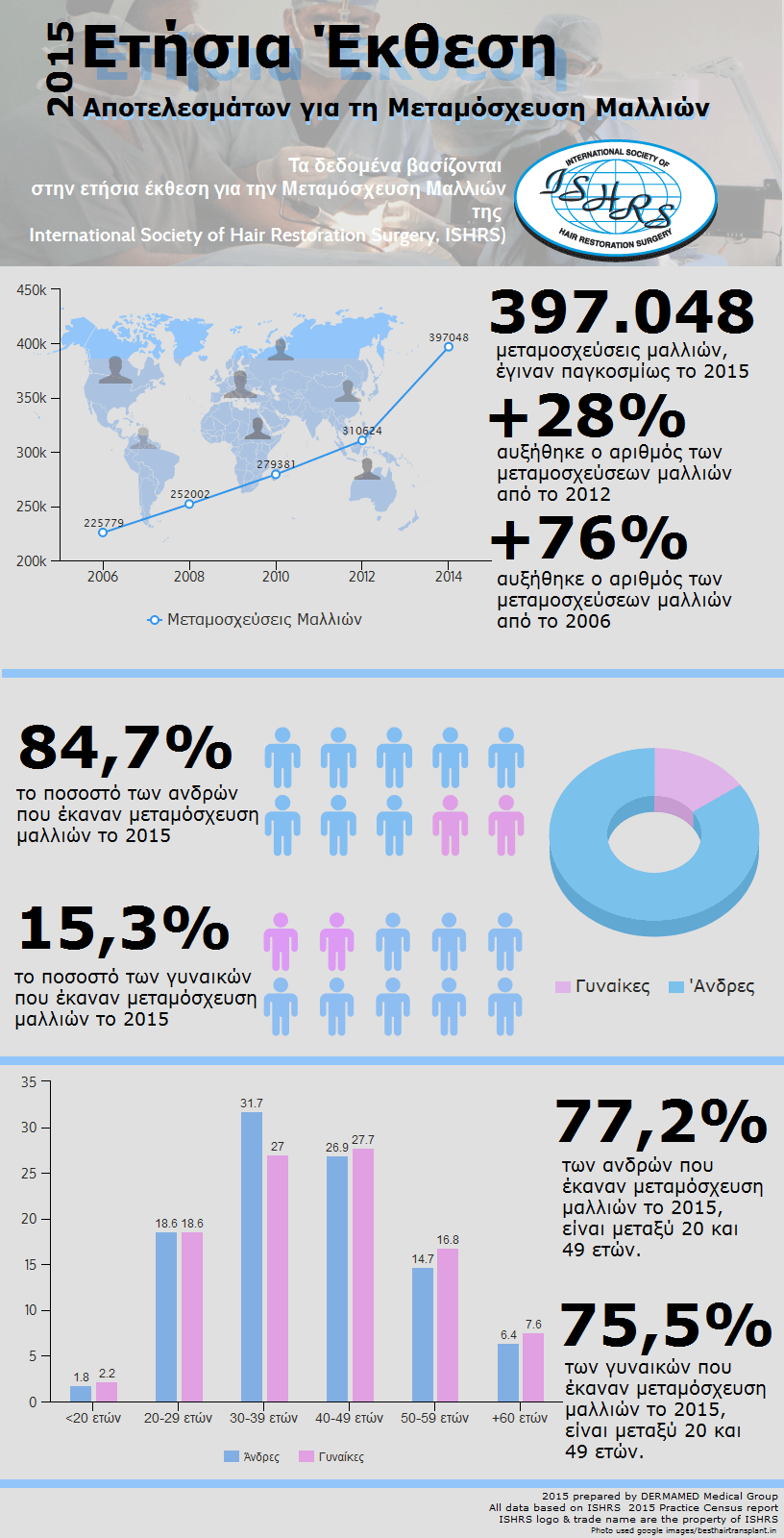
According to recent official data published by the International Society of Hair Restoration Surgery (ISHRS), hair transplantation ranks as the most popular cosmetic procedure among men worldwide.
More specifically, based on the data presented by ISHRS, nearly 400,000 hair transplants were performed globally in 2015 alone—a 28% increase compared to 2012 and a staggering 76% increase compared to 2006.
Notably, 85% of all these procedures were performed on men.
These numbers highlight the growing popularity and acceptance of hair restoration as a safe, effective, and natural-looking solution for male hair loss.
 Hair Transplantation and Its Impact on Perceived Youth, Attractiveness, and Success
While the popularity of this aesthetic procedure continues to grow steadily, it remains relatively unknown just how significantly a man’s image can be influenced—socially and professionally—after restoring his hair through a Hair Transplant.
The perception of youthfulness, attractiveness, and even professional or social success may all be affected, but the extent of this impact had not been clearly studied—until recently. In August 2016, the first scientific study to directly examine this subject was published in the prestigious medical journal JAMA Facial Plastic Surgery.
This study was the first to scientifically explore how hair transplantation influences public perception of a person’s attractiveness, appearance, and perceived success.
Hair Transplant Questions for Men
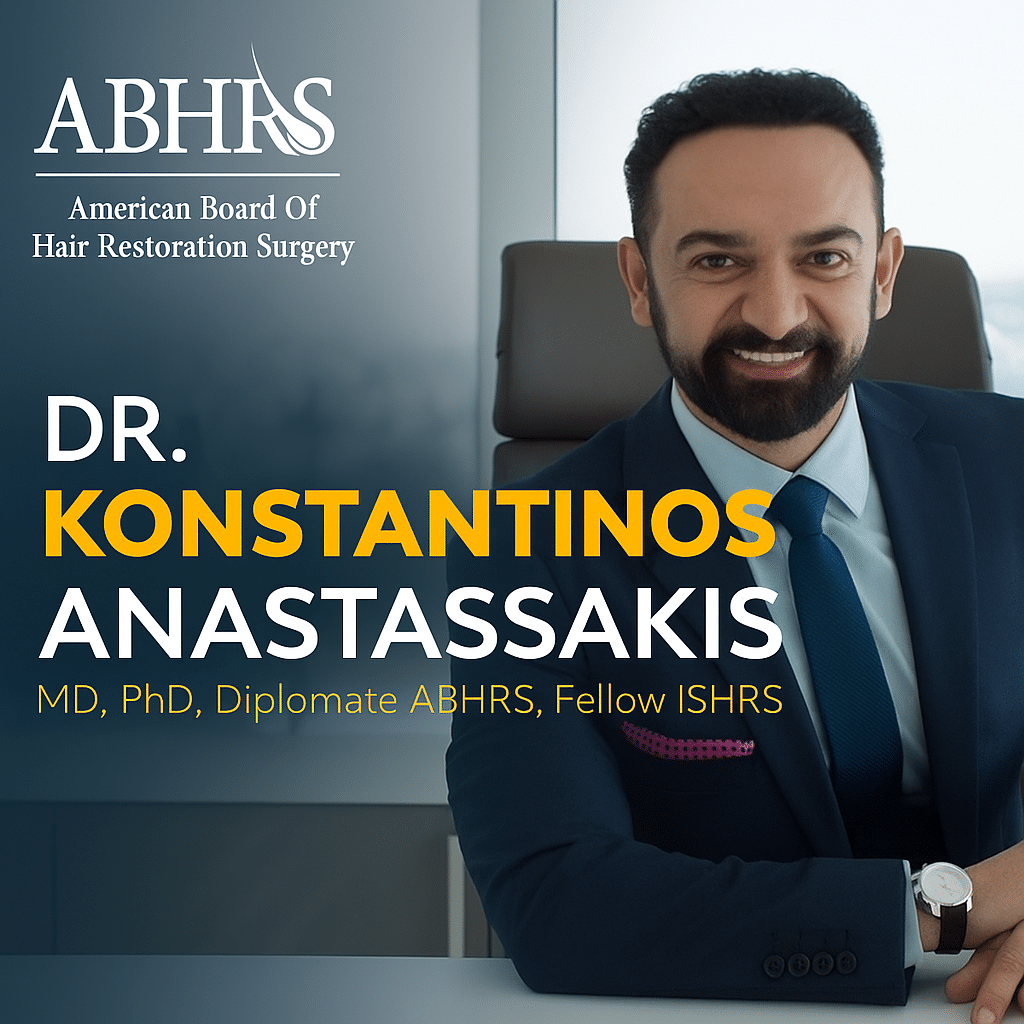
To better understand the findings of a recent study, we spoke with Dr. Konstantinos Anastassakis, MD, PhD—Head & Neck Surgeon, PhD in Medicine, certified specialist in hair restoration surgery, active member of the International Society of Hair Restoration Surgery (ISHRS), and the only Greek surgeon certified as a Diplomate of the American Board of Hair Restoration Surgery (ABHRS).
Q: Doctor, what was the aim of this study? What was it designed to investigate?
Dr. K. Anastassakis:
The aim of the study was to determine whether, and to what extent, hair transplantation can influence a third party’s perception of a man in terms of his age, attractiveness, social and professional success.
Analyzing the data from the ISHRS study, we see that a hair transplant not only improves a man’s appearance but also significantly changes the way he is perceived socially, professionally, and even romantically.
Q: What were the main findings of this study?
Dr. K. Anastassakis:
This was a randomized controlled trial, conducted from November 10 to December 6, 2015, using image databases featuring before-and-after photos of men who had undergone hair transplant surgery.
122 participants, randomly selected across all age groups, were shown side-by-side images of the same individual—before and after the procedure—and asked to compare the two photos. Out of 13 image pairs, 7 showed men who had undergone a hair transplant, and 6 were control subjects who had not.
Participants evaluated each photo using several parameters, including age, attractiveness, success, and likeability—how likable the person appeared to them.
The results showed that, almost unanimously, men post-hair transplant were rated as younger and more attractive than before. They were also perceived as more successful and likable compared to their pre-transplant appearance.
These four key aspects—youth, attractiveness, success, and social appeal—are all proven to play an important role in both professional advancement and social integration. The study conclusively demonstrated that hair transplantation can positively influence public perception across all four areas.
Q: How reliable are these findings?
Dr. K. Anastassakis:
This is the first official, scientifically designed study to explore the social impact of hair transplantation on men.
Of course, the crucial role hair plays in a man’s appearance has been established in scientific literature for decades. As early as the 1970s, studies confirmed that hair significantly influences one’s appearance and attractiveness—whether a person is perceived as good-looking or not. Moreover, it’s been shown that those who are perceived as more attractive tend to have a notable advantage in every interpersonal interaction
Q: So what are the actual benefits of a hair transplant?
Many men suffer from hair loss due to androgenetic alopecia—the most common cause of male baldness, which is purely genetic. It affects 99 out of 100 men with hair loss.
However, it’s important to clarify that androgenetic alopecia does not reflect a man’s physical or mental strength, intelligence, personality, or fertility. Its impact lies entirely in the realm of perception—how others view us based on natural tendencies and culturally shaped beauty standards, often referred to as stereotypes.
Society unconsciously associates youth, vitality, and attractiveness with traits like a full head of hair, a fit physique, or tall stature. These stereotypes, as unjust and superficial as they may be, have remarkable influence over how we behave towards others.
In fact, studies have shown that we tend to be overly lenient with attractive individuals and unfairly harsh with those considered less attractive.
Even though this behavior is discriminatory and socially undesirable, science merely reports what is objectively true—not whether it’s “politically correct.”
Hundreds of studies confirm that individuals perceived as less attractive face disadvantages in all interpersonal interactions—from fewer career opportunities to reduced chances of finding a life partner.
These findings are also constantly reinforced in clinical practice. As hair restoration specialists, we witness the emotional and social transformation our patients experience following a hair transplant.Ultimately, the difference in appearance before and after a hair transplant not only boosts self-confidence, but also influences how others perceive the individual—leading to more positive social and professional interactions.

Q: Does hair transplantation ultimately contribute to happiness and life satisfaction in men?
Dr. Konstantinos Anastassakis:
Absolutely—as long as the result is successful, natural-looking, and harmoniously matches the individual’s facial features and age.
What I can tell you with certainty is that a hair transplant is not “just a few more hairs.”
Men dealing with hair loss often suffer from lower self-esteem and a negative self-image. If you ask me, there’s no valid reason for this—these men are all unique and worthy individuals. However, since they can’t easily change the deeply ingrained and often unfair stereotypes they hold about themselves—or those held by others—I take on the responsibility of helping them restore both their appearance and their confidence.
The transformation that modern hair transplantation can offer is truly remarkable. It helps rebuild confidence, makes someone look younger, and often encourages the individual to embrace and improve other aspects of their life.
I’ve had many patients who, following their hair transplant, went on to quit smoking, adopt healthier diets, start exercising regularly, and, in general, reclaim their youthfulness. When they start to like what they see in the mirror, they feel motivated to improve further—and they often succeed!
Modern hair transplants deliver completely natural density and appearance. And what I see every day in my practice is a big, genuine smile from each patient when they look at themselves in the mirror after the procedure.
But let’s not forget: hair transplantation is a medical procedure. It is extremely important who you trust with your scalp, because the result will be there every day—you’ll see it in the mirror for the rest of your life.
The most crucial decision is choosing the right specialist. Anyone considering a hair transplant must trust only the most highly qualified and specialized physician.
Q: What advice would you give to someone considering a hair transplant?
Dr. Anastassakis:
Rather than simply offering advice, I would encourage them to first reflect on their personal reasons for wanting a hair transplant—and then begin their search for the right hair transplant surgeon.
Yes, it’s true that hair transplantation can make us appear younger, more attractive, and even more successful—as studies have shown. But let’s be clear: it won’t save a marriage, and it won’t magically make people love you more.
What it does do is help you feel better about yourself. It helps you feel more attractive and confident—and that’s something people around you, especially those meeting you for the first time, can immediately sense. It’s your confidence, your calm energy, and your youthful spirit that will make an impression.
What I always tell my patients is:
“It’s important to proceed with a hair transplant because you love and care for yourself—not for anyone else.”
Q: According to ISHRS statistics, what do you think explains the increasing number of hair transplants being performed?
Dr. Anastassakis:
Today’s modern techniques have become highly refined, and when performed by skilled specialists, the results are virtually indistinguishable from natural hair—as if it had never been lost.
More and more men—and women—are learning how modern hair transplantation can improve their appearance and boost their confidence, and they come to see a hair restoration specialist with great anticipation and excitement.
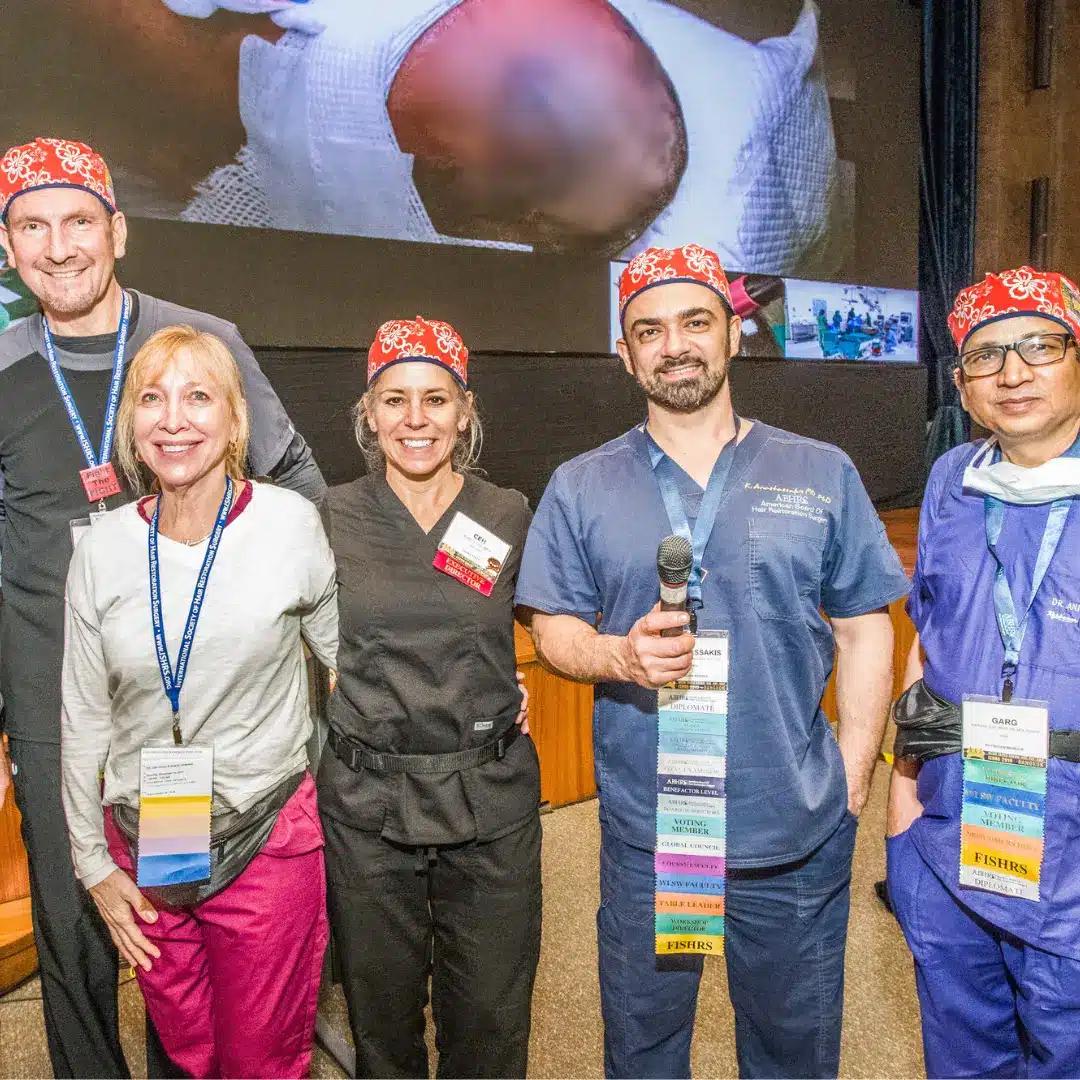
For those of us who specialize in hair restoration surgery, attending the annual ISHRS (International Society of Hair Restoration Surgery) conference is an invaluable experience. It allows us to exchange knowledge and stay up-to-date with scientifically validated best practices.
From September 28 to October 2, the ISHRS annual global conference was held in the United States, and, as every year, I participated with great enthusiasm. These events are a vital source of innovation and knowledge that raise the global standards of hair restoration surgery.
Most importantly, this expert-level training allows certified hair transplant surgeons to deliver even better, more refined outcomes to patients seeking to improve their appearance.
Q: Are there any new developments expected at this year’s ISHRS conference?
Dr. Anastassakis:
Every year, the conference presents a wealth of new scientific insights and innovations that greatly assist us in our clinical work.
The topics cover a wide range—from technical and scientific advancements to important ethical considerations. For example, a key topic this year is the ethical and legal question of whether it is acceptable for non-physicians to perform FUE hair transplants.
As participants, we have a duty to inform the public afterward—to clearly explain what is valid and what is not, so that prospective patients can make well-informed decisions and choose the surgeon who can truly deliver the best aesthetic outcome.
 0
0