

Hair Transplantation with FUE and FUT Combo Hair Transplant
FUE and FUT Hair Transplant surgery combines the two scientifically accepted surgical techniques in modern hair restoration. According to the world’s only official scientific authorities in the field the ISHRS (International Society of Hair Restoration Surgery) and the ABHRS (American Board of Hair Restoration Surgery) — the two validated methods are: Follicular Unit Transplantation (FUT) Follicular Unit Excision (FUE).The key difference between these two hair transplant techniques lies in how the follicles are harvested from the donor area:In the FUT technique, follicles are extracted as a single strip, which is then dissected under specialized stereo microscopes into individual follicular units. In FUE hair transplant surgery, follicles are extracted one by one directly from the donor area.

What to Expect After a Hair Transplant – Anastasakis Hair Clinic
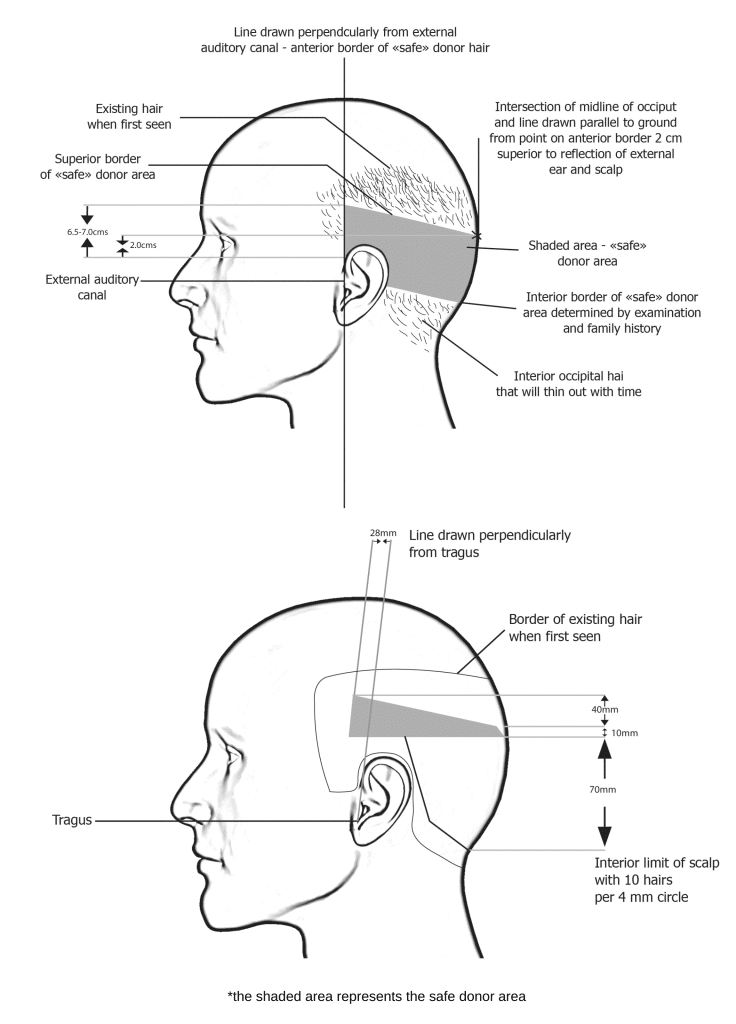
In addition, modern hair transplant surgery has provided effective solutions even in cases where the follicles from the safe donor zone of the scalp are insufficient
With Body Hair Transplantation (BHT) — where follicles are harvested using the follicular unit excision FUE technique from other parts of the body — we can obtain high-quality donor hair grafts from areas such as the chest, beard, and more. For a hair transplant surgeon to deliver a dense and natural-looking result, it is essential to have expert knowledge and mastery of all available hair transplant methods in modern hair restoration — and to be able to combine them effectively depending on the unique needs of each patient

A clinic that only performs FUE hair transplant surgery is likely doing so because the physician is not trained or capable of performing FUT hair transplant surgery. It’s clear that a specialized and ethical surgeon should be able to perform both follicular unit extraction and follicular unit transplant procedures — FUE and FUT.
At Anastasakis Hair Clinic, we offer a unique combined surgical approach that brings together the best elements of both FUT and FUE hair transplant techniques. This method — FUE and FUT Combo Hair Transplantation — is a procedure that only a few hair transplant clinics worldwide are able to perform.It allows us to provide patients with a larger number of follicular grafts in a single session without compromising the safety of the donor area, and without the risks associated with overharvesting, a practice commonly seen in some foreign clinics — including those in Turkey.
Choosing the Right Combination in FUE and FUT Hair Transplant – Combo Hair Transplantation
Depending on each patient’s individual needs and the characteristics of their donor area, there are various ways to combine the FUT and FUE hair transplant techniques.This combination approach gives the surgeon the flexibility to collect the number of follicular units needed to effectively cover the patient’s thinning areas.


In the FUE and FUT combination approach, follicles are harvested both in a continuous donor strip (FUT) and individually (FUE).
-
FUT and FUE and/or BHT
-
Limited FUT from the occipital (back) donor hair area combined with FUE and/or BHT
-
FUT from the lateral sections of the safe donor zone combined with FUE and/or BHT
-
FUT + BHT
-
FUE + BHT
From the above, it becomes clear that in-depth knowledge of modern hair transplant surgery gives the surgeon a wide range of options and strategies to deliver dense and natural-looking results for patients who place their trust in them.However, to be able to do this, the surgeon must have full mastery of and be able to perform all scientifically accepted hair transplant procedures in modern hair restoration.
When Is FUE and FUT – Combo Hair Transplantation Necessary?
As mentioned earlier, the decision to proceed with FUE and FUT – Combo Hair Transplantation depends on two key factors: The number of follicular units the patient needs to achieve a dense and natural result, and The capacity of the donor area specifically, how many follicular units can be safely harvested without compromising the donor zone.
In cases where the FUE and FUT – Combo approach is used, the procedure typically begins with the FUT technique, followed by the harvesting of additional follicular units using FUE, either from the scalp or from other parts of the body (via Body Hair Transplantation – BHT).
When Is It Necessary to Combine Techniques with FUE and FUT – Combo Hair Transplantation?
A physician may choose the FUT+FUE Combo solution in the following cases:
-
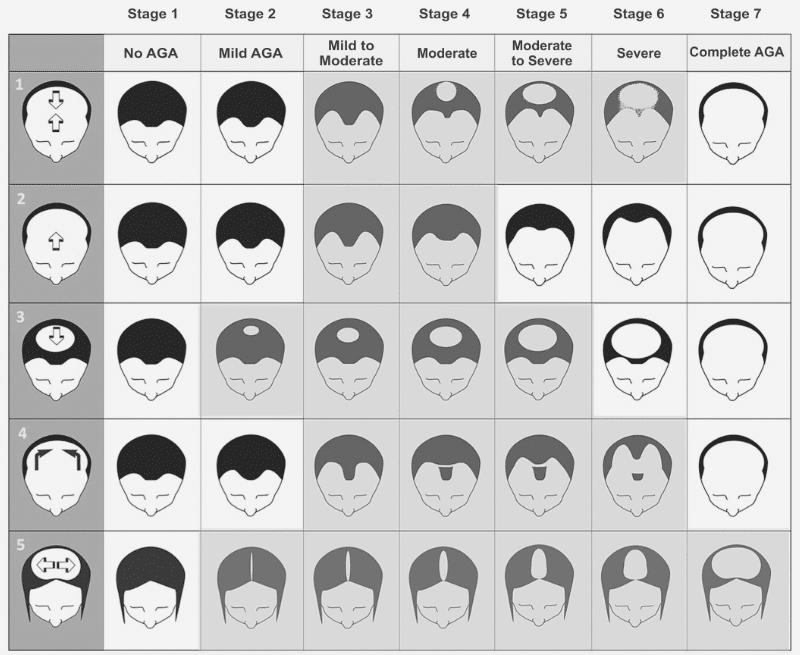
In advanced stages of androgenetic alopecia – Stage 4, 5, 6, or 7! Both individuals with moderate thinning (classified as Stage 4) and those with more advanced hair loss (Stages 5, 6, and 7) are ideal candidates for the Combo technique. Ιn these cases, we are typically dealing with a mega session — involving more than 3,000 follicular units. If the surgeon determines that neither technique alone can be used with complete safety, then FUE and FUT – Combo Hair Transplantation is the optimal solution. The majority of the grafts will be harvested using the FUT technique, and FUE will be used to collect any additional grafts as needed.
-
When the safe donor hair zone is extremely narrow. Due to this particular limitation, both techniques are required — with FUT as the primary method and FUE as the secondary.
-
When the donor hair area is sparse or consists of single-hair follicular units with very fine hair. Again, in these cases, both techniques are needed, with FUT as the primary method and FUE as the secondary. FUT can safely provide a large number of follicular grafts, but due to this particular limitation, the additional multi-hair grafts will be harvested using the FUE technique.
-
When the density of the donor hair area is not uniform throughout its entire extent. **The same applies as in the previous case.**Due to this particular characteristic, the use of both techniques with FUT as the primary method and FUE as the secondary will achieve the desired result.
-
When there is a risk of further extensive progression of male androgenetic alopecia. Hair follicles are each patient’s most valuable asset. This means they must not only be wisely invested, but the physician must also be able to predict the progression of hair loss and plan ahead for future follicular needs. Combining FUT and FUE now will help preserve the future harvesting potential of the donor hair area, should additional procedures be needed later on.
-
When there is a lack of elasticity in the donor hair area. When a large number of grafts is needed, but the limited elasticity of the scalp does not allow for a discreet incision, then FUE is chosen as the primary technique, with a smaller-scale FUT procedure performed as a secondary method.
-
When the scalp is excessively elastic. In patients with hyper-elastic scalp tissue, performing a hair transplant using the FUT technique may lead to widening of the linear scar, according to the scalp laxity paradox the greater the elasticity, the higher the risk of a widened donor scar.Therefore, in such cases, FUE is used as the primary technique, while FUT is limited in scope and performed only in the occipital region of the donor hair area.

- Social or personal reasons. When a high number of grafts is needed, but social or personal reasons lead the patient to prefer FUT, then a combination of both techniques, with FUT as the primary method, can meet the needs of the recipient area. As a result, fewer follicular units will be needed via “non-shaven FUE”, offering a discreet solution that respects the patient’s preferences.

Special Cases Where FUE and FUT – Combo Hair Transplantation Is Selected
In many cases involving the repair of previous hair transplants, the combination of techniques can resolve issues that arise when the following conditions are present:
-
Previous failed hair transplants using damaging techniques that resulted in extensive or scattered scarring in the donor hair area (e.g. strip surgery, punch grafts, scalp reductions, scalp flaps, or donor site necrosis)
-
Depleted donor hair area due to overharvesting from a previous FUE procedure
-
Scarring in the donor hair area from an earlier surgery or trauma
-
A donor scar needs to be removed or corrected
-
When marks from a previous SMP (Scalp Micropigmentation) procedure need to be removed

All these advancements now give our patients the opportunity to choose the hair transplant procedure that best suits them. However, this also introduces a new dilemma — which technique, and for whom?
Anyone considering a hair transplant should be familiar with the advantages of each hair transplant method in order to make an informed decision that best matches their individual needs.But far more important is choosing the right clinic, regardless of the technique, to ensure the best possible outcome.

Every clinic should approach hair transplantation as a form of art! If they are proud of their craft, this will be clearly reflected in the high-resolution photos of hair transplant results on their website. It will also be evident in their patient videos, where individuals share their personal experiences. Any hair transplant clinic that features only a few photos, or uses images that are poorly lit or low in resolution, is a clear sign that this is not the right clinic for you. Therefore, take the time to carefully and patiently research the hair transplant clinics offering hair transplant surgery. Look into which doctors actually perform the surgeries, their certifications and expertise, the size and experience of the medical teams involved in each case, and whether the clinics are fully knowledgeable and proficient in all modern hair transplant techniques.
The two scientifically accepted hair transplant procedures are FUT (Follicular Unit Transplant) and FUE (Follicular Unit Extraction). The main difference between them lies in how the follicular units are harvested. Each patient’s unique needs must be considered when deciding which hair transplant method is best suited for them.
At Anastasakis Hair Clinic, we are able to deliver full, natural-looking results, often by combining both techniques when necessary. To ensure that our patients experience truly satisfying results, we place great importance on personalized care and the use of the most appropriate hair transplant procedures for each individual case. If you would like to learn more about the cost of a hair transplant, our clinic provides a completely free evaluation, easily and quickly — from the comfort of your home.
Do you have questions?
We’re here to help! Find out if you’re a suitable candidate for hair transplantation by using our online consultation form, and we’ll provide answers to all your questions — from the comfort of your home.
Submit Your Photos for a Personalized Assessment
To help us provide you with an accurate estimate for the cost of your hair transplant, you can use our contact form to submit your contact details, a brief history of your hair loss, and photos of both the recipient and donor hair areas. Your information will be reviewed within 2–4 business days, and a member of our clinic’s team will contact you to discuss the options and solutions we recommend specifically for you.
 0
0