

Hair loss and thinning concern many people as they age, especially after 50, when androgenetic alopecia becomes more pronounced. However, modern medicine, through hair transplant after 50 or even earlier—particularly using the FUE hair transplant method—offers solutions that can restore hair density and appearance, regardless of age.
Hair transplant is considered for various age groups, each with its own unique factors and suitability. In this article, we will focus on the specific considerations and benefits for those over 50.
At Anastasakis Hair Clinic, a center with extensive experience, we believe it’s never too late to transform your hair and regain your lost confidence through a successful hair transplant surgery after 50.
Age and Hair Transplant: Myths and Facts
The notion that hair transplantation is an exclusive privilege of younger individuals is a widely held but incorrect myth. Experience and modern clinical studies show that men over 50 who are suitable candidates for hair transplant after 50 can not only safely and successfully undergo the procedure but, in many cases, are actually ideal candidates. Suitability for hair transplant procedures is determined by factors beyond just age group, including overall health, scalp condition, and the stability of hair loss.
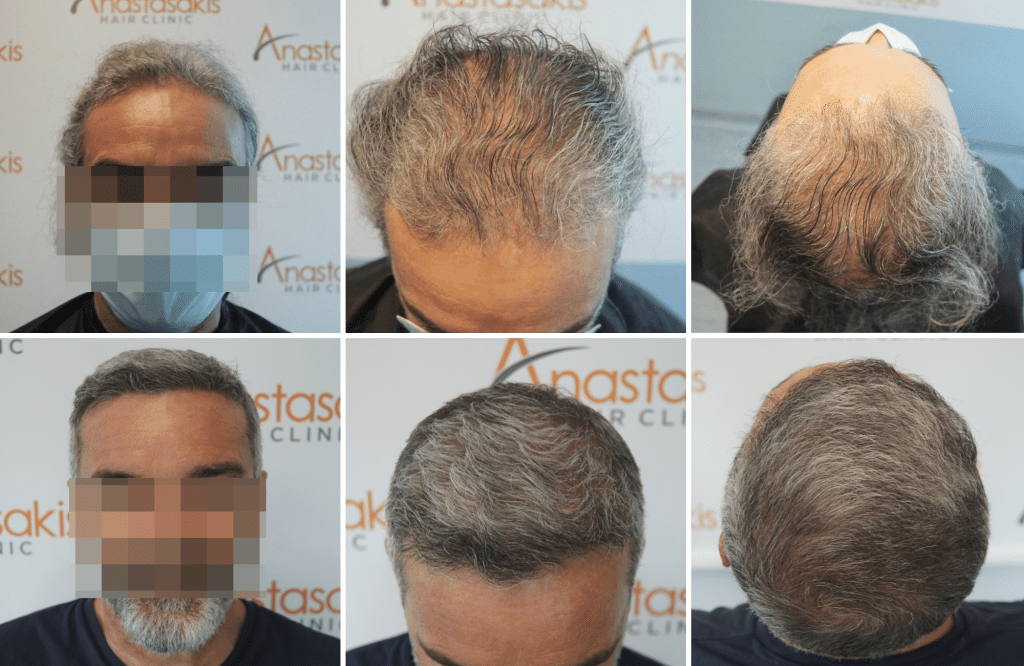
Before-and-after photos of a patient from Anastasakis Hair Clinic. See more real cases and hair transplant results.
According to the International Society of Hair Restoration Surgery (ISHRS), men over 50 who choose to undergo hair transplant can expect excellent results from the procedure. The optimal age for a hair transplant is determined by both the patient’s age and the stability of their hair loss, rather than chronological age alone.
The main reason that makes individuals over 50 ideal candidates is that they typically experience stabilized hair loss or androgenetic alopecia, which makes the planning of the hair transplant more predictable and effective. Surgical Hair Restoration are available for all age groups, and the approach is tailored to the patient’s age to ensure the most natural and satisfying results.
The Importance of Stable Hair Loss and the Donor Area
As we age, the progression of androgenetic alopecia (the most common cause of male hair loss) slows down or stabilizes. This means that in patients aged 50 and over, hair loss has reached a more predictable stage, often referred to as stable hair loss. Stabilized hair loss is important because it allows for better planning of hair transplant, as future changes in hair loss are less likely. In fact, according to Dr. Anastasakis, men experiencing hair loss who are over 45-50 years old are theoretically ideal candidates for a hair transplant, as by this age, hair loss is generally stabilized and significant deterioration is not expected in the future.
For the specialized surgeon, this hair loss stability is a valuable asset, allowing for more precise planning of the hair transplant strategy, knowing that the existing hair growth is unlikely to change significantly moving forward. Additionally, identifying the specific type of pattern hair loss is crucial for accurate assessment and determining the most appropriate treatment options.
When evaluating candidates with hair loss, the surgeon must carefully assess the donor area to ensure there is adequate donor hair and a sufficient number of healthy donor hair follicles. The presence of healthy donor hair and the quality and quantity of donor hair follicles are essential for achieving natural results and a successful outcome. Evaluation of donor hair and healthy donor hair is a key part of the pre-procedure assessment to determine the viability of the transplant.
Is Hair Transplant After the Age 50 Safe?
The safety of surgical hair restoration after 50 depends on the medical evaluation of the candidate and proper preparation. Modern hair transplant techniques, such as FUE (Follicular Unit Extraction) and FUT (Follicular Unit Transplantation), are extremely safe and effective for patients over 50. FUE involves extracting individual hair follicles, which results in minimal scarring and is ideal for those who prefer short hairstyles. In contrast, FUT requires removing a strip of follicular units, but allows for the transplantation of a larger number of hair grafts in a single session. The choice between these hair transplant techniques depends on the number of follicular units needed and patient’s characteristics. Hair transplantation does not require hospitalization, and recovery is quick, allowing patients to return to their daily activities promptly.
Benefits of Hair Transplant After the Age of 50
Since appearance remains important at every age, hair transplant in the age of 50 offers men not only a refreshed and rejuvenated look but also the opportunity to restore a youthful appearance and address age related hair loss and thinning.
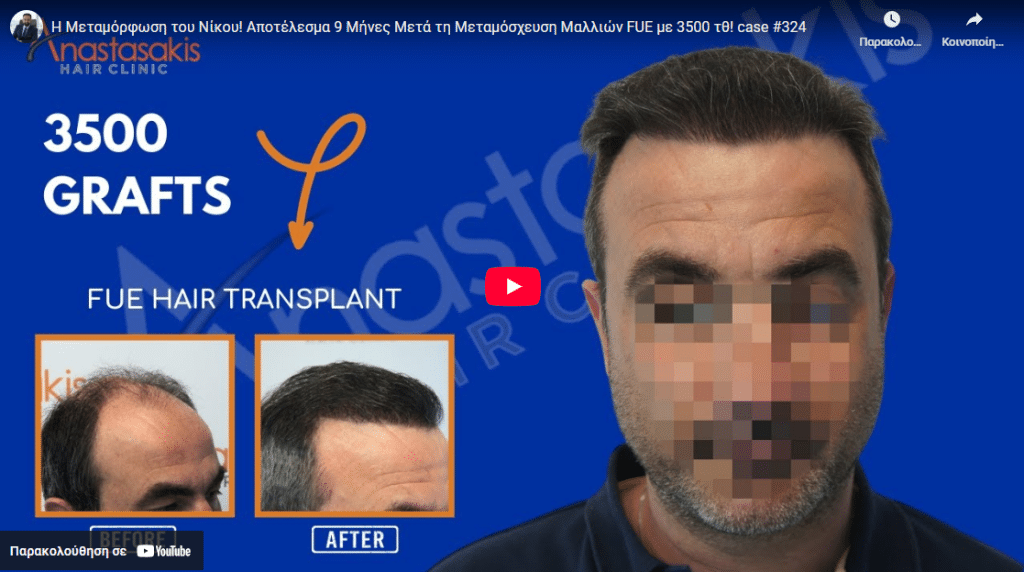
See a completely natural hair transplant result from Anastasakis Hair Clinic.
Significant hair loss, thinning hair, and thinner hair are common concerns for men over 50, often due to male pattern baldness, male pattern hair loss, and progressive hair loss. As hair loss progresses, excessive hair shedding and changes in the remaining hair can prompt individuals to consider a hair restoration procedure. Planning for future hair loss is also an important part of achieving lasting results.
Key Benefits of Hair Transplant After the 50th Year of Age
The main advantages of undergoing a hair transplant after the age of 50 include:
- Permanent Results: The grafts are taken from areas of the scalp that are resistant to hair loss, ensuring long-lasting outcomes.
- Rejuvenated Appearance: Restoring hair density contributes to a more youthful and refreshed look.
- Boosted Self-Esteem: Improving the density of the hair, triggers a positive impact on self-image and mental well-being.
- Modern Techniques: FUE hair transplantation is a popular, minimally invasive option for older adults with male pattern baldness, offering natural results and a quick recovery.
- Cost Consideration: Hair transplant cost is an important factor, and many patients find hair transplantation to be a valuable long-term investment due to its effectiveness.
Psychological Benefits of Surgical Hair Restoration after 50
Restoring hair later in life is closely linked to improved self-image and overall mental well-being. Men over 50 with hair loss—whether still active in their professional careers or enjoying retirement—often find that their renewed appearance:
- Boosts their self-confidence
- Enhances their social interactions
- Rekindles their motivation for activities and social engagement
Many patients report feeling “younger” not just externally, but internally as well—an effect that positively influences their overall quality of life. After undergoing a hair transplant, it’s not uncommon for individuals to begin taking better care of their health, body, and personal appearance. Positive lifestyle factors, such as maintaining a healthy diet and regular exercise, can further enhance the results and support long-term hair health.
While a flawless hair transplant with a completely natural result may not make someone look 20 again, it certainly helps turn back the clock a few years.
When to Choose Hair Transplant Surgery After 50
The truth is, there is no upper age limit for undergoing a hair transplant—even individuals over 60 with stable hair loss can achieve successful results, provided certain conditions are met.
For those who are not suitable candidates or who prefer less invasive options, non surgical treatments are available as effective alternatives.
Factors to Consider Before Undergoing a Hair Transplant After the Age of 50
There are specific factors that must be carefully evaluated before proceeding with a hair transplant after the age of 50. These can significantly influence the final outcome of the procedure
- Quality and Density of the Donor Area
The condition of the donor area—typically the hair on the back and sides of the head, where grafts are harvested—is perhaps the most critical factor in determining the success of a hair transplant. It is essential to assess whether there is enough donor hair and a healthy scalp, as both are crucial for a successful procedure and long-term results.
Many individuals over 50 still maintain sufficient donor density. The higher the density and the better the hair characteristics (e.g., thickness, texture), the more suitable the candidate and the greater the achievable density in the transplanted area.
Conversely, a very sparse or weak donor area limits the number of viable grafts, thus affecting the coverage that can be achieved. In such cases, the doctor may recommend a more conservative approach or explore alternative solutions, such as treatments aimed at strengthening existing hair.
- Overall Health Condition
The general health of the patient is always a top priority before any surgical procedure. Some individuals over 50 may have chronic conditions (e.g., hypertension, diabetes) or be on medication, but as long as these conditions are well-managed and the patient is in overall good health, age alone is not a barrier.
Hair transplant is performed under local anesthesia and is minimally invasive, making it safe even for older patients. Your physician will take a full medical history and may request additional tests to ensure no underlying conditions—such as severe blood clotting disorders or advanced cardiovascular disease—pose a risk.
Fortunately, such contraindications are rare. Most healthy individuals in their 50s or 60s can safely proceed with the procedure after medical clearance.
- Realistic Expectations
A key factor for a successful outcome is having realistic expectations that align with what the procedure can actually deliver. After the age of 50, hair thinning may be more advanced and the donor area more limited. This means the transplant will provide visible improvement and increased density—but may not restore the thick hair someone had in their 20s.
An experienced surgeon will discuss the likely results with honesty and help you set priorities (e.g., focusing on the hairline versus the crown). Open communication helps ensure your goals are aligned with realistic outcomes, minimizing the risk of future disappointment.
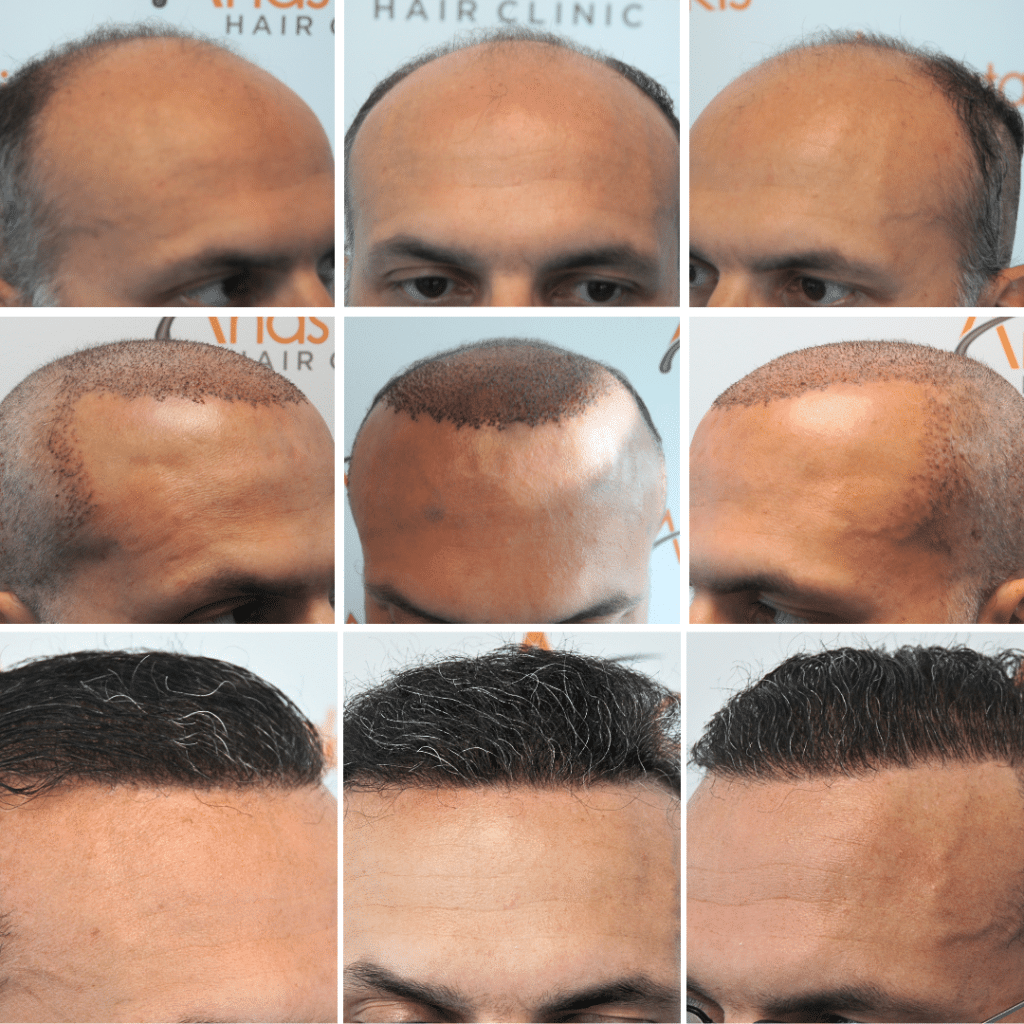
Fortunately, most mature patients usually have more realistic expectations — even partial restoration can significantly satisfy them, as it provides an improved appearance and boosted self-confidence.
For example, it has been observed that a subtle “filling in” of a very thinning crown may be considered a success by an older patient, even though the doctor might describe it as a moderate result. The key lies in proper guidance and clear explanations from the physician, so that expectations align with what is achievable and every patient is satisfied with the final outcome.
- Predictability of Alopecia
An advantage for hair transplant candidates at an older age is that their androgenetic alopecia has usually already revealed its full extent. At 50 and above, hair loss typically progresses very slowly — or may have even stopped — compared to the rapid deterioration often seen in younger men with hair loss. Age related hormonal changes, such as fluctuations in testosterone and DHT, play a significant role in hair thinning and baldness at this stage of life. These age related hormonal factors, especially around menopause or after 50, naturally impact hair health and contribute to the progression of hair loss.
This allows the surgeon to predict the pattern of thinning with considerable accuracy and to design the hair transplant taking into account not only the existing thinning areas but also any potential future progression.
In individuals aged 25–35, hair loss is often unpredictable, which is why a more conservative approach is recommended until the final extent of alopecia becomes clearer. In contrast, at 50+, with a clear picture of how much hair has been lost and how much remains, the doctor can develop a long-term hair transplant plan that effectively addresses today’s needs while preserving a natural look for the future.
- Technological Support and Personalized Hair Transplant Planning
Modern hair transplant procedures makes full use of the latest technologies and personalized design techniques, which is particularly important for older patients who may require more careful planning. Techniques such as FUE and FUT are performed with the aid of high-precision and magnification tools, ensuring that the extraction and implantation of hair follicles are carried out with maximum safety and effectiveness.
At the same time, every treatment plan is tailored to the individual: the surgeon carefully considers the patient’s age, hair loss stage, facial features and proportions, hair quality, and aesthetic preferences in order to design a new hairline and graft distribution that looks completely natural and harmoniously suited to the person.

Pre-Transplant Preparation: Getting Ready for Your Procedure
Preparing for a hair transplant is a vital step toward ensuring a smooth and successful hair restoration journey. Before your hair transplant, it’s important to focus on both your physical and mental readiness. Start by adopting a balanced diet rich in essential vitamins and minerals—nutrients like biotin, zinc, and iron are known to support healthy hair follicles and promote natural hair development. Avoiding excessive alcohol consumption and quitting smoking can also improve your body’s ability to heal and optimize the results of your hair transplant procedure.
Your hair restoration surgeon will provide you with a detailed list of pre-transplant instructions tailored to your needs. This may include temporarily stopping certain medications, such as blood thinners, that could interfere with the hair transplant process. It’s also a good time to discuss any questions or concerns you may have, ensuring your expectations are realistic and aligned with what the procedure can achieve. By following your surgeon’s advice and taking care of your overall health, you’ll be setting the stage for a successful hair transplant and a positive hair restoration experience.
Post-Transplant Recovery: What to Expect After Surgery
After your hair transplant, the recovery process plays a crucial role in achieving the best possible outcome. In the days following the procedure, it’s normal to experience some swelling, redness, or mild discomfort around the treated areas. These symptoms are typically short-lived and can be managed with prescribed pain medication and gentle care, as recommended by your surgeon.
To protect your newly transplanted hair follicles, it’s important to avoid strenuous activities, heavy lifting, and direct sun exposure for several days. Your hair restoration specialist will provide you with specific aftercare instructions, including how to wash your hair, which gentle shampoos to use, and when to return for follow-up appointments. Refraining from smoking and alcohol during the initial recovery period can further support healing and hair growth. By carefully following your surgeon’s guidance and taking good care of your transplanted hair, you’ll help ensure a smooth recovery process and set the foundation for healthy, natural hair growth.
Potential Risks and Complications of Hair Transplant Surgery After 50
While modern hair transplant is generally safe and minimally invasive, it’s important to be aware of potential risks and complications, especially for older patients. Some possible issues include infection, minor bleeding, or scarring at the donor or recipient sites. Older individuals may also face a slightly increased risk of complications due to underlying health conditions such as high blood pressure or heart disease, and the healing process can sometimes be slower compared to younger patients.
Your hair restoration surgeon will thoroughly assess your overall health and medical history before recommending hair restoration surgery, ensuring you are a suitable candidate for the procedure. By openly discussing any pre-existing conditions and carefully following your surgeon’s instructions, you can minimize the likelihood of complications. Most importantly, choosing an experienced hair restoration specialist and adhering to all pre- and post-operative guidelines will help ensure your hair transplantation is both safe and effective, even after the age of 50.
Maintaining Results: Long-Term Care After Your Hair Transplant
Achieving a successful hair transplant is just the beginning—maintaining your results over the long term is equally important. To keep your transplanted hair looking its best, continue to follow a healthy lifestyle that includes a balanced diet, regular exercise, and proper hair care. Avoid excessive heat styling and protect your scalp from prolonged sun exposure to preserve the health of your hair follicles.
Regular follow-up appointments with your hair restoration surgeon are essential for monitoring your progress and addressing any concerns early on. Your surgeon may recommend additional hair restoration options, such as medication or low level laser therapy, to further support hair growth and maintain hair density. By staying proactive with your scalp and hair care, and by keeping in close contact with your hair restoration specialist, you can enjoy a full, healthy head of hair for years to come and maximize the long-term benefits of your hair transplant.
Experience at Anastasakis Hair Clinic
Anastasakis Hair Clinic brings years of expertise in hair transplant, offering personalized solutions tailored to the unique needs of each patient. Dr. Anastassakis utilize advanced techniques, including FUE (Follicular Unit Excision) and follicular unit graft implantation(FUT), to ensure optimal results for patients over 50. With a deep specialization in hair restoration, we leverage the biological maturity of patients over 50 and combine it with advanced scalp restoration techniques to deliver customized treatments with guaranteed natural-looking results.
Age is not a limitation—in fact, it can be an advantage in the hair transplant process. The stabilized pattern of hair loss in androgenetic alopecia, more realistic expectations, and the positive psychological impact make individuals over 50 excellent candidates for a successful and natural hair transplant.
With careful planning of both the donor and recipient areas, the procedure can not only transform one’s appearance but also significantly boost self-confidence and quality of life.
Your Second Youth Starts with Your Hair – Book a Free Consultation
At Anastasakis Hair Clinic, we’re here to guide you through every step of the process, offering fully personalized solutions tailored to your needs and your hair loss stage. Contact us today to schedule your free consultation and discover your hair transplant cost how you can restore your hair with the natural, safe, and long-lasting results of a hair transplant—performed by a highly specialized surgeon (MD, PhD, FISHRS) at one of Greece’s leading hair restoration clinics.
0
 0
0