

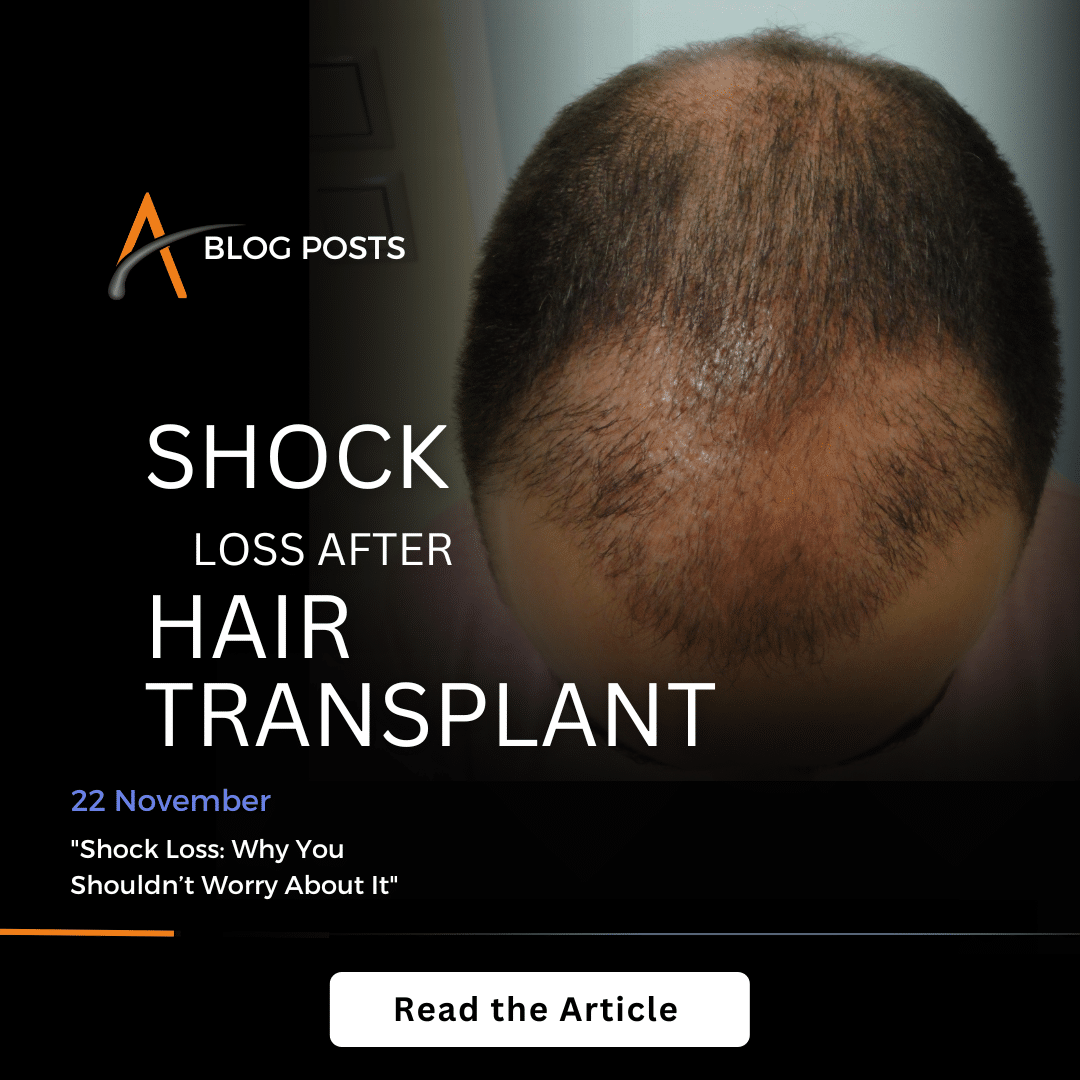
When we talk about shock loss following a hair transplant—or postoperative hair shedding—we refer to the temporary, and in some cases permanent, loss of existing hair in the recipient area. This means the shedding occurs among and around the sites where new hair follicles have been implanted.
If you do a simple online search for the term “shock loss hair transplant FUE or FUT,” you’ll quickly see that most clinics — both in Greece and internationally — describe it as a completely normal and expected process that typically occurs during the first few weeks following the procedure. Many doctors equate hair transplant shock loss with acute telogen effluvium — a condition in which a large percentage of hair follicles on the scalp abruptly enter the telogen phase. This is the resting phase of the hair growth cycle, where the hair stops growing and eventually falls out.
What Causes Shock Loss After a Hair Transplant?
Until recently, shock loss following a hair transplant was attributed to various underlying mechanisms. These included mechanical trauma to the scalp, chemical trauma from locally injected medications that reduce or interrupt blood flow, the tissue’s own response to injury, and the implantation of hair follicles too close together in the recipient area, among others.
Latest Research on Shock Loss Prevention – 2025. Although scientific studies on the pathophysiology of shock loss are still limited, the prevailing theory is that it represents a classic form of anagen effluvium — the shedding of hair in the active growth phase caused by mechanical or chemical stress. This explains why shock loss typically occurs within 2 to 4 weeks after the triggering “stressful” event.
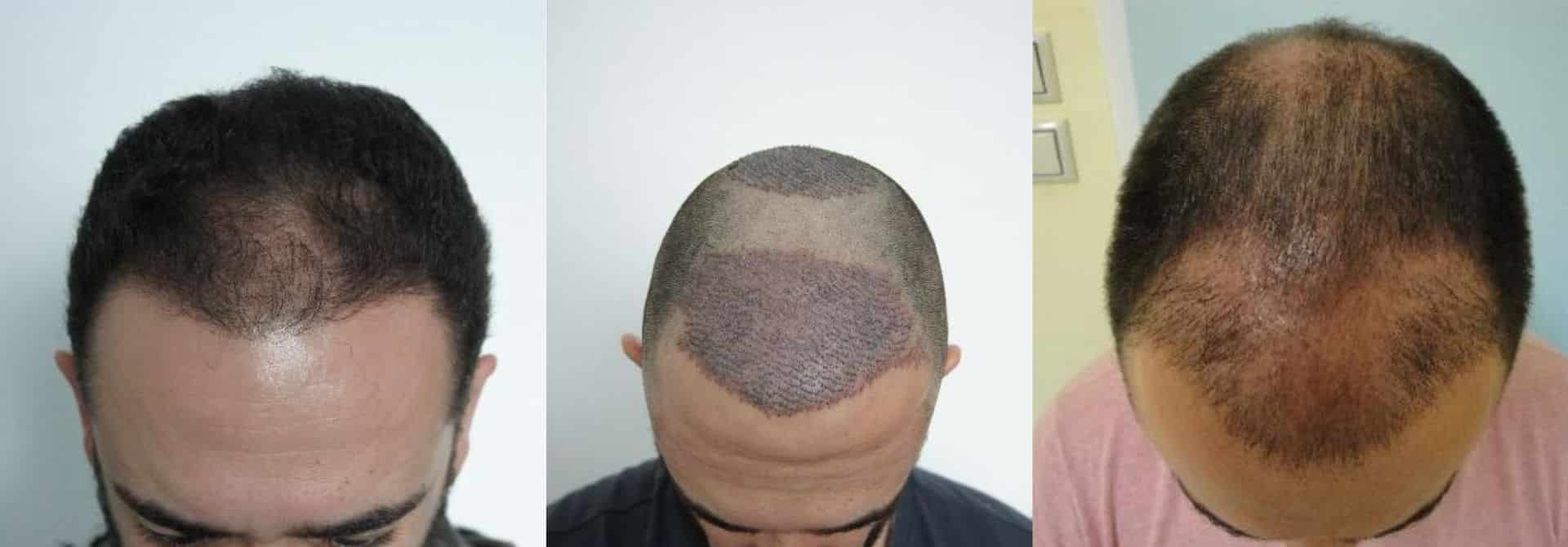
The shock loss in the frontal area was extensive and likely permanent for many fine pre-existing hairs. Even the hairs in the non-transplanted mid-scalp area took months to recover. Shock loss is unpredictable unless every precaution is taken and a strict shock loss prevention protocol is followed.
Who Is More Likely to Experience Shock Loss?
There are certain characteristics of the recipient area that doctors should carefully consider in order to prevent the occurrence of shock loss. Postoperative shedding, depending on its extent and duration, can significantly jeopardize the aesthetic outcome of a hair transplant.
Patients who are more likely to experience shock loss after a hair transplant include:
- Any patient with thinning and reduced hair density in the recipient area
- Most women
- Those undergoing treatment with Minoxidil
- Young men experiencing rapid hair loss and thinning progression
- Patients with mild thinning but relatively high hair density in the recipient area, even if the hairs have not yet thinned significantly
How Can the Risk of Shock Loss Be Reduced?
A few years ago, it was widely believed that shock loss after a hair transplant was almost inevitable, even in the hands of highly experienced surgeons. What remains unpredictable, however, is the extent of the shock loss. This can range from a minimal, almost unnoticeable shedding to a complete loss of hair in the recipient area.
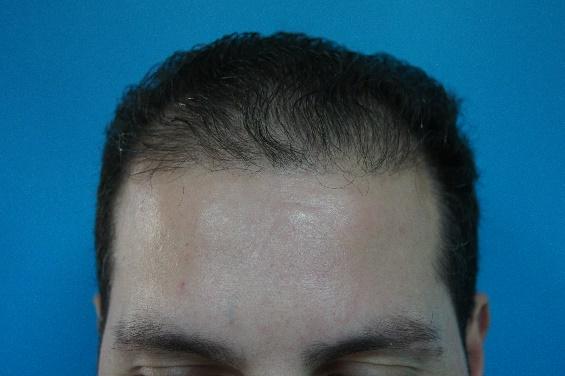
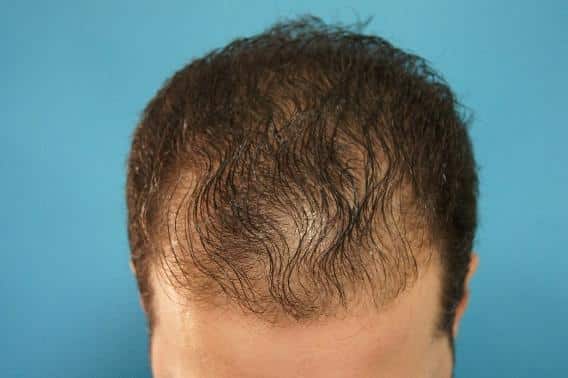
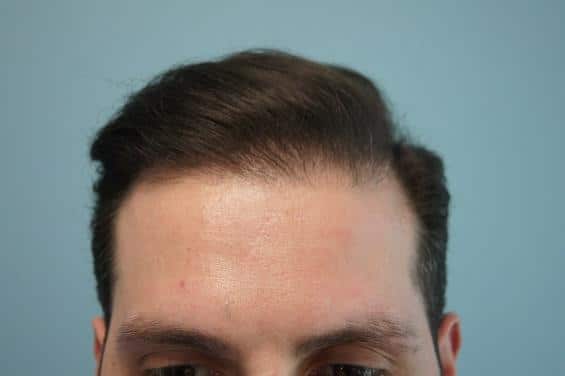
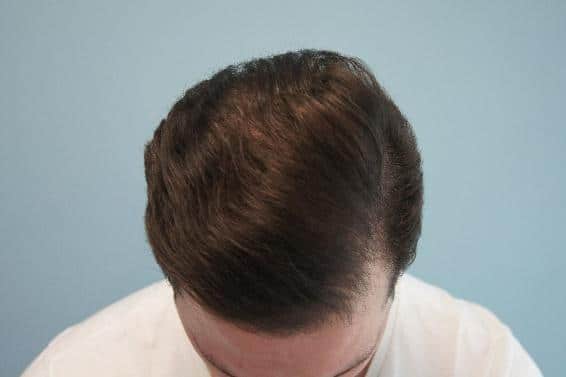
Case of Hair Density Improvement at Anastasakis Hair Clinic. A 49-year-old male patient with an excellent donor area, dense mid-scalp and crown, but a sparse frontal region with a low and partially preserved natural hairline. With proper follicle management, successful densification can be achieved..
The last thing patients want is for their hair to appear thinner after a transplant than before. Unfortunately, this often happens when inexperienced surgeons or technicians perform hair transplants on areas that already have a high density of existing hair. What’s even worse is that shock loss is frequently presented as a possible and expected side effect of hair transplantation. This is often used to justify a second procedure for further densification or to explain poor regrowth of the transplanted hair.
Will I Experience Hair Loss After a Hair Transplant?
At our clinic, we follow specific protocols based on the latest technology and scientific approaches to prevent shock loss. Combined with the skill and technical expertise of Dr. Anastasakis, these measures ensure that the densification cases we handle achieve a natural, dense result without any noticeable hair loss..
The first step is selecting the right candidate for a hair transplant, always based on scientific measurements. Initially, the recipient area is examined with a digital microscope. This allows precise measurement of the area and accurate calculation of the follicular units needed to cover it.
The density and quality of the follicles in the recipient area are crucial, as well as determining which hairs are terminal or intermediate. These existing hairs in the recipient zone must always be protected during the hair transplant from:
- Mechanical trauma caused by the recipient site creation tool
- Injury to the subdermal microvascular network during recipient site creation
- The cumulative biochemical stress follicles endure throughout the transplantation process
If the density in the recipient area is so high that it discourages a hair transplant, then medical treatment is the most suitable option for that case.
How Anastasakis Hair Clinic Ensures the Viability of Hair Follicles
For candidates suitable for hair transplantation at Anastasakis Hair Clinic, existing hair follicles are protected from shock loss and do not fall out after the procedure because the doctor, among other measures:
- Implements specialized pharmaceutical protocols
- Maintains and safeguards the vital space of each follicle by creating recipient sites that do not damage neighboring follicles
- Creates recipient sites in a manner that preserves the vascular system of adjacent follicles
- Ensures grafts remain intact throughout and after the transplantation
- Applies specialized post-operative protocols
If you want to learn more about shock loss, useful information can be found in Volume 3 of Dr. Anastasakis MD, PhD’s book, «Androgenetic Alopecia From A to Z» Volume 3, Springer Publications.
At our clinic, the above combined with impeccable surgical technique guarantees the health and integrity of existing follicles in the recipient area and minimizes the risk of temporary or permanent shock loss in all cases we handle.
However, patients should understand the limitations and unpredictable nature of shock loss, which can sometimes be permanent despite flawless surgical technique. Hair transplantation involving existing follicles—i.e., densification—is a highly demanding technique that requires exceptional surgical skills and should never be performed by inexperienced surgeons. So choose wisely!
Book Your Appointment at Anastasakis Hair Clinic and Learn About Shock Loss
At Anastasakis Hair Clinic by always carefully selecting suitable candidates, we perform hair transplantation only on cases that will truly benefit from it. This ethically responsible patient selection, combined with all the strategies and protocols we follow, ensures that none of the cases we handle experience shock loss.
If you want to take the first step toward a successful and dense hair transplant result—without unpleasant surprises—book your free online consultation today!
 0
0