

Modern hair transplantation is, without a doubt, the most impressive procedure in aesthetic surgery! And this is because no other cosmetic operation can so dramatically improve a person’s appearance. In Greece, services offering surgery with modern hair transplantation techniques are scarce. Instead, one will find a multitude of advertisements for so-called “bloodless” techniques, “hair transplants in just 2 hours,” procedures performed by “specially trained staff,” and many other inaccuracies that mislead—and sometimes deceive—those interested.
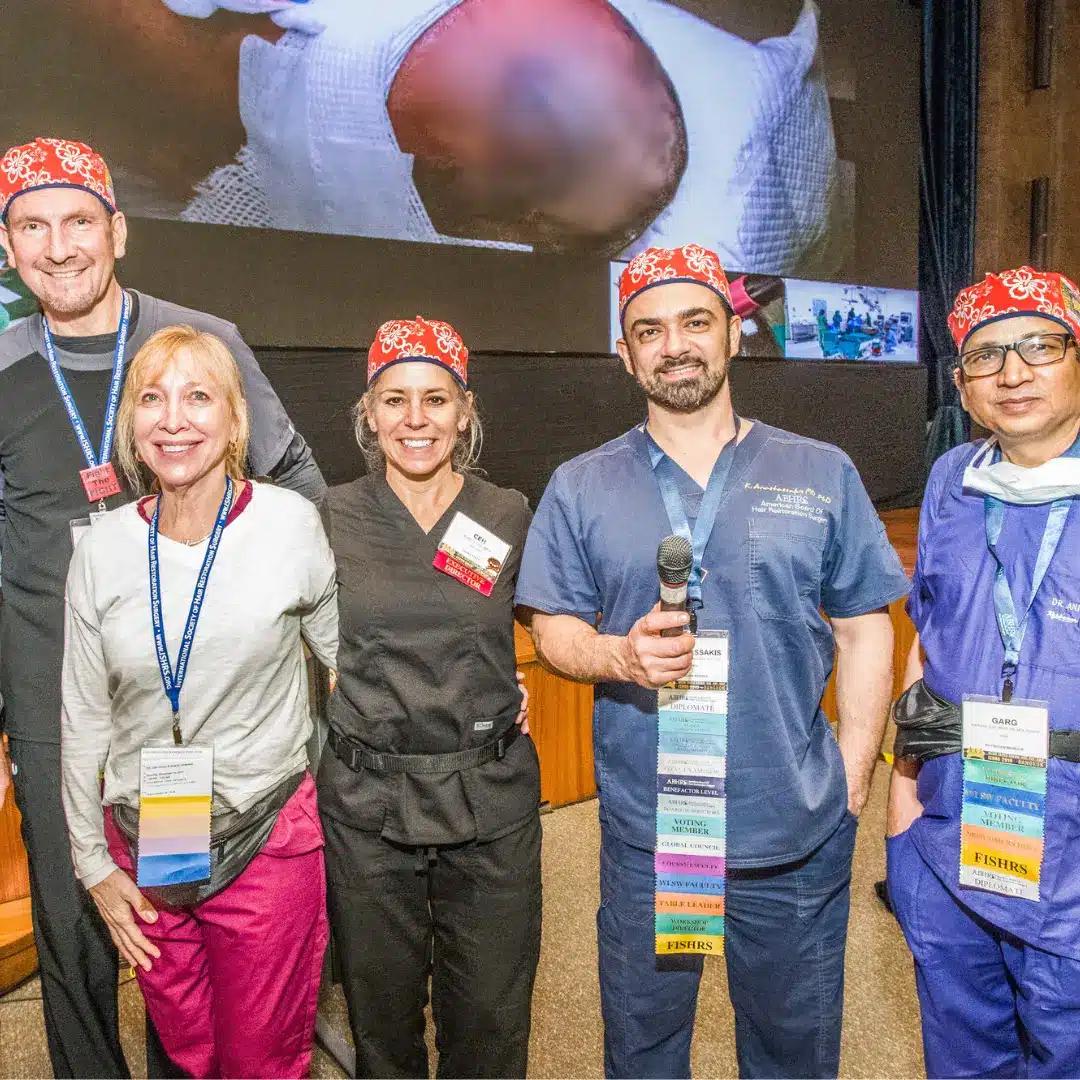
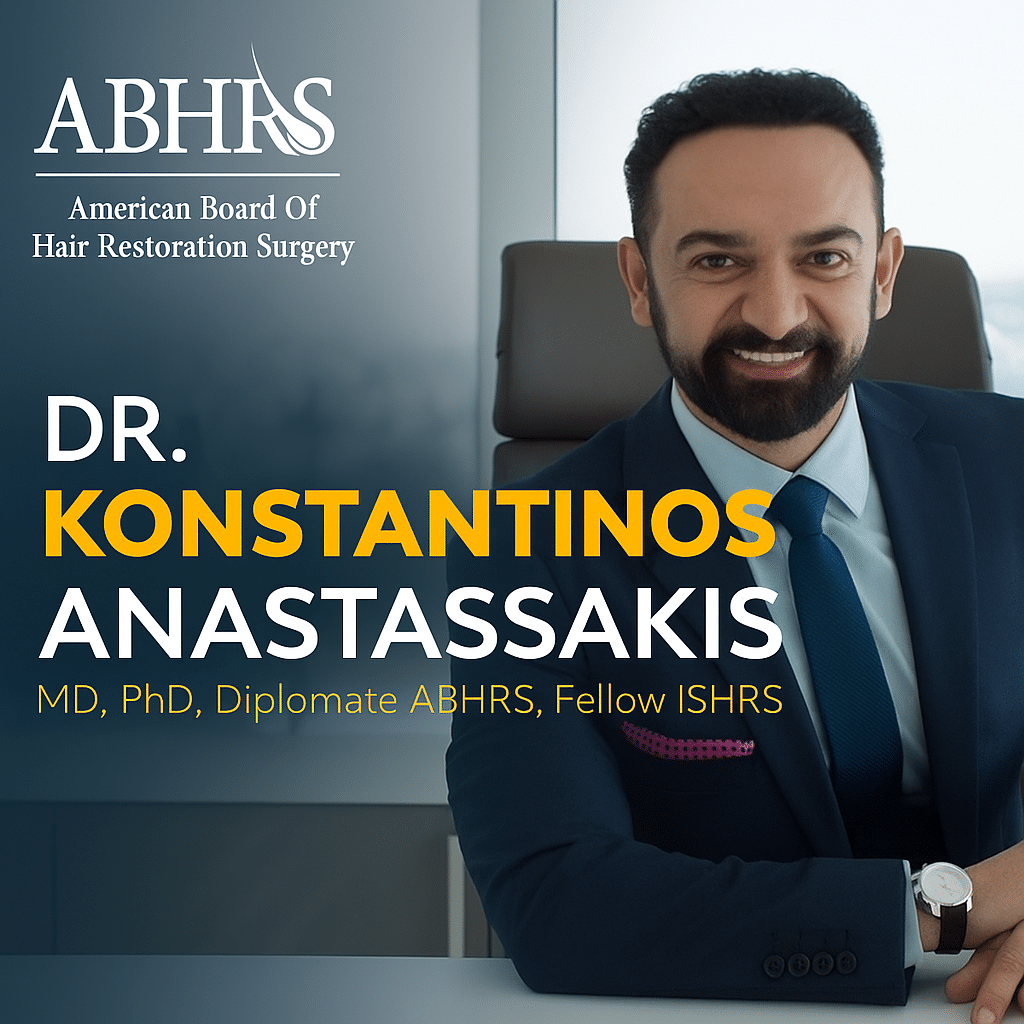
As President of ELAMAT, Dr. Konstantinos Anastassakis, MD, PhD, explains what one should pay attention to in our country when deciding to undergo a hair transplant.
Choosing the Right Surgeon
The choice of surgeon and/or hair transplant clinic is the most crucial factor. What matters most is to conduct a mature and thorough market research—and above all, with a clear mind. You should not begin your search in a state of panic, stress, or sadness just because you suddenly noticed your hair thinning.
Your research should last for a reasonable period of time, during which you should visit several doctors/clinics. The criteria you should apply must include at least three key factors: the surgeon’s experience, their scientific knowledge, and certified specialization in hair transplantation. I emphasize the word certified because everyone will present themselves as a specialist—even non-doctors!
If you want “the best,” your doctor must be specialized and continuously updated on the latest advancements. Remember that physicians who are truly specialized in hair transplantation are, without exception, members of the International Society of Hair Restoration Surgery (ISHRS) and, also without exception, have completed their medical specialty training.

That’s why I advise you to always request the following when visiting a hair transplant clinic:
-
Meet the surgeon in person. Do not accept vague answers such as “we have many doctors.” Insist on being assigned to a specific doctor and speak with him before the procedure. And, of course, make sure the same doctor will be present on the day of surgery!
-
Do not allow anyone to operate on you unless you are certain they are a licensed physician. Ask to see their medical degree, specialty certification, and proof of training. Don’t be embarrassed to request whatever will make you feel safe and reassured — it is your right. In Greece, it is unfortunately common for untrained or inexperienced doctors to perform FUE hair transplants until they continue their medical specialty training in a hospital. Even worse, in some cases, non-physicians such as nurses or surgical assistants carry out FUE procedures! Note: this occurs mainly with FUE, because the FUT technique requires significant surgical expertise that no unqualified individual — not even an inexperienced doctor — dares to attempt.
-
Never accept an untrained or inexperienced doctor simply because it seems like a cheaper option. Demand to be operated on by an experienced physician who has at least completed a medical specialty and holds certifications from international congresses on modern hair transplantation. A hair transplant is not the time to cut corners. You owe it to yourself to choose the best.
-
Don’t be dazzled by celebrity photos. Almost always, these high-profile cases are performed for free for promotional purposes. The fact that a surgeon operated on a celebrity says absolutely nothing about their true value or expertise.
Tip: The procedure must always be performed by a specialized and certified hair transplant surgeon, supported by an experienced and well-trained surgical team.
Suitability of a Patient for Hair Transplantation
Hair transplantation is indeed the most impressive procedure in aesthetic surgery — but it is also the most unfair!
Unlike most other cosmetic procedures, not everyone interested in a hair transplant is a suitable candidate. In fact, those patients who are in the greatest “need” of a transplant — that is, those with the largest bald areas — often turn out to be the least suitable candidates.
This is because the follicles we transplant come from the patient’s own donor area, located at the back of the scalp. These follicles are permanent: no matter where they are placed, they will never fall out again. However, the larger the bald area, the greater the number of follicles required to cover it — and at the same time, the fewer the follicles available in the donor area. In advanced cases of hair loss, often only a thin strip of hair remains at the back and sides of the scalp, making proper coverage impossible.
It therefore requires sound judgment and a high level of skill from the surgeon to achieve good results and to avoid unwanted aesthetic consequences in the future. These can occur when hair loss has advanced so far that the follicles available in the donor area are no longer sufficient to cover all the bald regions.
Unfortunately, it is a common phenomenon in clinics in Greece to label all interested individuals as “suitable candidates for hair transplantation” — regardless of whether the donor area is too small, whether its density is excessively low, whether the hairs are too fine, or whether the person is very young with clear signs of future extensive hair loss that no transplant will ever be able to cover.
Tip: If a doctor or so-called “specialist” tries to convince you with various arguments that you are a potential candidate for hair transplantation — beware!
Ethics and Professional Responsibility of the Surgeon
You must be certain that the doctor you are speaking with has your best interests at heart — especially in the long term — and not simply the payment for yet another surgery.
Poor results in hair transplantation are not caused only by inadequate surgical technique, but mainly by the decision to operate on a patient who, in reality, was never a suitable candidate in the first place.
In Greece, it is very common to see young men, mostly, with shaved heads and a large, unsightly scar in the donor area. Beyond poor technique and lack of care, this picture signifies much more.
The truth is that whenever you see a man with visible grafts, with a poorly designed and sparse hair transplant, or with a shaved head and at least one visible scar in the donor area, you are looking at:
-
Someone who should never have undergone a hair transplant, since they were not a suitable candidate based on medical, ethical, or aesthetic criteria. The surgeon should have foreseen that this patient would eventually end up with excessively extensive baldness that no surgeon could ever cover — and should have refused to operate from the beginning.
-
Someone who may have been a candidate, but was never informed about the limitations of hair transplantation, or was given an “idealized” version of the final result and ultimately felt disappointed.
-
Someone who became so disheartened by the aesthetic result and by the subsequent behavior of the doctor or the clinic they trusted, that they completely lost faith that anyone could help them further — and chose to remain with an aesthetically unacceptable outcome.
These patients understandably become a living discredit to a surgical field which, in truth, can offer tremendous benefits to the right candidates.
From my experience, I can tell you that almost always, the surgeon and the patient must reach a compromise between the patient’s wishes of “today” and the surgeon’s conservative strategy of “today and tomorrow.”
Old and Modern Hair Transplant Techniques
Consumers are “bombarded” on the Internet with impressive advertisements for “new pain-free hair transplant techniques,” for “modern scarless methods,” for “pioneering approaches,” and other such exaggerated or false claims, aiming to impress and reassure.
In reality, however, there are only two officially recognized modern hair transplant techniques in Medicine:
- FUT Technique (Follicular Unit Transplantation)
A strip of follicular units is removed from the donor area, the area is closed with a fine suture, and microscopes are then used to dissect the follicular units. In the donor area, a horizontal scar remains, usually 1–2 mm wide, which is easily covered by the surrounding hair.
- FUE Technique (Follicular Unit Excision)
Individual follicular units are extracted one by one from the permanent donor area. Thousands of tiny scars remain, each smaller than one millimeter in diameter, which are also easily hidden by the hair.
If you see other “technique names” in advertisements besides FUT and FUE, you should know they do not differ in any way from the official techniques recognized by the scientific bodies ISHRS and ABHRS, which in fact prohibit their members from using “invented” or “novel” terms other than FUT and FUE.
And something even more important:
- There is no such thing as “the best hair transplant technique” — only the most suitable one for each individual case, based on the unique characteristics of the patient’s face, hair, and scalp. According to the International Society of Hair Restoration Surgery (ISHRS), in 2015, approximately 58% of hair transplants worldwide were performed using the FUT technique and 42% using the FUE technique. Therefore, the most highly specialized hair transplant surgeons globally use both techniques.
- There is no such thing as a “new” and “old” hair transplant technique. Both modern techniques, FUT and FUE, are the result of decades of refinement and evolution of earlier surgical methods. The FUT technique has been practiced since 1994, and the FUE technique since 2002, and both continue to evolve.
Both are valuable tools. Neither is suitable for every case, and each complements the other’s limitations.
In modern hair transplantation, we are fortunate to have more than one “weapon” to fight baldness. It is a mistake—whether due to ignorance, bias, or vested interests—to dismiss either of these proven surgical techniques.
Find a surgeon who is experienced in both methods, because only then will your needs be fully addressed, without being limited by a practitioner’s personal preference or attachment to one technique over the other.
Tip: If someone tells you that they always use one technique and reject the other because it is “old” or “new,” be cautious!
Scars – Marks
You’ve surely heard about so-called modern hair transplant techniques advertised as “scar-free,” “mark-free,” or even … “surgery-free.”
The truth, however, is different.
Both FUT (Follicular Unit Transplantation) and FUE (Follicular Unit Excision) are microsurgical procedures. And the moment we, as surgeons, have to intervene in the scalp’s skin, some kind of scar will inevitably remain. This is a scientific axiom—and anything else anyone claims is simply untrue.
To give you an idea, both ISHRS and ABHRS explicitly prohibit their members from using the terms “scar-free” or “painless” when advertising hair transplant services.
The only difference between the two techniques is this:
-
With FUT, a fine linear scar remains in the donor area, usually 1–2 mm wide, easily hidden by the surrounding hair.
-
With FUE, thousands of tiny micro-scars remain, each less than a millimeter in diameter, also easily concealed by the hair.
As a surgeon who performs modern hair transplant techniques with significant experience and knowledge, I can assure you of the following:
- If the hair transplant surgeon is skilled and meticulous, and provided the patient carefully follows the postoperative instructions, the FUT scar and the FUE scars are equally microscopic. With hair as short as 1 cm, they are easily covered.
- Regardless of which hair transplant technique you choose, you will NOT be able to shave your head completely in the future. If that is your main selection criterion, then you should not undergo a hair transplant at all.
Tip: If anyone tells you that there will be no scars or marks after a hair transplant and that you’ll be able to cut your hair as short as you like—be cautious!
Hair transplantation is a cosmetic procedure that will richly reward you on a psychological level, transforming your appearance and helping you feel more confident every time you look in the mirror.
With modern hair transplant techniques, we can achieve density and naturalness indistinguishable from natural, thick hair, allowing us to successfully treat almost every case of hair loss, in both men and women.
It is your responsibility to yourself to find a surgeon whose knowledge, experience, and dedication will restore your hair and give you back an appearance you will enjoy for the rest of your life.
Scars – Marks
You’ve surely heard about so-called modern hair transplant techniques advertised as “scar-free,” “mark-free,” or even … “surgery-free.”
The truth, however, is different.
Both FUT (Follicular Unit Transplantation) and FUE (Follicular Unit Excision) are microsurgical procedures. And the moment we, as surgeons, have to intervene in the scalp’s skin, some kind of scar will inevitably remain. This is a scientific axiom—and anything else anyone claims is simply untrue.
To give you an idea, both ISHRS and ABHRS explicitly prohibit their members from using the terms “scar-free” or “painless” when advertising hair transplant services.
The only difference between the two techniques is this:
-
With FUT, a fine linear scar remains in the donor area, usually 1–2 mm wide, easily hidden by the surrounding hair.
-
With FUE, thousands of tiny micro-scars remain, each less than a millimeter in diameter, also easily concealed by the hair.
As a surgeon who performs modern hair transplant techniques with significant experience and knowledge, I can assure you of the following:
- If the hair transplant surgeon is skilled and meticulous, and provided the patient carefully follows the postoperative instructions, the FUT scar and the FUE scars are equally microscopic. With hair as short as 1 cm, they are easily covered.
-
Regardless of which hair transplant technique you choose, you will NOT be able to shave your head completely in the future. If that is your main selection criterion, then you should not undergo a hair transplant at all.
Tip: If anyone tells you that there will be no scars or marks after a hair transplant and that you’ll be able to cut your hair as short as you like—be cautious!
Hair transplantation is a cosmetic procedure that will richly reward you on a psychological level, transforming your appearance and helping you feel more confident every time you look in the mirror.
With modern hair transplant techniques, we can achieve density and naturalness indistinguishable from natural, thick hair, allowing us to successfully treat almost every case of hair loss, in both men and women.
It is your responsibility to yourself to find a surgeon whose knowledge, experience, and dedication will restore your hair and give you back an appearance you will enjoy for the rest of your life
If you have any further questions or would like to learn more about the cost of hair transplantation using the FUT or FUE methods, please contact us through our online form or call us at
+30 210 8011000, Monday to Friday, 9:00–21:00.
 0
0