

Hair Transplantation in the Vertex: A High-Risk Procedure
Hair transplantation in the vertex (crown) area is considered one of the most challenging and high-risk procedures in hair restoration surgery. It should only be pursued under specific conditions that can ensure long-term natural results. The decision to operate and the exact surgical strategy fall entirely within the surgeon’s expertise and judgment.
Only a small percentage of patients experiencing hair loss in the vertex are ultimately suitable candidates for transplantation in this area. The surgeon must exercise caution and discretion when evaluating such cases, and should generally be hesitant to proceed unless all criteria are met.
Unlike the hairline area—where excellent outcomes can be achieved by following well-established guidelines—there are very few standardized protocols for vertex transplantation. Most recommendations focus on technical considerations and strategic pitfalls to avoid, rather than clear instructions to follow.
Hair Transplantation in the Vertex: Key Characteristics
There are several important factors one must take into account before proceeding with a hair transplant in the vertex region. The most critical ones are:
- The vertex area is the most challenging for FUE hair transplantation, yet it is less aesthetically significant compared to the frontal hairline. Interestingly, many patients focus more on the vertex than on hair loss in the front area.
- The complexity of a vertex transplant matches or even exceeds that of the hairline; likewise, the negative visual impact of a poorly executed vertex transplant can be as noticeable as a poorly done hairline.
- The vertex generally has an oval, not circular, shape, and is the least stable part of the scalp over time in terms of hair loss progression.
- Because hair loss tends to expand with time, achieving satisfactory coverage of the vertex will require a very large number of grafts, and such resources are almost never enough to provide dense coverage.
- Each time a strip graft is harvested, the vertex area either extends or lowers due to scalp stretching—unlike other areas which remain relatively stable.
- Unlike the upright hairs of the hairline or midscalp, where one hair can visually overlap another, the vertex doesn’t allow such overlap. The hair in the vertex area has only the underlying skin as a background, making it significantly harder to create a sufficient visual density.
- One specific feature of the vertex is that human scalp hair typically forms one or two whorls, more often rotating in a clockwise (S) direction. As one approaches the center of the whorl, the hairs tend to emerge at increasingly oblique angles.
- The whorl pattern on the vertex was described in 1927 as heritable. Later studies have correlated the whorl’s orientation with dominance of left vs. right brain hemisphere (e.g. handedness), and even with certain cognitive and behavioral traits. Some associations, like counter-clockwise whorls with schizophrenia or sexual orientation, have been suggested, though many have been questioned by subsequent research.
- Ziering’s study, for example, defined five whorl patterns: S, Z, DSZ (double SZ), DSS (double SS), and diffusion. In that data, ~75% of individuals displayed a clockwise (S-pattern) whorl, about 11% had counter-clockwise (Z-pattern), ~3.2% had DSZ, ~0.6% had DSS, and ~9.8% showed a diffusion pattern
- For patients who still retain some hair in the vertex, the surgeon should follow the remaining whorl’s direction. In cases of complete baldness, the surgeon must carefully inspect under magnification for vellus hairs to locate any residual directionality, or follow the most common clockwise pattern—unless there is evidence to the contrary.
Another Unique Feature of the Vertex
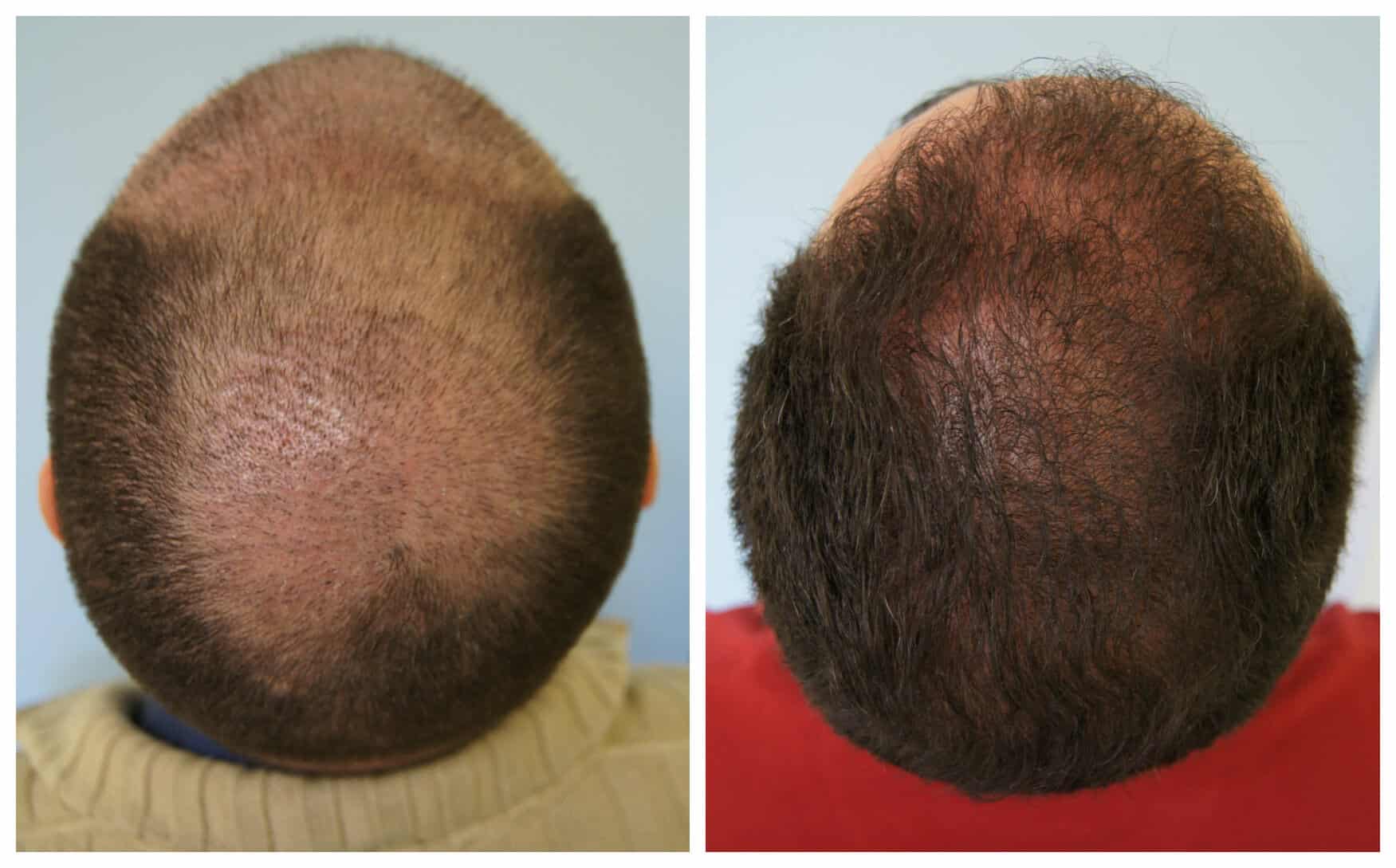
Another particular characteristic of the vertex is that hair loss in this region tends to progress in a centrifugal pattern, rather than in the front-to-back direction typically seen in other areas of the scalp.
This means that if one rushes to transplant hair into a vertex that initially appears only slightly affected, the inevitable outward progression of hair loss can result in an unnatural “island” of hair, surrounded by a bald halo.
Correcting this appearance requires even more grafts, which can then compromise the availability of grafts for the frontal regions—areas that will almost certainly continue to thin over time due to progressive hair loss.
Read in our next article, in the coming days, about the strategies followed for hair transplantation at the vertex, as well as certain technical details that every patient should know. To learn more about the cost of hair transplantation, contact us today.
 0
0