

The Hidden Dangers of Hair Transplants in Unregulated Clinics

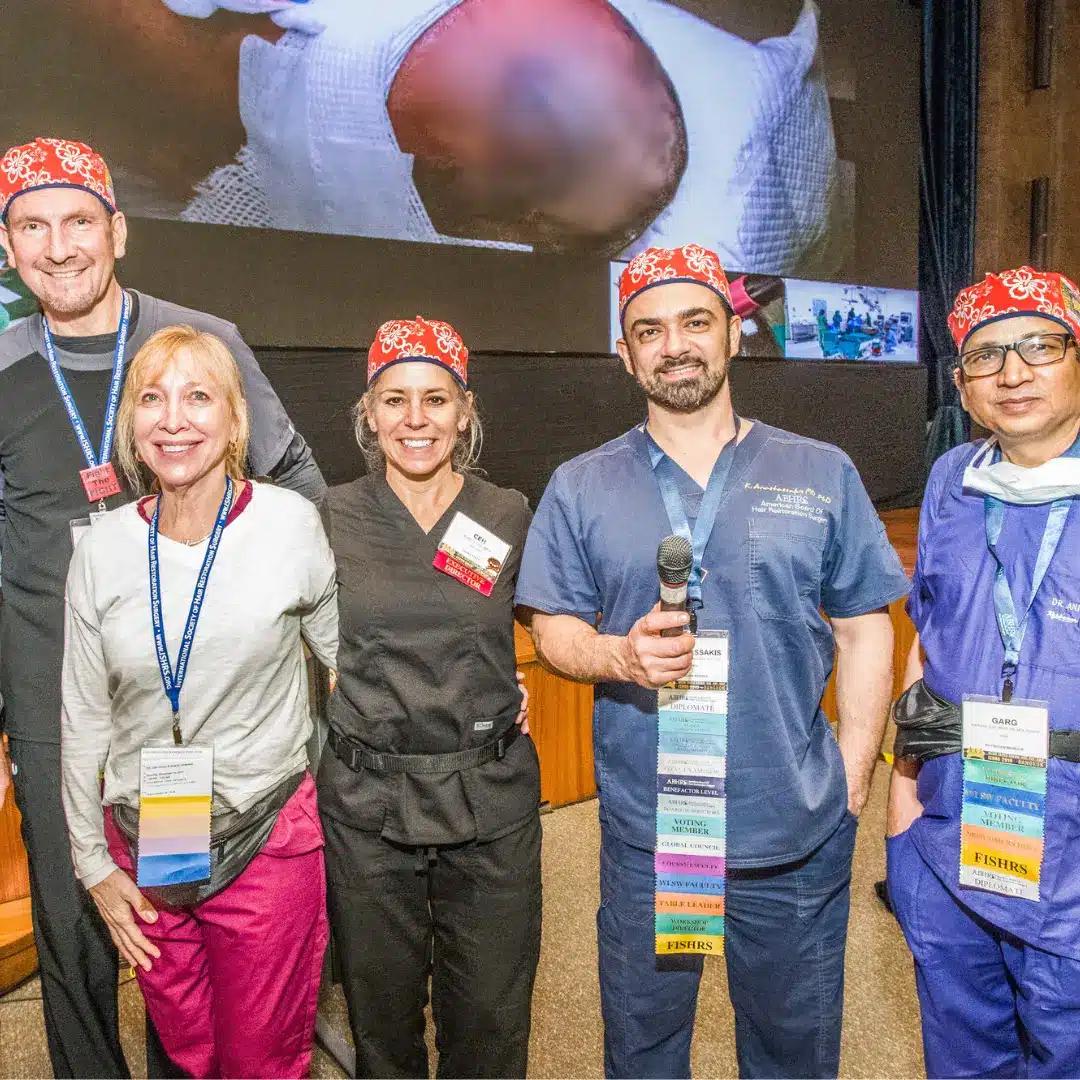
Exclusive FUE Technique Conference Held in Istanbul from April 19–21, 2019
Top hair transplant surgeons from around the world gathered for a unique three-day live surgery workshop in Istanbul, held under the auspices of the International Society of Hair Restoration Surgery (ISHRS). The event was exclusively dedicated to the FUE (Follicular Unit Extraction) technique, offering unparalleled opportunities for hands-on learning and knowledge exchange.

The workshop included lectures, hands-on training in graft preparation, as well as live surgery demonstrations—performing FUE hair transplant procedures on patients.

World-Renowned Hair Transplant Experts
The conference was organized by two leading Turkish hair transplant surgeons, Dr. Kayihan Sahinoglu and Dr. Tayfun Oguzoglu.
Also invited were globally recognized surgeons Dr. James Harris, Dr. Sanusi Umar, and Dr. Steve Gabel, who held educational roles during the event.
The only Greek physician to participate both as a speaker and trainer, as well as coordinator and member of the scientific committee, was Dr. Konstantinos Anastasakis, MD, PhD.
Regarding the organizers, it is worth noting that they are among the few physicians in the neighboring country who are members of the ISHRS. Every hair transplant procedure they perform fully complies with the stringent medical and ethical standards required for hair restoration surgery.
Questionable Quality Hair Transplant Clinics
It is worth noting that in Istanbul, there are approximately 1,000 hair transplant clinics, of which only 300 are officially recognized and licensed.
Even more striking is the fact that just 33 of these clinics are owned by physicians who are members of the ISHRS.
As for the remaining “clinics,” the majority of hair transplant surgeries are performed by non-physicians, often resulting in devastating consequences for both the health and appearance of their patients.
These pirate clinics lure unsuspecting consumers with extremely low-priced “packages” that include accommodation, transportation, and… an unlimited number of grafts!
What you need to know is that these procedures are generally carried out by non-physicians in facilities that do not meet any of the required medical standards.
Many times, the documents signed by patients include a waiver of liability clause, absolving the clinic of responsibility in case of negative outcomes or complications.
For quite some time now, the ISHRS has been raising the alarm with repeated consumer warnings, aiming to inform the public about all the risks and potential complications associated with procedures performed in such unacceptable conditions.
Statement on the Risks by Dr. Konstantinos Anastasakis
“Unfortunately, the phenomenon of rogue ‘clinics’ operating unchecked—where the staff performing hair transplant surgeries are not licensed physicians—has reached epidemic proportions,” says Dr. Konstantinos Anastasakis, MD, PhD.
Dr. Anastasakis is a member of the ISHRS and President of the Hellenic Academy of Hair Transplantation and Restoration (ELAMAT), the official ISHRS affiliate in Greece.
“These ‘clinics’ are commonly known as hair farms. Hair farms perform hair transplants exclusively using the FUE method at extremely low prices.
They have branches or offices in Western countries where the cost of hair transplantation is high. They heavily advertise, mainly via the internet, offering all-inclusive packages — including transportation, accommodation, and FUE hair transplant surgery for as little as 1,000 to 2,000 euros!
What anyone should ask themselves is why their prices are so low. The answer is very simple:
These transplants are performed by non-physicians and unqualified personnel. Often, up to 10 patients may be undergoing FUE hair transplants simultaneously in the same room.
The hygiene conditions in these facilities are unacceptable, resulting in countless risks for patients.”

The Latest Victim of a Non-Physician Hair Transplant in India
It goes without saying that there was no medical diagnosis, no review of the patient’s medical history, and no safeguards in place should complications arise. The risk to the patient’s health is IMMEDIATE.
Just two months ago, another patient in India died following a hair transplant procedure precisely because no physician was available to manage the complications that occurred. Although complications in hair transplantation are rare, as medical professionals, we know how to handle them properly.
But what happens when the health of those seeking treatment is entrusted to unqualified personnel? What happens when we are called upon to correct the tragic aesthetic outcomes of such transplants?

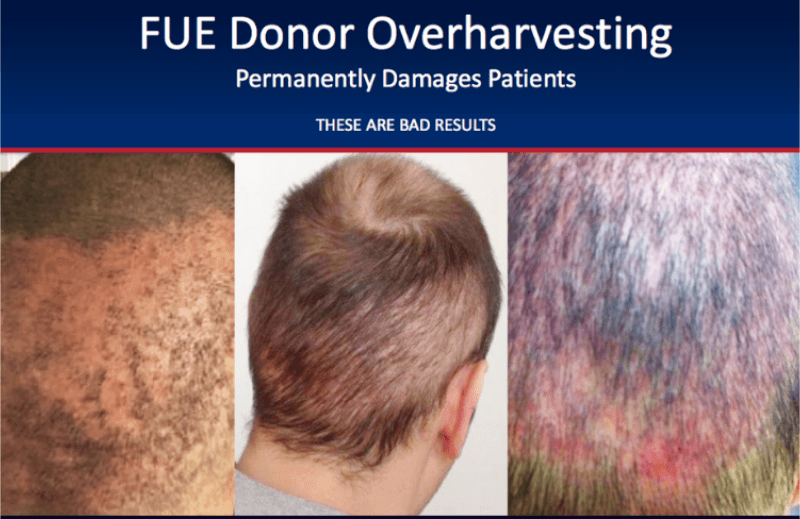
The number of patients seeking us out to repair the tragic results of unsuccessful, low-cost hair transplants has risen alarmingly in recent years. Unfortunately, sometimes the damage is irreversible.
We often see literally “shot-up” scalps with a severely damaged donor area and sparse or minimal hair growth. We also frequently encounter infections that require extensive time and effort to heal—and most importantly, cause immeasurable emotional distress for the patient.
The Response of the Global Medical Community
The International Society of Hair Restoration Surgery (ISHRS) has launched a major initiative aimed at educating and deterring individuals from undergoing hair transplant procedures at such questionable clinics. The goal is to ensure that patients fully understand the real risks involved.
At the recent workshop held in Istanbul, numerous presentations and discussions addressed the epidemic of “pirate” clinics and the use of unlicensed personnel.
A central topic of discussion, led primarily by Turkish ISHRS member physicians, was the dire situation in the neighboring country concerning these risks and issues.
Reports of clinics performing up to 100 “procedures” a day, along with data showing that more than 500,000 patients undergo hair transplant surgeries annually in Turkey—many of whom receive poor to failed results—are truly shocking.
“This Huge Problem Only Gains Public Attention When a Tragedy Occurs”
According to Dr. Anastasakis,
“This issue only appears in the media when we mourn victims caused by dangerous, unlicensed ‘pirate clinics.’
We must choose both the physician and the clinic with safety and achieving the best possible outcome as the sole criteria.
If cost becomes the primary consideration, we are truly putting ourselves and our health at enormous risk.
Hair transplantation should never be treated as an everyday consumer product you pick off a supermarket shelf. It is a genuine medical procedure — a surgical operation with permanent results.
Every prospective patient must take full responsibility for their choices, prioritizing above all their health and the enjoyment of a truly natural outcome.”
Recommendations from the ISHRS
The essence of the discussions at the recent workshop, as well as all related actions by the International Society of Hair Restoration Surgery (ISHRS), is clear:
Prospective patients must exercise extreme caution when considering “low-cost” clinics both in Greece and abroad!
Ensure that the doctor you consult is genuinely a Hair Transplant Surgeon. Verify the specific steps of the procedure performed by the surgeon versus those carried out by assistants. Under no circumstances should you accept to be operated on by an inexperienced physician, no matter how tempting the financial offer may be.
The surgeon performing your procedure must have completed a recognized medical specialty. Request to see the clinic’s operating license, which should be either a personal license for an individual practice or a polyclinic license if multiple specialties operate under the same roof.
Rest assured that a clinic truly compliant with the required standards, along with its staff, will be happy to address all your questions and make you feel confident about your decision.
It is also important to remember that hair transplantation is not always the ideal solution. There are alternative strategies to combat hair loss and thinning.
A truly specialized physician possesses the comprehensive knowledge necessary to recommend the optimal treatment tailored to your specific condition and needs.
Under no circumstances should you feel pressured into undergoing a hair transplant procedure.
Dr. Konstantinos Anastassakis MD, PhD, Head and Neck Surgeon, is a specialist in Hair Restoration Surgery, Diplomate and Board Member of the ABHRS, ISHRS member, and President of ELAMAT (Hellenic Academy of Hair Transplantation and Restoration).

For more information, schedule an appointment with Dr. Konstantinos Anastassakis MD, PhD at his clinic located at 57 Alexandras Avenue, Athens, by calling +30 210 8011000.
 0
0