

What Do You Know About Hair Transplant Methods?
You’ve most likely heard of the well-known FUE Hair Transplant technique (Follicular Unit Excision). Over the years, it has gained increasing popularity and continues to attract a growing number of patients.
The reason for this rising interest is that FUE is one of the two main hair transplant techniques used to extract hair follicles from the donor area — typically the back of the scalp
Differences Between FUE and FUT Hair Transplant Techniques
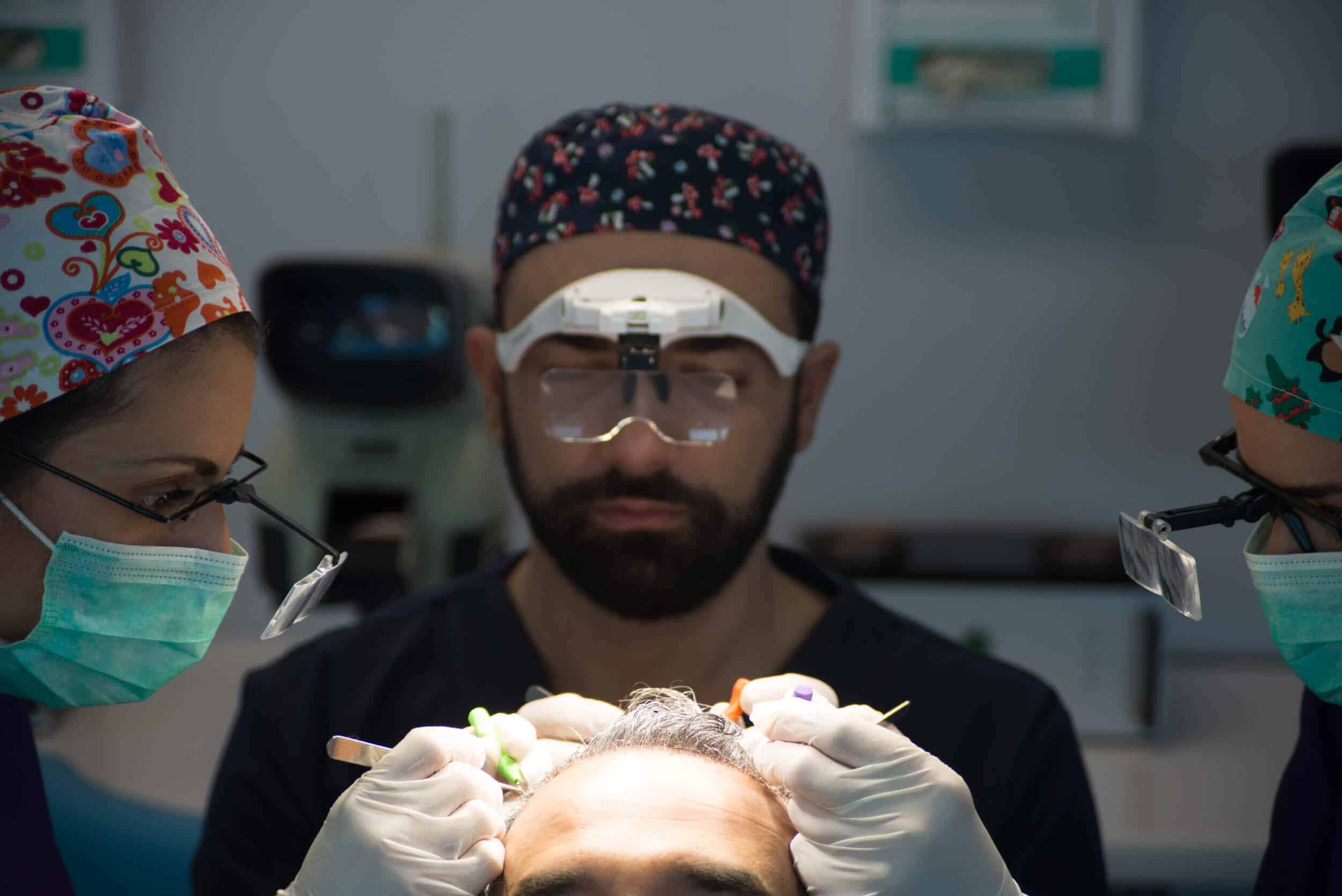
More specifically, with the FUE (Follicular Unit Excision) hair transplant technique, hair follicles are extracted one by one from the donor area, while with the FUT (Follicular Unit Transplantation) technique, a strip of scalp is removed from the donor area and then dissected into individual follicular units using specialized stereo-microscopes.
The most important factor for a successful hair transplant is that the follicles are implanted into the thinning areas in such a way that they appear natural and dense, regardless of the extraction technique used.
The choice of follicular unit extraction technique depends on a variety of factors such as the patient’s age, the elasticity and density of the donor area, any previous transplant procedures performed, and more.
A hair transplant specialist possesses the knowledge and necessary experience to select the appropriate extraction technique for each individual case. However, most importantly, they understand exactly how to place the follicles in the thinning areas with the goal of achieving a natural and dense result.
But what makes this technique so popular? What kinds of cases are best suited for it? And are there any precautions that patients should be aware of?
FUE Hair Transplant Technique
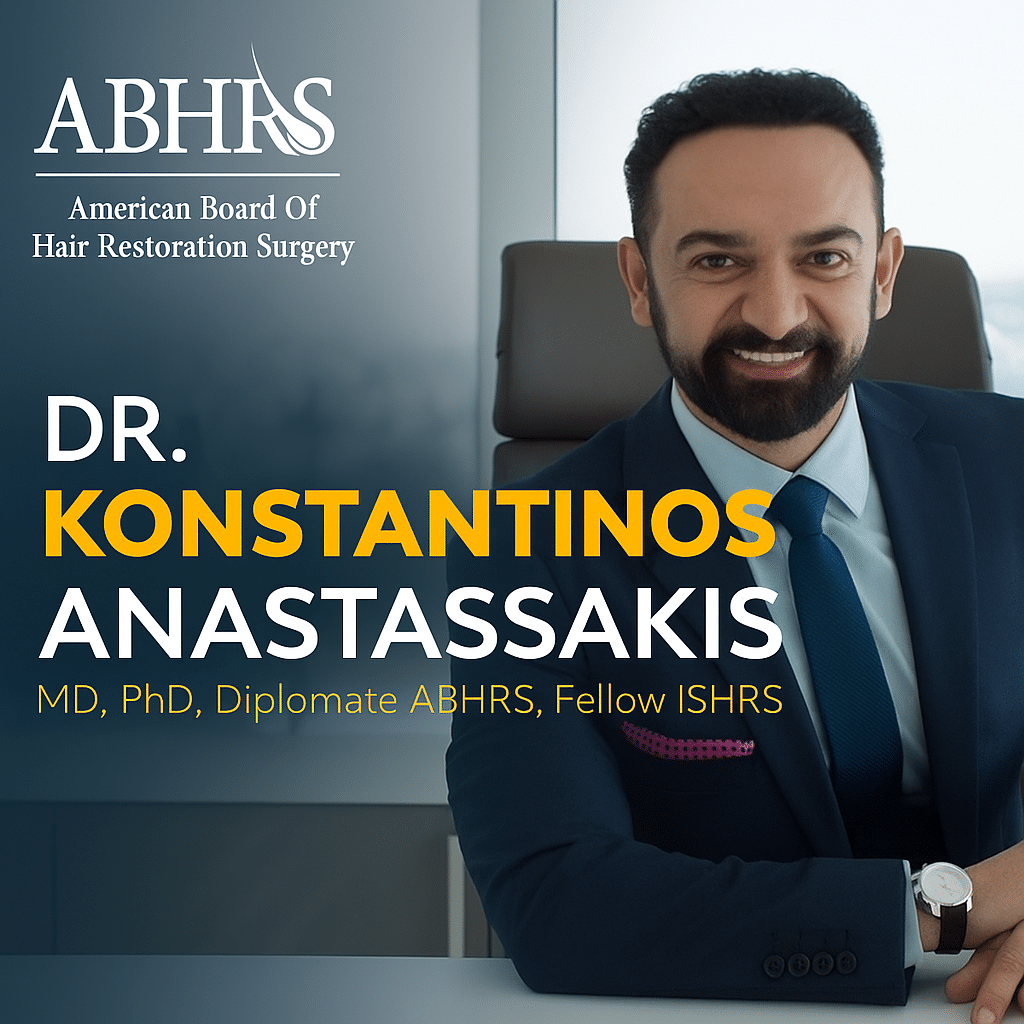
To address all these questions, we consulted Dr. Konstantinos Anastassakis, MD, PhD, member of the International Society of Hair Restoration Surgery (ISHRS), Diplomate and Board Member of the American Board of Hair Restoration Surgery (ABHRS), and President of the Hellenic Academy of Hair Transplantation and Restoration (ELAMAT) — the Greek chapter of the ISHRS.

Do you prefer the FUE technique or the FUT technique?
Dr. Anastassakis: I have no personal preference. My sole concern is what is most suitable for the patient in front of me, based on medical criteria. In modern hair transplantation, we are fortunate to have multiple “tools” to combat hair loss. It is wrong—whether out of ignorance, bias, or self-interest—to dismiss one proven surgical technique in favor of another.
There is a saying in America: “If all you have is a hammer, everything looks like a nail.” For this reason, I do not ethically or scientifically agree with those who use only one of the hair transplant techniques! Science has given us more than one “tool” to help our patients. It is malicious for someone to criticize a technique simply because they don’t know it, while pushing the one they do know indiscriminately. Each patient is unique, and the more “tools” a surgeon knows how to use, the better the outcome will be. Anything else you hear is misleading.
When is a candidate suitable for the FUE hair transplant technique?
Dr. Anastassakis: As I have often said, follicular units are the patient’s “capital,” and unfortunately, they are not unlimited. For this exact reason, the surgeon must “invest” them in the best possible way, designing a long-term strategy for managing and “investing” the patient’s precious grafts. This criterion guides my decision on whether someone is suitable for the FUE technique.
The most important factor is the number of grafts the patient needs—both at the time of examination and the anticipated total needed in the future. If the requirement is up to 2,000–2,500 grafts and I don’t foresee the total exceeding 4,000–4,500 in their lifetime, I prefer the FUE technique.
Age is equally important. For patients under 30 years old seeking a hair transplant, I generally consider FUE to be more appropriate.
Additionally, some individuals want to maintain a very short haircut. In these cases, FUE is often selected because it doesn’t leave a linear scar. However, this is an aesthetic criterion I discuss with my patients, who often have short hair to conceal thinning. After undergoing a transplant at my clinic, practically all prefer to grow their hair longer because they no longer need to hide anything—instead, they want to showcase their thick, natural hair, style it, and enjoy it!
Another medical reason I choose FUE is when a candidate is suitable for transplantation but has limited elasticity in the donor area—whether due to skin type or previous transplants that have depleted the donor’s elasticity. In such cases, FUE can be a “lifesaver,” as no other method would effectively help this patient.
Moreover, FUE is indicated when, after examination and based on medical history, there is an increased risk of wide scarring. In these situations, FUE offers a safer option.
Finally, when we want to transplant grafts to other areas such as the beard or eyebrows, FUE is the most appropriate choice because it allows us to select finer, single-hair grafts suitable for the specific needs of those procedures.

Can someone with significant hair thinning choose the FUE technique?
Dr. Anastassakis: Absolutely. When we talk about a large-scale hair transplant, we refer to a megasession—meaning more than 2,500–3,000 grafts. If the donor area can provide that many grafts, the harvesting method can indeed be FUE, but in this case, the transplant will be performed over two days.
For such extensive cases, in order to fully utilize the donor area, it is often preferable to combine both harvesting techniques—that is, to take grafts using both FUT and FUE methods. Of course, for this to be feasible, the surgeon and their team must have full expertise in both techniques and the necessary staff to manage such large procedures. This approach is called the Hybrid Technique and requires a team of at least 6–7 people.
What has increased the popularity of the FUE technique?
Dr. Anastassakis: Unfortunately, for the wrong reasons. Instead of the public being informed about the true advantages of FUE, some deliberately market it as a “magical” technique—no scars, no cuts, no pain, essentially a “non-surgical” procedure! This is truly regrettable.
While FUE performed by skilled hair restoration surgeons can yield excellent results, the technique has been brutally abused by opportunists aiming to exploit patients for easy profit, with no regard for the disastrous results they cause.
FUE is used as “bait” by various clinics worldwide to attract clients. They promote FUE hair transplantation as a purely cosmetic procedure rather than a medical surgical act, and in many of these clinics you will find 6–7 or more patients undergoing hair transplants simultaneously by non-licensed personnel.
These patients come because a doctor advertised the procedure and believe the doctor will perform the transplant and stay with them throughout. They are promised that 2,500 to 3,000 grafts can be transplanted in three hours by one person, whereas, in reality, removing about 300 grafts carefully and ensuring high survival requires at least one hour! Ultimately, the procedure is done by a non-doctor, resulting in unnatural, sparse outcomes—and only afterwards do they understand why the price was so low.
Every day, I see patients with literally destroyed scalps, with donor areas looking, to put it plainly, “moth-eaten,” exhibiting unacceptably low growth rates and unnatural, poor results!
 What do the medical organizations you belong to say about all this?
 What do the medical organizations you belong to say about all this?
Dr. Anastassakis: The issue of exploitation of the FUE technique by opportunists is a major concern for the global medical community of hair transplant surgeons.
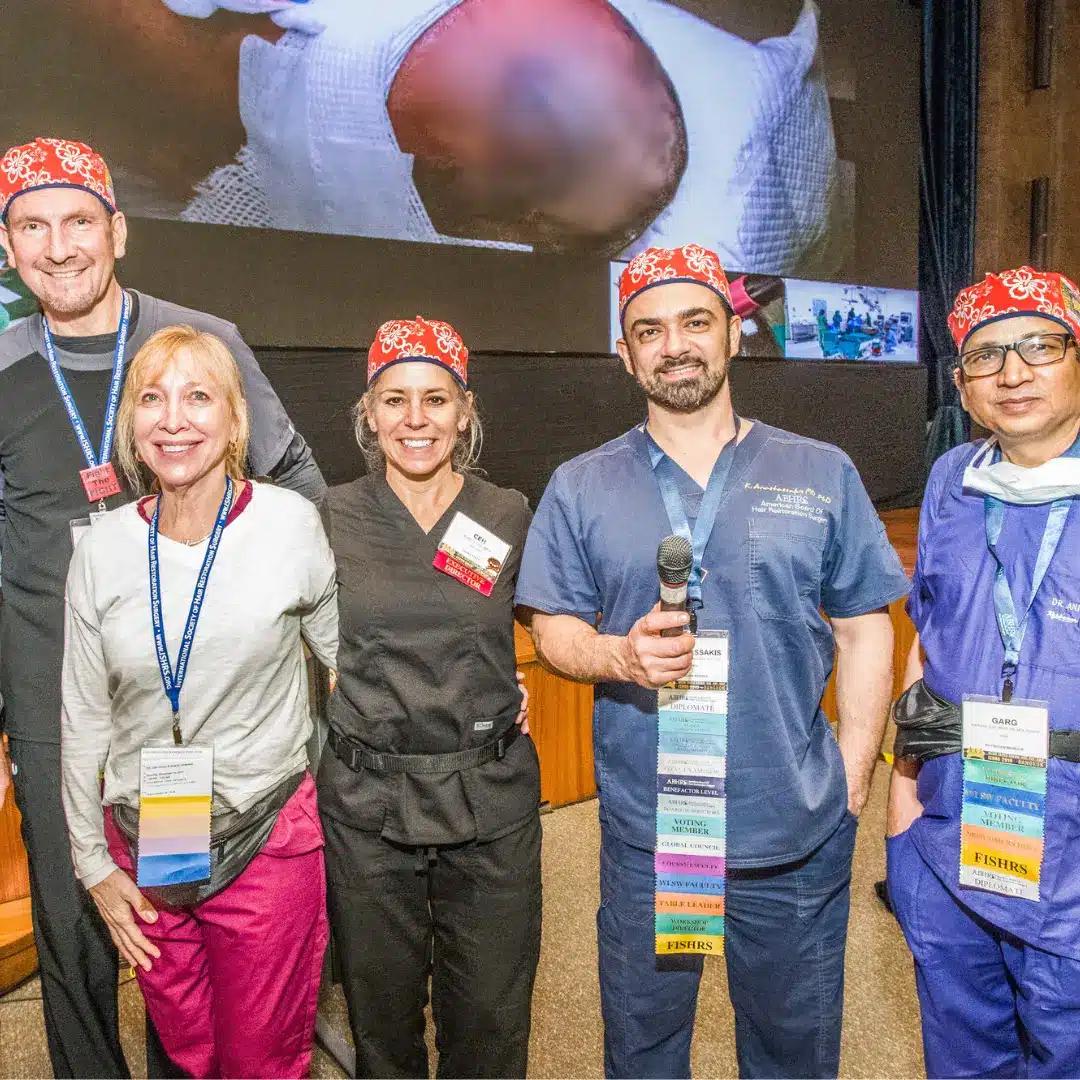
At the recent International Society of Hair Restoration Surgery (ISHRS) conference in Los Angeles, where I was a member of the organizing committee, it was decided to launch a public awareness campaign to address the phenomenon of hair transplants being performed by non-physicians and unlicensed personnel.
As I mentioned, it is a worldwide phenomenon that many clinics and institutes perform hair transplants exclusively with the FUE method—advertising it as a “new,” “modern,” “bloodless,” “scarless” technique. The catch is that, to reduce costs and maximize profits, these procedures are often carried out by non-physicians. Unfortunately, every day patients come to my clinic reporting prices offered by “clinics” that are unbelievable! Yet, these clinics sell their services cheaply to as many people as possible, exploiting the hopes of patients. Currently, hundreds of lawsuits from deceived patients are pending in the courts.
For this reason, since last year, the ISHRS has decided to redefine the terminology of the FUE technique—from Follicular Unit Extraction (where “extraction” implies removal) to Follicular Unit Excision (where “excision” implies surgical removal). This aims to emphasize the surgical nature of the procedure, especially for patients in countries where the term “extraction” is interpreted as a non-surgical practice. This change highlights that hair transplantation, regardless of graft harvesting method (FUT or FUE), should only be performed by qualified physicians
But from what we hear, the FUE method doesn’t leave scars, and that’s its biggest advantage, right?
Dr. Anastassakis: The FUE technique (Follicular Unit Excision) involves the removal of individual follicular units, one by one, from the permanent donor area at the back of the scalp. From each graft removal site, thousands of tiny scars remain—exactly as many as the number of follicular units taken. These scars are each less than one millimeter in diameter and are easily concealed by hair. Therefore, FUE is not a scarless technique, but rather a technique that disperses the scarring. The scar tissue exists, but it is not visible to the naked eye—unless someone chooses to shave their hair very short instead of keeping it at least one centimeter or longer after the transplant.
Provided the procedure is performed by a qualified physician who knows how to carefully extract the follicular units without damaging them, FUE truly leaves only minimal microscopic scars for each follicular unit removed. For example, if 100 grafts are removed, there will be 100 tiny scars; if 3,000 grafts are removed, there will be 3,000 tiny scars, and so on.
What is an “unshaven FUE session”?
Dr. Anastassakis: It is generally not a good choice for achieving a successful result in FUE hair transplantation. Let me explain why exactly:
In FUE, in order to remove several thousand follicular units one by one from the donor area, it is necessary to shave the entire donor region. This ensures that the extraction of follicular units is evenly dispersed across the entire area rather than concentrated in isolated spots. This way, even with short hair after the transplant, the density of the donor area appears normal—not patchy or thinned out.
In an unshaven session, only part of the donor area is shaved—usually the area covered by the hair above it. Unfortunately, because the follicular units are harvested only from this limited shaved region and the grafts are necessarily very close to each other, the resulting scarring becomes visible, and the donor area appears noticeably thinner compared to the surrounding untouched “virgin” skin.
The result is a donor area that looks very sparse and “moth-eaten” because the microscopic scars are so close together that they merge. Imagine how devastating this can be for someone who wants their hair transplant to be undetectable but ends up with a large visible scar at the back of their head! Ultimately, patients tend to grow their hair quite long—at least 4 to 5 centimeters—to hide this “step” in thinning and the scars.
What we must remember is that FUE requires certain conditions to be successful. The entire donor area must be shaved, and follicular units must be harvested with proper distribution and technique. Otherwise, the hair transplant will result in poor outcomes, with a visibly thinned donor area and scarring.

Is there anything prospective patients should be cautious about?
Dr. Anastassakis: The most important thing is to trust a physician specialized in hair transplantation and to conduct thorough research beforehand. Always insist on speaking directly with the doctor who will perform the transplant—not with a salesperson or consultant. Request to see the doctor’s certifications and medical license.
Discuss with the doctor the method they will use, the number of follicular units to be harvested, the design plan, and the pre- and post-operative instructions. Especially for those choosing the FUE technique, it’s crucial to be extremely cautious about whom they entrust with their scalp.
I want to emphasize again: hair transplantation—whether FUE or FUT—is a medical surgical procedure and should only be performed by a licensed physician in authorized medical facilities. Anything else poses risks not only to the result but also to the patient’s health.
Ultimately, FUE or FUT hair transplant technique?
Dr. Anastassakis: It depends on the patient and their current as well as future needs. As I mentioned before, find a doctor who is skilled in both techniques, because only then can they fully address all your needs without being biased or influenced by preferences or interests in one method over the other.
Hair transplantation is a medical procedure, and it is crucial to remember who you entrust your scalp to—because that result will be with you every day, reflected in the mirror.
The benefits of a hair transplant include an absolutely natural appearance, fully satisfying density, and a big smile every time you see yourself in the mirror.
Hair transplantation can truly change not only your appearance but your life.

 0
0