

How Permanent Are Hair Transplant Results?
Hair transplant results are generally regarded as permanent because the transplanted hair follicles are typically resistant to the hormone responsible for hair loss (DHT). Once transplanted, these follicles continue to grow naturally in their new location for a lifetime.
How Much Should a Written Guarantee of Permanence Influence Your Choice of Doctor or Clinic?
While a written guarantee may provide some reassurance, it should never be the sole factor in your decision-making process. The skill, experience, and reputation of the surgeon, as well as the clinic’s adherence to high medical standards and safety protocols, are far more important. Guarantees cannot replace quality care and expertise

Are There Factors That Can Undermine the Permanence of Hair Transplant Results?
Yes, certain factors may affect the long-term success of a hair transplant:
- Progressive hair loss in non-transplanted areas may require additional treatments.
- Underlying medical conditions or hormonal imbalances can impact hair health.
- Lifestyle factors such as stress, diet, and medication use may influence hair growth.
- Poor post-operative care or non-compliance with medical advice can affect outcomes.
For these reasons, ongoing consultation with a qualified hair restoration specialist and proper follow-up care are essential to maintain and enhance your results.
A good doctor or a specialized clinic guarantees permanent hair transplant results.
The fundamental process of a hair transplant involves transferring hair follicles from the back of the scalp—the donor area—to the recipient area. This recipient area consists of regions on the scalp that we want to either cover or densify, depending on whether they are completely bald or merely thinning.
For a hair transplant to be successful and to permanently stop hair loss, the follicles harvested from the donor area and transplanted must be hormone-resistant so they do not fall out in the recipient area due to androgen activity.
The so-called safe donor zone (SDZ) is defined as the anatomical area containing only hormone-resistant follicles—that is, follicles that do not miniaturize under the influence of androgens—and this characteristic remains after their surgical transplantation to the hormone-sensitive recipient area. Moreover, these traits of the donor follicles are genetically determined and remain stable throughout our lifetime.

Regarding graft survival:
- When the hair transplant surgeon performs the incision correctly in FUT or the follicular unit extraction in FUE,
- When the graft preparation in both techniques—FUE and FUT—is carried out meticulously by experienced technical staff, and
- When the placement of the grafts follows simple and precise protocols,
then the outcome of the hair transplant is almost always guaranteed.
It is the surgical team as a whole that enables the excellent results of modern hair transplantation, and every member must consistently work with the highest level of attention, focus, and dedication.
Graft survival is directly linked to the successful outcome of the hair transplant
If every step of the hair transplantation procedure is performed correctly, you can be confident that the result will be permanent. Remember, hair transplant results last a lifetime, as the grafts transplanted to the recipient area will continue to produce hair indefinitely—a natural advantage provided by nature itself.
However, this benefit can turn into a disadvantage if the procedure is not properly planned or executed. That is precisely why choosing the right surgeon to trust with your hair transplant is of utmost importance.
Every step of the hair implantation process must be carried out flawlessly—from strategy and design to surgical technique—because any mistake during the procedure is multiplied by the number of transplanted grafts. This is something you will notice every day when you look in the mirror.
Without a clear surgical plan, achieving the desired result becomes impossible.
An unnatural outcome—with poor design of the recipient area, thick multi-hair grafts lined up in rows, grafts growing at incorrect angles, or extremely sparse coverage—will be something you’ll have to live with forever, often with significant psychological impact. Otherwise, you will need to invest additional money to correct it… and that is not always feasible.
Imagine an artist who is asked to paint a blank canvas versus one who has to fix the work of another “colleague” with obvious flaws in the original design. The difficulty is immense.
Therefore, what truly matters to you—and should be your priority—is not permanence (which nature guarantees) but a guarantee of naturalness and density of the result. Such a guarantee can only be provided by a truly experienced and specialized surgeon, supported by a highly trained team.
Be cautious about which surgeon you choose for your hair transplant. Hair transplantation is constantly evolving, with new techniques, innovative tools, and protocols that every surgeon should know and follow. The lack of continuous training and specialization among some doctors, combined with the fact that many clinics now reduce costs by assigning procedures to non-specialized doctors—or worse, to non-physicians—puts not only the naturalness of the transplant at risk but also its permanence.
Conduct thorough research before making your decision, and don’t be swayed by offers, empty guarantees, or grand promises. Choose a surgeon who inspires trust and makes you feel secure with their expertise. Your hair transplant will be with you for life and should harmonize timelessly with your unique facial features and personal identity.
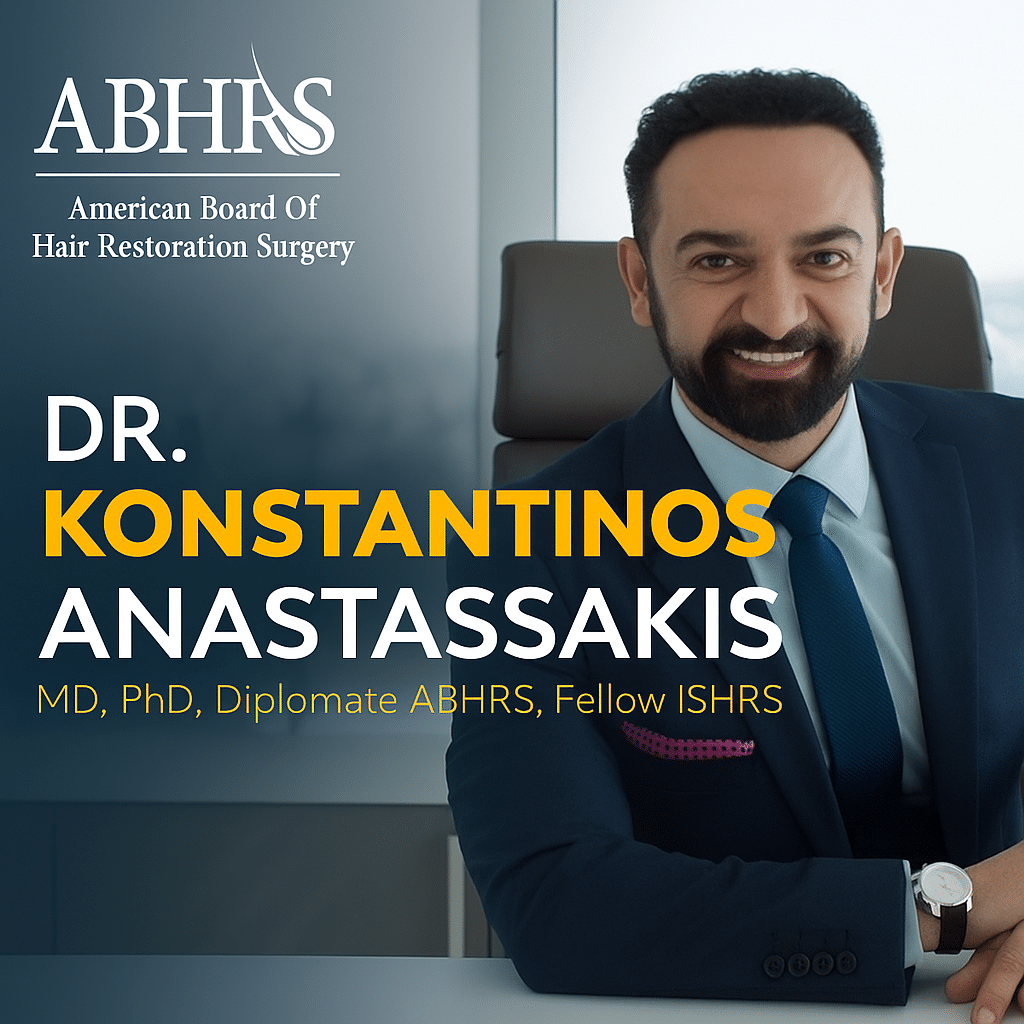
At Anastasakis Hair Clinic, we treat every patient individually with dedication, care, and professionalism, ensuring results that are completely satisfying and naturally authentic… because you will have them forever!

Read more about hair transplantation on our Blog and explore real hair transplant results!
 0
0