

AI in Hair Transplantation
Artificial intelligence is increasingly being integrated into hair transplantation through robotic systems that automate certain phases of the surgical procedure, as well as advanced measurement systems. Intelligent AI-powered follicle detection and measurement technologies, combined with complex algorithms and powerful analytics, provide the surgeon with precise data about the available hair follicles in the donor area. This enables accurate planning of how many follicles to extract and transplant to the recipient site.
Measurements related to follicle density per square centimeter, hair thickness, and other critical parameters in both the donor and recipient areas are now automated thanks to AI, enhancing precision when used by a skilled hair transplant surgeon. By incorporating artificial intelligence into hair transplantation, the future of the field looks exceptionally promising.
Can Artificial Intelligence Be Misused in Hair Transplantation?
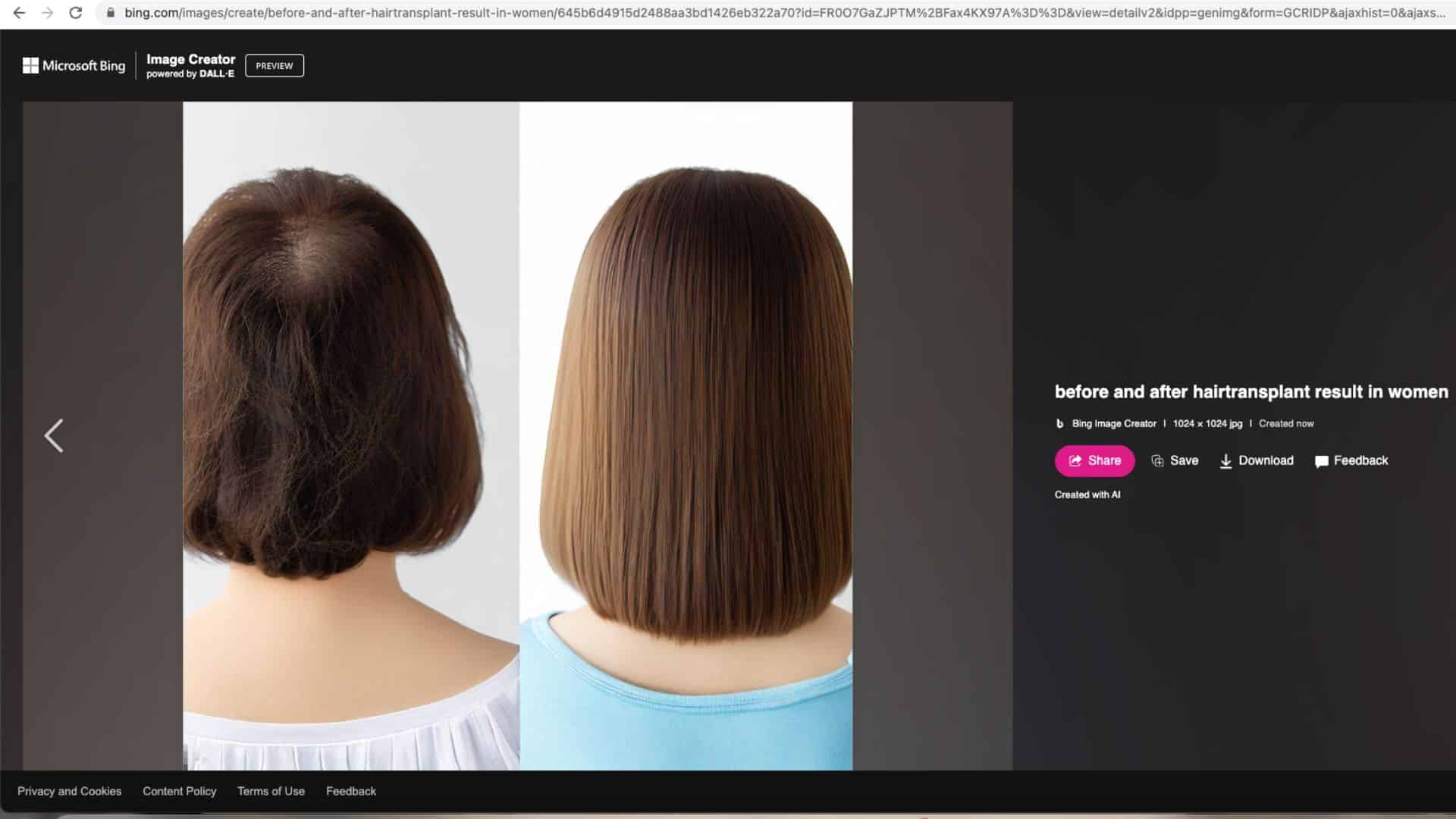
While AI in Hair Transplantation significantly facilitates the surgical process, it can also be misused as a tool to deceive potential patients. Recently, there has been increased discussion about AI-powered image generation programs. Some of these tools create such highly realistic artificial images that they have even been recognized and awarded over genuine photographs.
But how could these AI-generated images, created under the guise of hair transplantation results, be exploited by unscrupulous individuals or so-called “clinics” to mislead patients? Before addressing this question, it’s important to clarify what we mean by the term “artificial intelligence.”
 .
.
What Is Artificial Intelligence?
Artificial Intelligence (AI) is defined as the ability of a machine to replicate human cognitive functions such as learning, planning, and creativity. The machine ‘understands’ its environment, solves problems, and acts to achieve a specific goal. A computer receives data (either pre-existing or collected via sensors, e.g., cameras), processes it, and responds accordingly. Based on this definition, it becomes clear why AI in Hair Transplantation is both a milestone and a topic of extensive discussion.
In 2023, AI is one of the most popular topics worldwide, largely due to the release of ChatGPT (Chat Generative Pre-trained Transformer) by OpenAI in November 2022. Most people are impressed by their first encounter with this technology. The competition among various AI chatbots and search engines is intensifying, with major players such as Alphabet (Google) launching Bard and Baidu in China releasing Ernie.
Let’s take a closer look at how the introduction of artificial intelligence into hair transplantation—and other fields—has transformed their way of operating.
Images Created by Combining Artificial Intelligence with Other Methods in Hair Transplantation
On March 21, 2023, Bing launched the groundbreaking Bing Image Creator, powered by DALL·E—also developed by OpenAI. This tool can generate any image you desire simply by typing a description. The well-known saying, “A picture (even an AI-generated one) is worth a thousand words,” has now taken on a whole new meaning.
Before the rise of AI in Hair Transplantation many clinic websites used other questionable techniques to attract clients, such as blurry photos or borrowed results from other clinics.
Equally widespread is the practice of some “clinics” presenting before-and-after photos of patients from other clinics as their own results. According to several surgeons, this is a serious problem—and unfortunately, it is likely to worsen with the rise of artificial intelligence.
Fake Results Assisted by Artificial Intelligence in Hair Transplantation
Artificial intelligence is now integrated into hair transplantation, meaning that there is no longer a need for anyone to appropriate photos from others. Additionally, there are other paid AI image generation software such as Midjourney and Stable Diffusion, which have been popular since 2022.
However, the quality of images produced by artificial intelligence in hair transplantation can still be inferior in some cases, as shown in the examples below depicting before and after hair transplant results.
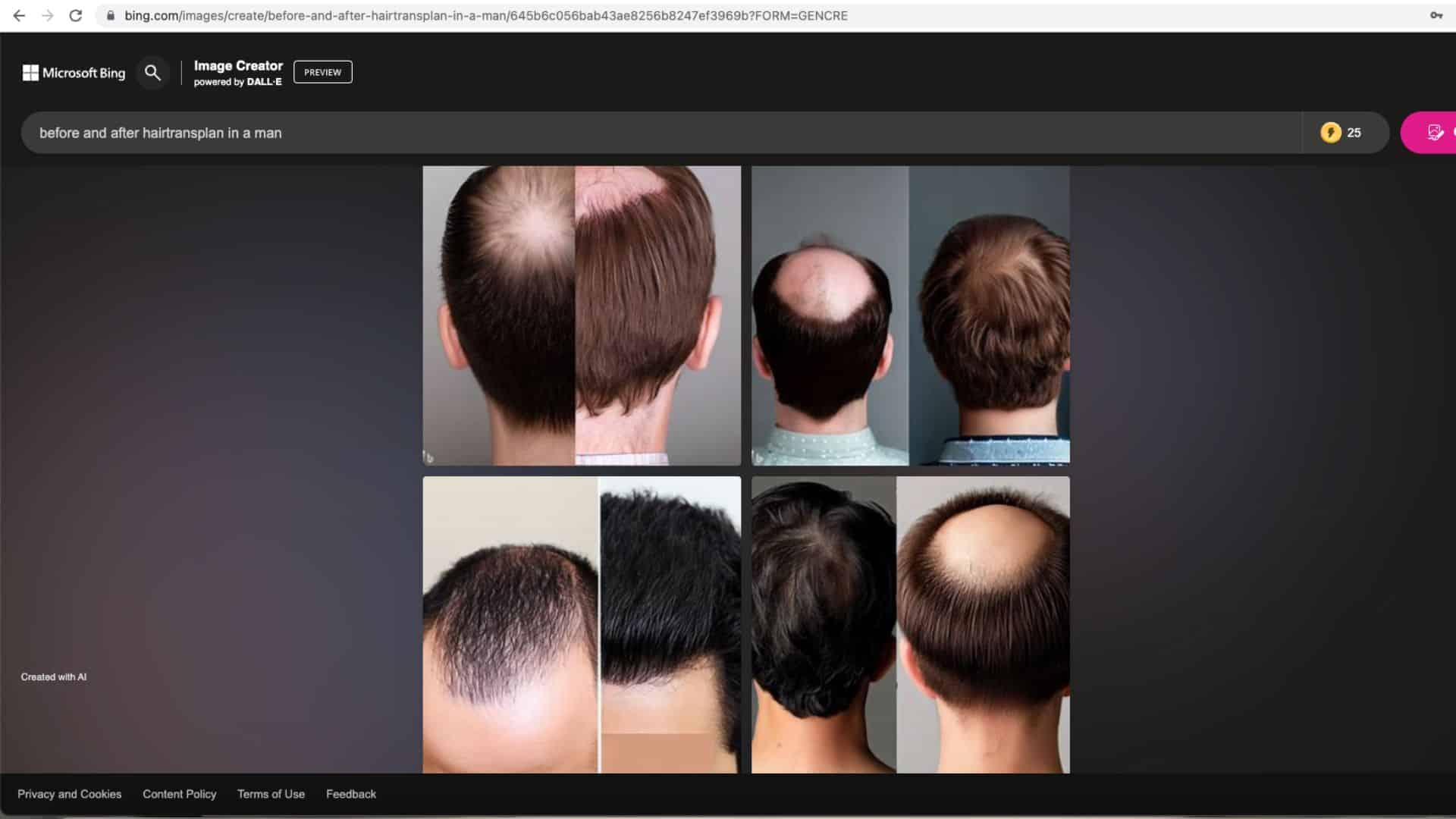
Until now, AI-generated images may not always be entirely realistic. However, it is certain that in a short time, these fake photos created by artificial intelligence will be perfected to the point of being indistinguishable from real ones. These AI systems continuously “learn and improve” based on user feedback. For the moment, it appears that artificial intelligence in hair transplantation tends to focus primarily on the crown area of the scalp.
A Future That Appears Unsettling…
Inevitably, in the coming years, we are likely to see many opportunists in our field using artificial intelligence in hair transplantation to mislead potential patients. It will become nearly impossible to distinguish truth from deception. It wouldn’t be surprising if even “before-and-after” photos from so-called “clinical trials” turn out to be entirely fabricated. Such developments could raise serious ethical concerns and undermine the credibility of the hair transplantation and restoration industry.
How to Spot the Use of AΙ in Hair Transplantation
Pay close attention to newly established clinics that, despite being recent entries in the industry, flood the market with dozens of “before-and-after” hair transplant cases. Their limited presence and experience in the field simply cannot justify such a high number of documented procedures.
Be equally cautious with “clinics” that, until recently, featured only a handful of hair transplant results on their website, yet suddenly showcase an overwhelming number of new cases.
At Anastasakis Hair Clinic, you can be 100% certain that every result you see is absolutely real. Our patients’ hair transplant outcomes meet the following standards:
- High-definition close-ups that show each follicle growing naturally from the scalp.
- Photos from every possible angle to ensure transparency and clarity.
- Consistent lighting conditions, with the clinic’s logo clearly visible in the background.
- Images with both dry and wet hair, wherever applicable, to show realistic density and texture.
Most importantly, many of our cases are also accompanied by video footage, offering undeniable proof that what you see at Anastasakis Hair Clinic is 100% authentic.
👉 Click here to view real hair transplant results using both the FUE and FUT techniques, performed exclusively at our clinic.
 0
0