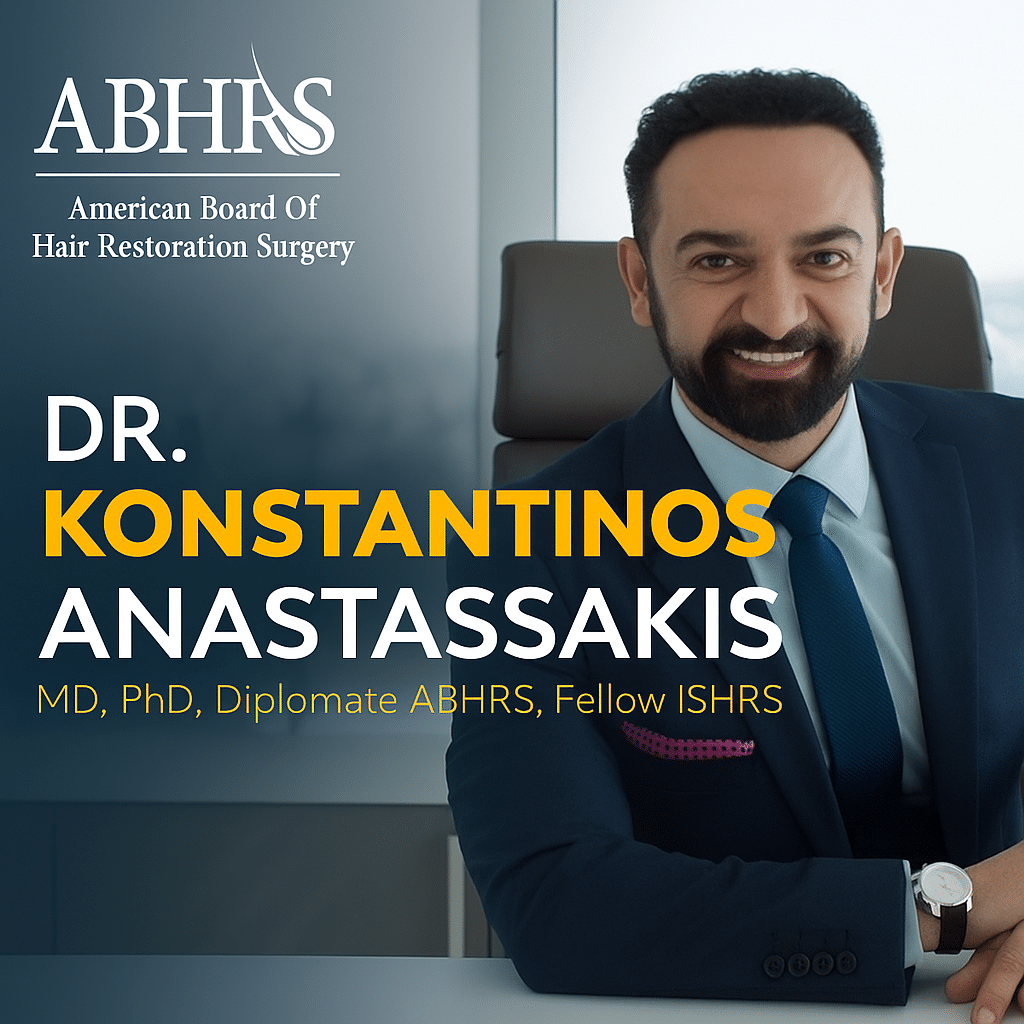


 Actor and director Stelios Kalathas chose Dr. Konstantinos Anastasakis and the Anastasakis Hair Clinic for his hair transplant. He shares his reasons for this choice and discusses the design of his personalized hair transplant procedure with the doctor. In the videos that follow, we watch step-by-step the entire process—from the initial trichoscopy to the 10th day post-operation.
Why I Chose Dr. Konstantinos Anastasakis
Stelios Kalathas explains why he selected Dr. K. Anastasakis, the key criteria behind his choice, how he decided to undergo a hair transplant, and why he preferred the FUT technique over FUE.
“I had been thinking for some time about getting a hair transplant. As the years go by, hair loss becomes more noticeable, and since I am an actor, my appearance always needs to be flawless. Honestly, I hadn’t seen very good results from other colleagues who had undergone hair transplants at different centers or clinics, which initially made me hesitant. However, I conducted thorough research and prepared myself mentally to move forward with a hair transplant. When I visited Anastasakis Hair Clinic, I immediately felt trust, confidence, and security in the doctor. It’s no coincidence that Dr. Konstantinos Anastasakis is the first Greek physician to be a Diplomate of the American Board of Hair Restoration Surgery (ABHRS). But what truly won me over was seeing the results of his work with my own eyes! Ultimately, I believe this is the main reason I entrusted Anastasakis Hair Clinic.
Regarding the choice of hair transplant technique, my doctor thoroughly explained the pros and cons of each method. Initially, I was considering the FUE technique, where grafts are extracted one by one, but my doctor explained that I would need to shave my head, which wasn’t possible because I had performances scheduled. So, together, we decided that the FUT technique was the best option for me. With a single session, I could receive more grafts and achieve a denser result. It was the ideal technique for my case!”
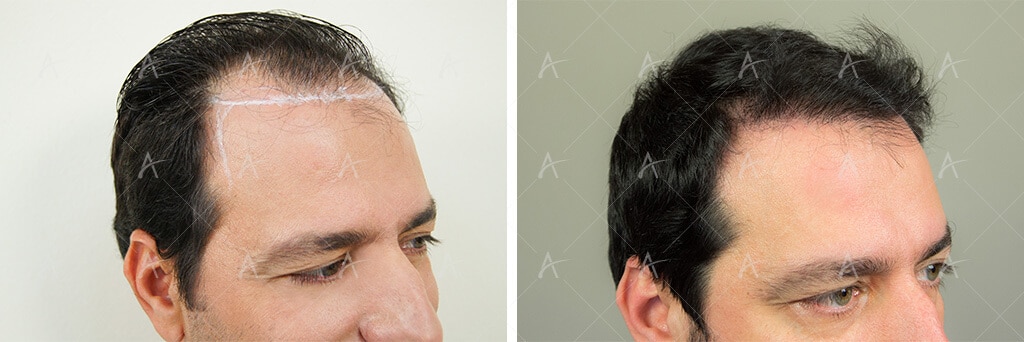


Consultation and Planning
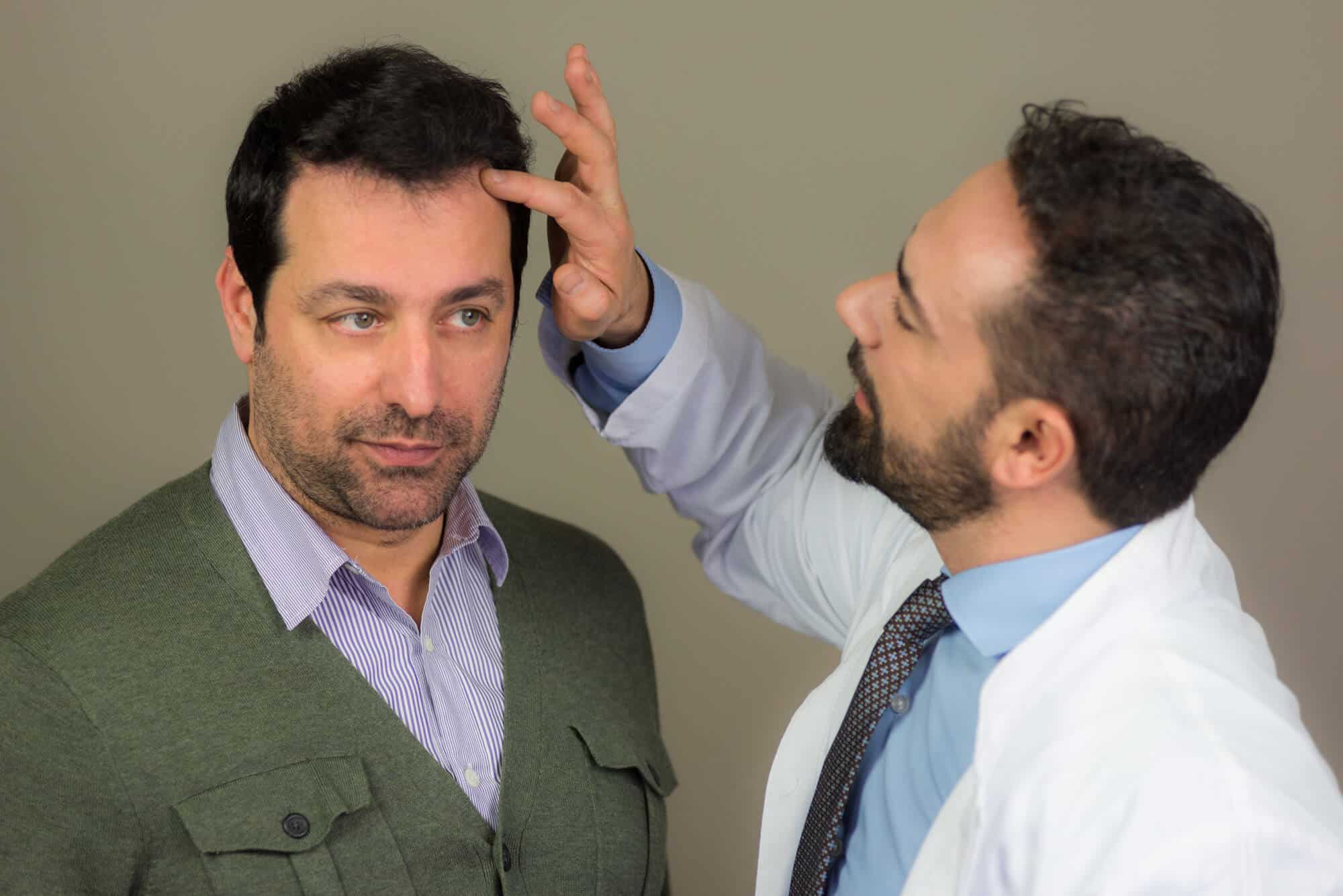
During the consultation with Dr. Konstantinos Anastasakis, a trichoscopy, hair density measurement, and a comprehensive evaluation of the donor area were performed. Finally, the precise design of the hairline and crown was completed prior to Stelios Kalathas’ hair transplant.
The first step was assessing Stelios’ donor area — a crucial evaluation before proceeding with a hair transplant to determine candidacy. The donor area is located at the back of the scalp and is where the follicular units for transplantation are harvested. Hair follicles from this area are permanent and will never fall out. The key characteristics evaluated include hair density, hair thickness, and the number of hairs per follicular unit. Each follicular unit is transplanted intact to the recipient site. For example, a follicular unit containing four hairs is not split into four separate units, nor are four single-hair units combined into one. Therefore, follicles are isolated and transplanted one by one. This meticulous process is essential for achieving completely natural and dense results.
Older techniques did the exact opposite — they harvested multi-hair grafts and transplanted them into large recipient sites. This method is now prohibited in modern hair transplantation. The goal is to replicate nature, which requires not only expertise but also passion, effort, and artistry.
The next step is designing the hairline and the crown area. Both areas must mimic the natural hair growth patterns, making the direction in which grafts are placed critically important. The crown is especially challenging because it requires the most artistry. The whirl pattern of hair growth in the crown is difficult to reproduce and demands significant experience and expertise in hair transplantation to ensure a flawlessly natural result.
Follicular Unit Dissection
Watch the preparation and meticulous dissection of natural follicular units using specialized Mantis® Vision stereomicroscopes. The follicular units are continuously preserved in advanced electronic cooling units at a stable temperature of 6°C, immersed in a liposomatic ATP solution. Discover why natural follicular units achieve the highest survival rates at Anastasakis Hair Clinic!
Creating Recipient Sites at the Hairline
Creating recipient sites to accommodate natural follicular units in the highly demanding aesthetic area of the hairline requires exceptional precision and care. The sites are made one by one, with careful adjustments in density, direction, and angle at every point to ensure a completely natural result.
The process begins with the administration of local anesthesia. Once numb, the creation of recipient sites starts. These sites are almost always created using micro-blades ranging from 0.7 to 1.0 mm in width. However, in Stelios’ case, 20G, 19G, and 18G needles were preferred due to the larger size of his follicular units. Just 2 mm of high-density recipient sites at the hairline require over 400 single-hair grafts. This clearly shows that claims of coverage with only 1,000 hairs or 500 follicular units—commonly advertised—are unrealistic, as such numbers are not sufficient even for half a temple.
The procedure is so comfortable that patients can sometimes even fall asleep during it.
The greatest challenge in creating recipient sites is protecting the existing hair without damaging any surrounding follicular units. Depending on the area of the scalp, the angle, direction, depth, and diameter of the recipient sites vary. A hairline with a depth of 7-8 mm requires more than 650 single- and double-hair grafts. For covering Stelios’ hairline and temples, 1,600 recipient sites were created to accommodate 400 single-hair, 700 double-hair, and 500 multi-hair follicular units. These 1,600 grafts correspond to approximately 3,500–4,000 hairs.
The same meticulous approach will be applied to creating recipient sites in the crown area.
Stelios Shares His Impressions!
During the procedure, Stelios shares with us his experience and what impressed him most about his Hair Transplant:
“The outstanding nursing team at the clinic, the smiling faces of the staff, and the positive energy from the moment I arrived made me feel completely safe and confident that I had made the best choice for my hair transplant! I was amazed at how skilled and knowledgeable the nurses were. Although the whole process was a bit tiring and quite time-consuming, it’s not something you do every day, so overall, it was a very positive experience.”
See Stelios Kalathas’ Hair Transplant Results — Just 7 Months Later!
Stelios Just 3 Days After His Hair Transplant!
See Stelios only 3 days after the transplant, right after his first wash! No swelling, no redness, no pain or discomfort whatsoever!
Ο Στέλιος 10 ημέρες μετά την Μεταμόσχευση, εντελώς ΑΟΡΑΤΗ ΟΥΛΗ!
FUT technique with a barely visible 0.5mm scar!
Dr. Konstantinos Anastasakis removes the tiny suture from Stelios Kalathas’s donor area, debunking the myth of LARGE scars in modern hair transplantation. See it with your own eyes!
Post-Transplant Care Instructions for Stelios
Ten days after his completely successful hair transplant at Anastasakis Hair Clinic, Stelios Kalathas returns for suture removal and to receive detailed aftercare instructions to follow over the coming weeks, until his new hair grows in.
The doctor explains, step-by-step, the process and stages involved in a modern hair transplant to every patient choosing Anastasakis Hair Clinic for their procedure.
Modern hair transplantation ensures 100% natural results with perfect density, leaving no visible scars or signs of the past. The procedure is completely hassle-free for the patient and does not interfere with daily activities starting as early as the very next day.
Natural appearance, density, a remarkable transformation in look, and the absence of any discomfort post-surgery can only be achieved when the hair transplant is performed by a specialized and certified surgeon in advanced hair restoration techniques, supported by an experienced and well-trained surgical team.
 0
0