

First Published: August 2016 | Last Updated: September 2021
Key Concepts
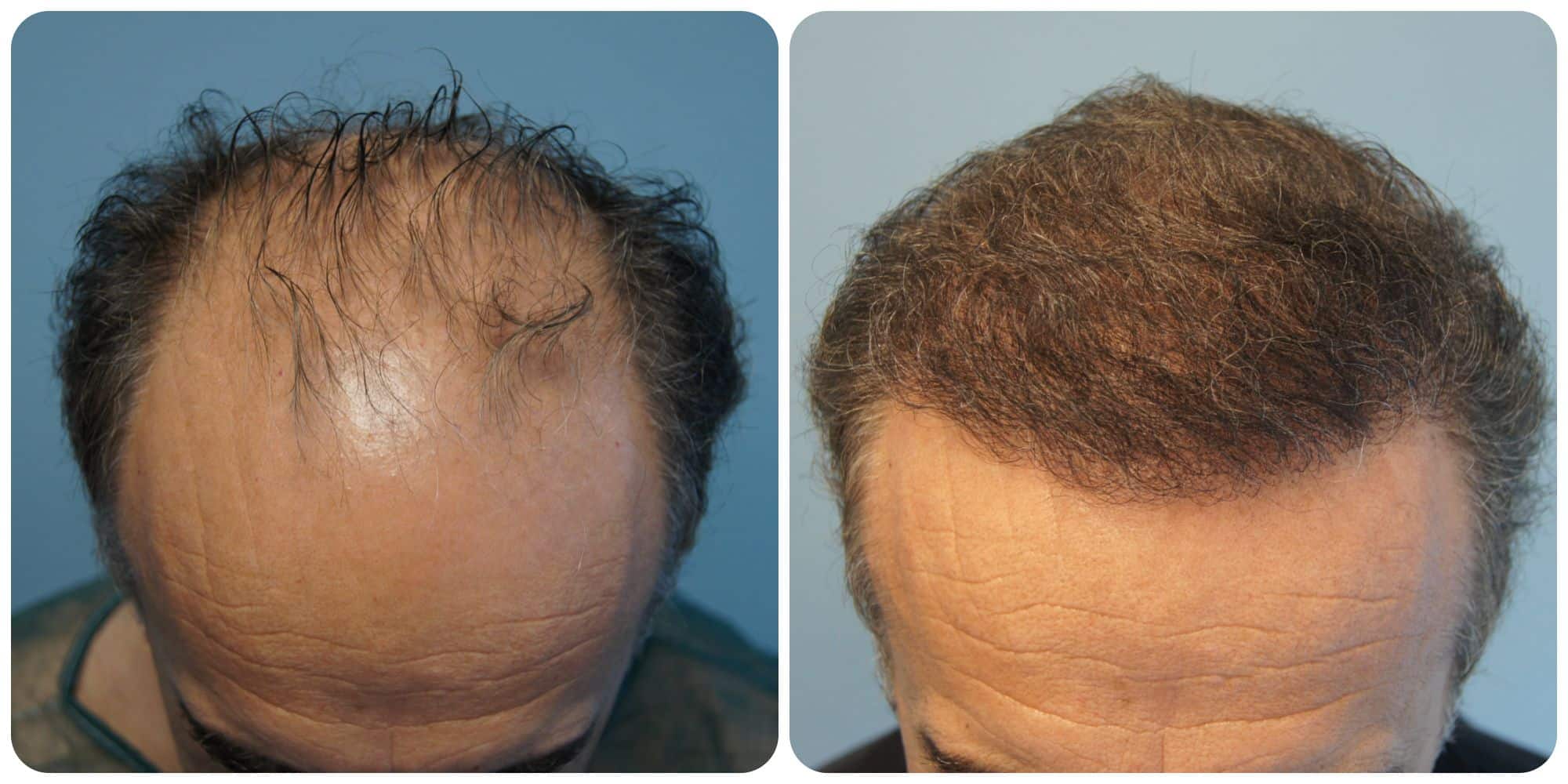
In hair transplant megasessions, between 3,000 to 5,000 follicular units (FUs) are transplanted in a single session. The goal is to achieve maximum coverage and density across multiple areas of the scalp in one procedure.
There are several strong arguments in favor of megasessions, including:
- More complete results in fewer procedures
- Fewer incisions and less cumulative trauma
- Reduced need for medications
- Less overall discomfort
- Lower total cost and cost per graft
However, there are also drawbacks, such as:
- Potential for lower graft survival rates
- Greater trauma to the recipient area
- Need for shaving both the donor and recipient areas
It’s important to emphasize that very few surgical teams worldwide are truly capable of performing megasessions lege artis (by the book), and as you read on, you’ll understand why.
What Is a Megasession?
The term “megasession” refers to hair transplant procedures involving a large number of grafts, typically more than 2,500 FUs. The first to report a session with over 1,000 mini/micro-grafts was Uebel in 1983. His technique did not gain much attention until 1992, when the Moser team presented a similar approach.
Until the early 1990s, the “psychological limit” for hair transplant sessions was around 1,000 FUs. Later, Dr. Rassman introduced sessions reaching up to 3,600 FUs, managing in a single procedure to almost fully restore patients with Norwood stage VI androgenetic alopecia.
This approach was later widely adopted and further refined, especially in terms of graft preservation solutions, surgical instruments, and local anesthesia protocols.
Today, several renowned specialists exclusively perform megasessions, most notably Hasson & Wong, who report consistently achieving over 5,000 FUs per session with very high graft survival rates. Dr. Wong even states that the future of hair transplantation lies in high-density megasessions, aiming to fully restore the scalp in a single session—also known as a “one-pass hair transplant“.
Advantages of Hair Transplant Megasessions
Supporters of megasession hair transplants highlight the following key advantages:
1. Social Reasons
The primary motivation for most patients seeking a hair transplant is to improve their appearance—and they want to see complete results as soon as possible.
There is arguably no quicker way for a cosmetic surgeon to undermine patient confidence than to subject an already emotionally vulnerable individual to a long, drawn-out process of multiple minor, incomplete procedures.
Undergoing repeated surgeries disrupts the patient’s daily life and often leads to a frustrating experience where they feel like their hair is perpetually “under construction.”
This is especially true for individuals with demanding professional or social schedules, where taking time off work multiple times is simply not feasible. For these patients, a megasession is the only viable option.
2. Medical Reasons
From a medical standpoint, it is preferable to minimize the number of surgical procedures and the total amount of anesthetic agents used.
Much like it’s now common practice to combine rhinoplasty and septoplasty into one operation (to avoid two separate surgeries in the same anatomical region), it makes sense to perform one comprehensive hair transplant session rather than subject the patient to multiple procedures and recoveries.
3. Practical Considerations – Donor Area Management
Every time a strip graft is harvested from the donor area, a small percentage (~0.5%) of follicular units is inevitably lost due to transection or trauma.
Additionally, each healing cycle causes reorganization of collagen, alters the angle and direction of hair growth, and increases the risk of follicular transection during any future procedures.
This makes it strategically smarter to perform the largest possible session during the first procedure, when the scalp is untouched and healing potential is optimal.
Scalp closure complications in future sessions are often the result of suboptimal technique during the initial closure. To minimize such risks, surgeons aim to maximize graft extraction in the first session, followed by smaller touch-up sessions if needed.
Furthermore, attempting to place grafts in areas previously transplanted can reduce survival rates due to compromised blood supply and the presence of microscar tissue from earlier procedures.
Therefore, it is medically advantageous to implant as many grafts as safely possible during the first session (the so-called “one-pass hair transplant”)—provided this is done without surgical overreach and with careful attention to graft survival and patient safety.
Practical Considerations Specific to FUT
With the Follicular Unit Transplantation (FUT) technique, the characteristics of the donor area determine the follicular unit (FU) composition—i.e., whether the grafts are single-hair, double-hair, or contain more follicles. The strip excised contains a fixed number of FUs with 1, 2, 3 or more hair follicles, which must not be dissected to artificially produce single-hair micrografts.
A typical hairline design requires approximately 250–400 single-hair FUs.
In a patient with a calculated density of 2 follicular units per mm², if the harvested strip yields fewer than 250 single-hair grafts, there won’t be enough to properly construct the hairline.
Conversely, in order to extract the necessary number of single-hair FUs, the surgeon will need to harvest a larger strip, which inevitably results in a surplus of multi-hair grafts for the rest of the recipient area—making a megasession not only logical but necessary.
Reasons for Anticipating Postoperative Telogen Effluvium
Regardless of the surgical technique used or the size of the session, when areas of the scalp that already have some existing hair are transplanted—no matter how weak or strong that hair may be—there is a possibility that native follicles in those areas may shed temporarily or even permanently.
This phenomenon is thought to be related both to the trauma and “shock” of surgery, and to the release of inflammatory molecules due to injury in the recipient area, as well as to reperfusion injury from the implanted grafts.
Hair follicles that are already in the process of miniaturization are more likely to shed. If they are near the end of their life cycle, they may not regrow at all.
In some cases, this shedding is mild and goes unnoticed. In others, it may be more pronounced. However, if the patient is not in an especially active phase of androgenetic alopecia, with a large number of follicles undergoing miniaturization, the shed hairs are typically expected to regrow after a period of time.
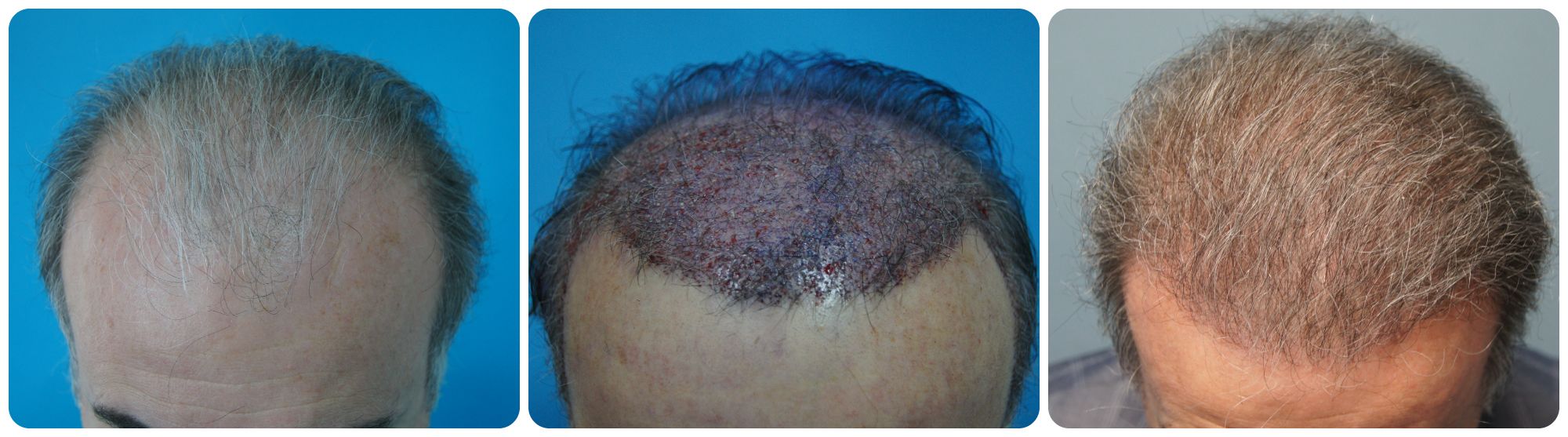
A megasession will typically restore the recipient area with such density and coverage, that even the loss of some miniaturized native hairs will likely go unnoticed.
Financial Reasons
From both a cost-efficiency perspective for the patient and an ergonomic standpoint for the surgical team, performing megasessions is generally more advantageous than conducting multiple smaller sessions. As a result, the cost per graft is typically lower and more attractive when the patient opts for a megasession.
Disadvantages of Hair Transplant Megasessions
However, the disadvantages of megasessions stand in stark contrast to the aforementioned advantages.
Social Reasons
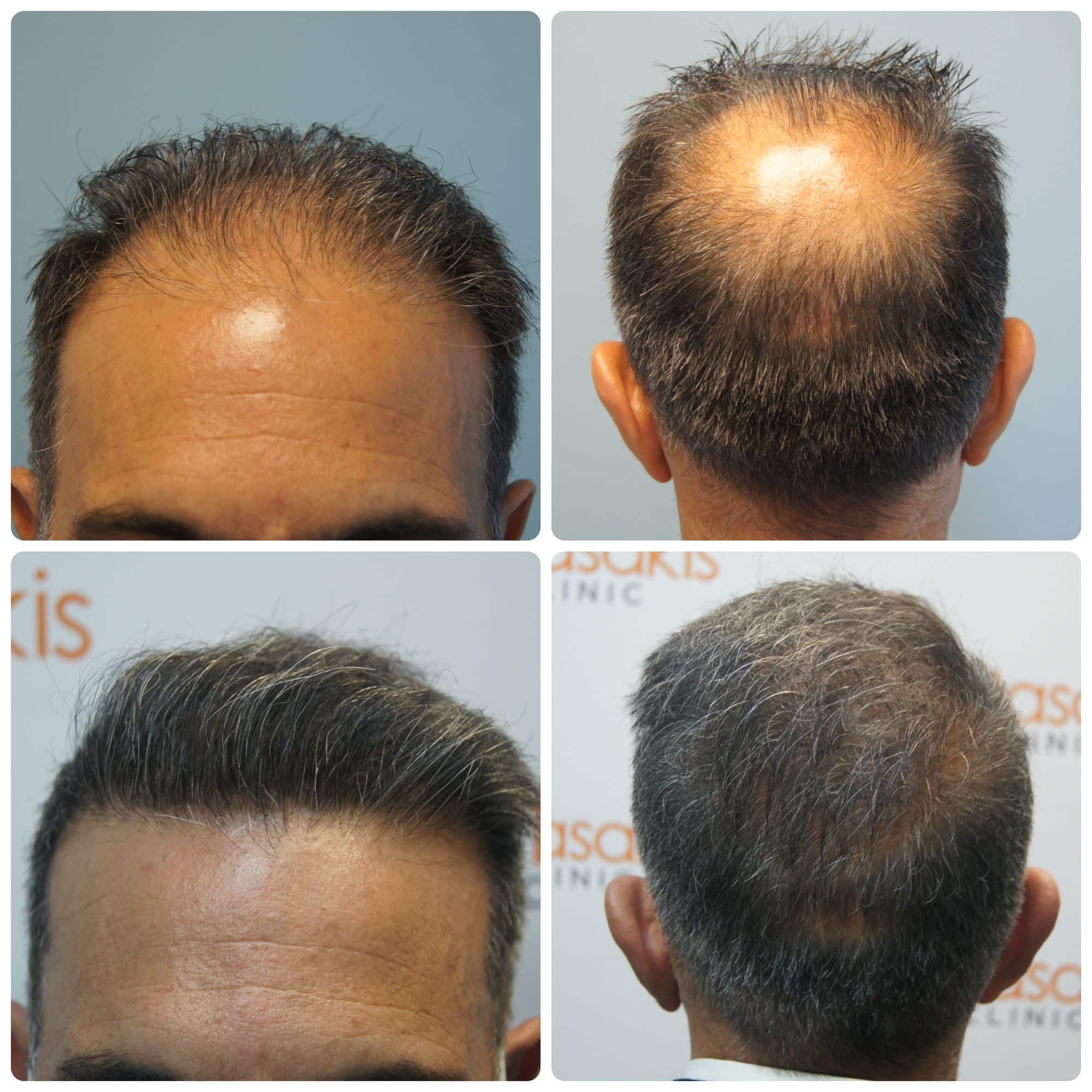
The patient should be guided towards achieving long-term results rather than chasing impressive but potentially impractical methods. Megasessions often require the patient to shave the entire recipient area to a length of less than 2 mm. Many patients are hesitant to do this. In such cases, the number of grafts offered should be reduced to levels that do not excessively prolong the duration of the hair transplant and do not compromise graft survival. (Fig.3)
Medical reasons
Anesthesia in hair transplantation (FUT/FUE) is local with a very low risk of systemic complications. However, to tolerate a megasession lasting 9–12 hours, the patient often requires supplemental intravenous sedation (conscious sedation), as well as large total doses of local anesthetics, which increase the risk of local or systemic complications
Practical Reasons Concerning the Donor Area in Hair Transplantation (FUT)
With each additional strip graft removal, the previous scar is also removed or serves as the upper or lower boundary of the incision. Moreover, a megasession requires a longer and wider incision, which increases the chances of complications in the donor area, mainly in the form of wide scarring, anagen effluvium, and injury to significant vascular branches. Generally, 3500-4500 follicular units (FUs) can be harvested in one megasession, and only patients with ideal donor area characteristics can hope for more than 5000 FUs. Specific scalp exercises that increase scalp laxity (scalp laxity exercises) should be recommended to the patient 3 months prior to the megasession, as they can significantly improve graft harvesting from the donor area.
Practical Reasons Concerning the Recipient Area in Hair Transplantation (FUT)
It should be remembered that creating thousands (>4000) of recipient sites in the recipient area can potentially exceed the safe “limit” of microvascular damage to the scalp. For this reason, only micro-blades with the minimal possible width are used for creating the recipient sites. With the establishment of megasessions, even in the most experienced surgical teams, the grafts’ out-of-body time can sometimes reach 9–12 hours. It is extremely important to keep the follicular units (FUs) outside the body for as short a time as possible, maintaining them hydrated in special nutrient storage solutions supplemented with Vitamin B12 and aminoguanidine, and kept at low temperatures.
Practical Reasons Specific to FUΤ
A significant disadvantage of megasessions is that if the graft growth is not satisfactory (<85%), the donor area is almost exhausted, and the patient cannot hope for further improvement in appearance later on. Additionally, with smaller sessions, there is greater future flexibility to cover areas of the scalp that were not expected to thin but eventually developed androgenetic alopecia. However, with newer techniques such as FUE and body-to-scalp FUE, it is generally accepted that a real shortage of grafts for a patient will rarely be encountered in the future, provided that proper initial graft distribution has been done and realistic expectations are set.
Predictive Factors for Postoperative Telogen Effluvium
The more extensive the session, the greater the likelihood of extensive telogen effluvium. The infliction of thousands of microtraumas in the recipient area results in shock and local ischemia, often causing delayed graft growth. Under normal conditions, grafts revascularize in the recipient area 3-4 days after hair transplantation; however, after megasessions, revascularization may be delayed. Smaller sessions carry a lower risk of telogen effluvium, and it is believed that in some megasessions, the recipient donor area cannot adequately meet nutritional demands due to insufficient blood supply. Nevertheless, this claim has not yet been proven.
Economic Reasons
The patient may prefer to see a complete result quickly, but not all patients have the financial capability to afford the “mandatory” megasession. The cost of a megasession is clearly higher than that of a regular session, and many patients cannot cope with such an expense. The megasession is more expensive for the patient, at least in the short term, even though the cost per graft is ultimately lower.
Reasons concerning the surgical team
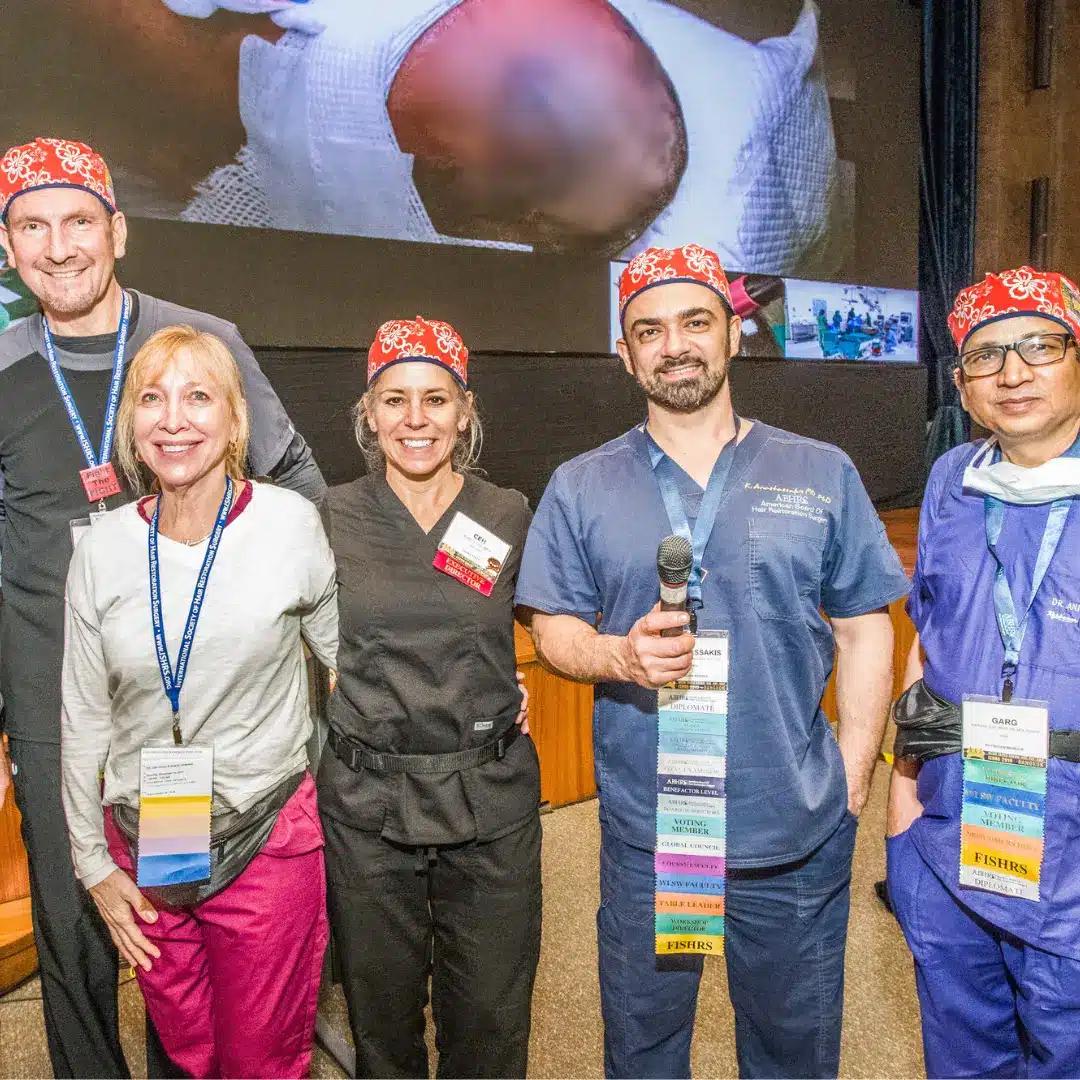
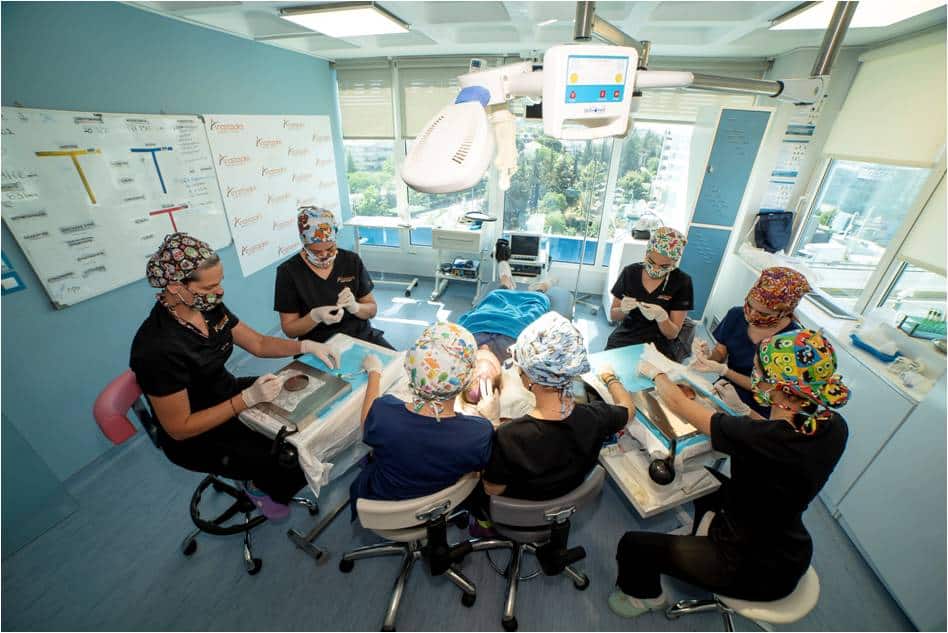
Megasession procedures require more staff and are more demanding for the surgeon. The most important factor for the success of megasessions is the surgical team, as their experience and skill essentially determine the success of these sessions. The surgeon must know how to assemble and train such a capable team, how to maintain enthusiasm, teamwork, interest, and excellent work quality, and unfortunately, very few meet all these requirements (Fig. 4).
SUMMARY
Both the advantages and disadvantages of megasession hair transplants are significant and valid. The essence of all these arguments must also be considered alongside the patient’s perspective. The nearly complete and often impressive results of megasessions are associated with significantly higher patient satisfaction. This factor is perhaps the most decisive, as satisfaction builds trust, and trust, in turn, gradually restores the negative image that has spread among the public about hair transplant procedures. However, megasessions are “cutting-edge” procedures with zero margin for error and should only be performed when the conditions for excellent execution have been fully ensured.
If you would like to find out whether you are a suitable candidate, as well as the results you can expect from a hair transplant, please contact us today and book an informational appointment at our clinic in Athens, located at 57 Alexandras Avenue.
 0
0