


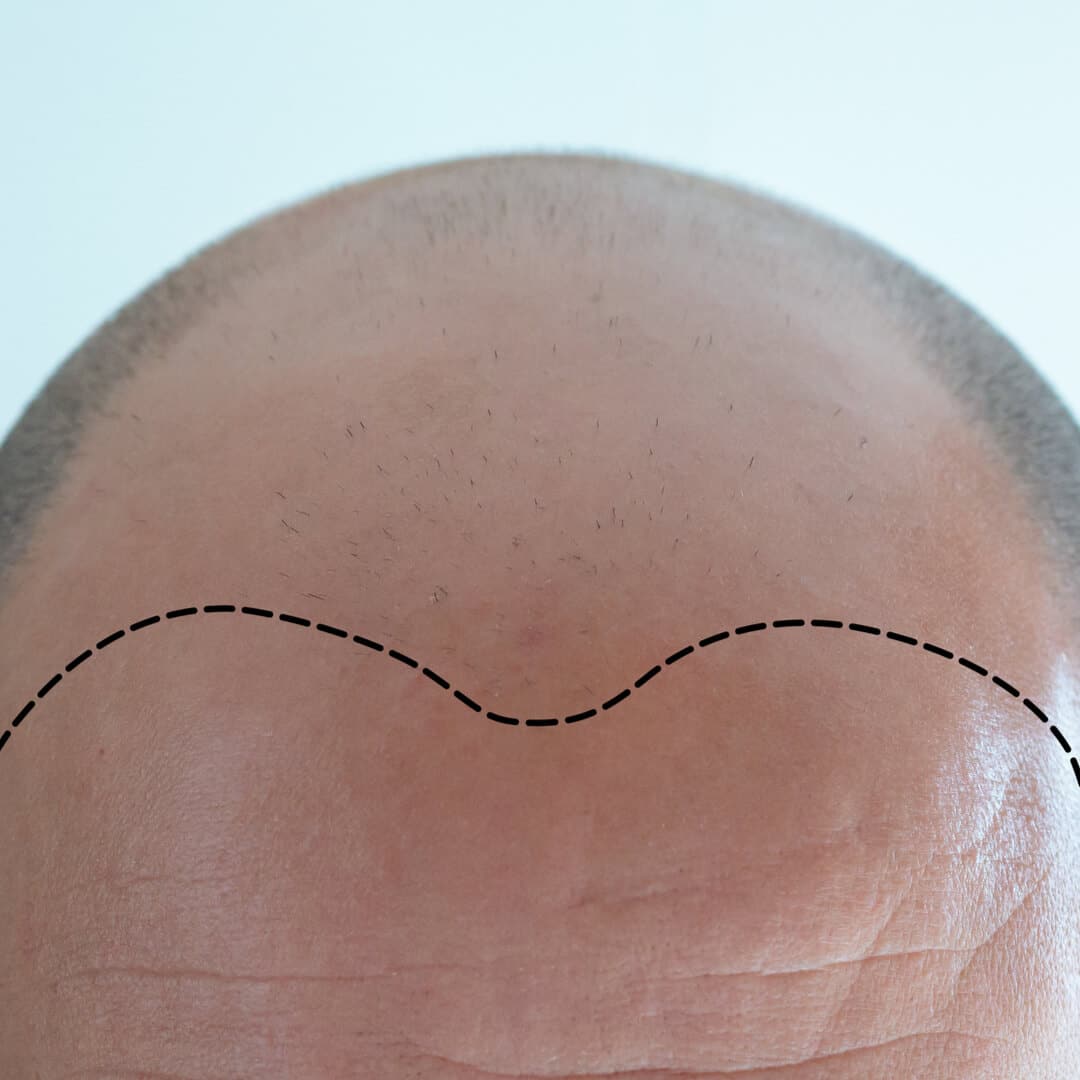
The hairline is the most critical surgical area in hair transplantation, and its restoration is the surgeon’s highest priority. It frames the face and highlights its defining features
The hairline is what defines the success of a hair transplan
There are clear guidelines regarding its height, shape, depth, angle of emergence, graft type, and irregular design. However, the surgeon’s artistic “touch” is essential in customizing the hairline to suit each individual patient.
Why is the hairline so important?
The hairline is the most prominent feature of the human face and a distinctive element of a man’s hairstyle. As a defining characteristic, it is the first part of the hair a man notices when looking in the mirror—and it’s also the first part others see when they look at him.
The hairline’s significance goes beyond appearance; it frames the face. Think of it as the frame of a painting—no matter how beautiful the artwork, without a frame it feels incomplete. Similarly, once the hairline is restored, the face’s “frame” is re-established, highlighting its features. Studies of facial perception show that the human eye first “checks the frame” of the face; if it appears natural, attention then moves to the center of the face and the eyes. But if there’s any irregularity in the hairline, the gaze lingers there, searching for other aesthetic flaws—which nobody wants.
All this underscores the aesthetic importance of the hairline and the critical role of the surgeon’s artistic skill in its reconstruction. The quality of a hair transplant surgeon’s work is primarily judged by the naturalness and precision of the hairline. An unnatural hairline—whether in position, shape, or density—can significantly diminish the overall success of the transplant.
Think about how many famous or everyday people you’ve seen with unnatural hairlines, prompting thoughts like, “So-and-so has had a hair transplant, and look how it turned out…” This means the transplant has failed its fundamental purpose—to look natural and go unnoticed.
Hairline Design: Do’s and Don’ts
The “art” of designing the hairline lies in the surgeon’s ability to choose the most suitable hairline for each patient—one that complements the unique features of their face. At this stage, the surgeon’s technical skill and aesthetic sensibility come into play. The surgeon must tailor the design to the individual in front of them, answering at least seven key questions before reconstructing the hairline:
At What Height Should the Hairline Begin?
Determining the height of the hairline is the first strategic decision in the design process. The adolescent hairline typically starts at the upper boundary of the frontalis muscle, while the adult hairline is positioned approximately 1.5 to 2 cm higher. The height of the hairline is planned with reference to the center of the face, which is usually aligned with the midpoint of the nose.
This is also where the most common mistakes occur. A hairline set too low—often requested by younger patients who recall their teenage hairline or compare themselves to peers without androgenetic alopecia—will inevitably create a harsh, “aggressive” or even “primitive” appearance as the man ages.
Conversely, a hairline placed excessively high fails to frame the face properly, intensifying the visual impact of androgenetic alopecia by drawing attention to its position and width. A conscientious surgeon must educate the patient and advocate for a conservative yet timeless hairline design that harmonizes with the patient’s facial features and will remain natural-looking even 10 years down the line
- What Shape Should the Hairline Have?
The shape of the hairline is just as important as its height, and both factors will accompany the patient for the rest of their life. Most often, the hairline shape should harmonize with the individual’s facial shape and generally falls into four main categories:
- Round
- Oval
- Triangular
- Square
For women, there is also a fifth category resembling the male adolescent hairline, known as the crescent-shaped hairline.
The hairline should be symmetrical and blend smoothly with the hair around the temples and the more posterior areas, creating a natural fronto-temporal angle. Most importantly, the hairline designed by the surgeon should reflect a slightly mature appearance that will continue to suit the patient’s face gracefully over the decades, ensuring it always looks natural and balanced.
- What Grafts Are Used in the Hairline?
The hairs produced by follicles in the donor area tend to be thicker than those naturally found even in the healthiest adolescent hairline. Although transplanting thicker hairs can enhance coverage, it often results in an unnaturally “strong” appearance at the hairline, which can undermine even the most skilled surgical technique.
For this reason, specific “fine” follicular units are carefully selected for the hairline to create a naturally soft transition from the bare forehead to the fuller hair. The very first rows of grafts at the hairline should consist exclusively of single-hair follicles with the finest possible hair diameter for maximum naturalness. As the transplant moves further back, finer two- or three-hair follicular units are used to achieve greater coverage and volume.
- What Angle and Direction Should the Grafts Have?
The angle at which the grafts are placed is of utmost importance. Hair follicles in the hairline always grow forward, emerging from the scalp at a very acute angle. The angle of the recipient sites must closely follow the natural angle of any existing hairs in the area, ensuring that the new hairs grow in the same direction and blend seamlessly without standing out.
- How Should the First Hairline Row Be Designed? (Micro & Macro Irregularities)
Perfectly symmetrical lines are rare in nature and should certainly not appear in the hairline. The front edge of the hairline must never look as if it was drawn with a ruler. Since the goal is to replicate a natural hairline, the grafts should not be placed in a straight, evenly spaced line. Instead, they must be arranged in an irregular, non-repetitive, zigzag pattern that mimics the natural hairline the patient would have had if not affected by androgenetic alopecia. These macro-asymmetries soften the hairline, creating a smooth, natural transition from the bald forehead to the hair-bearing scalp.
-
How Much “Depth” Should the Hairline Have?
Guidelines for the depth of the hairline are not clearly defined and depend on several factors. Generally, the hairline should have the minimal necessary depth to achieve a natural appearance and adequate density. Since the hairline is a resource-intensive area in terms of grafts, their use—even in this crucial aesthetic zone—must be carefully and judiciously managed.
- How Should the Side Zones of the Hairline Be Designed?
The way the horizontal hairline blends with the side hair near the temples is a very challenging and critical aspect of hairline design. This becomes even more complex when the patient suffers from extensive hair loss (stage 6 or 7), requiring reconstruction of the “sides” of the hairline as well. Generally, the slope of the hairline should be parallel—or preferably angled slightly upward—as it moves toward the sides and back to seamlessly merge with the remaining hair.
The success of a hair transplant surgery is primarily judged by the quality of the hairline created. If a natural and soft hairline isn’t achieved, no other aspect of the procedure truly matters, no matter how well executed.
The surgeon’s skill and artistic vision are revealed in the hairline design, especially since in most patients with androgenetic alopecia, this is the area most thinned or completely lost. Restoring the hairline dramatically transforms the patient’s appearance! The design must be soft, with an irregular front edge, gradual density increase toward the back, and a shape that remains harmonious with the man’s face even decades later—never appearing artificial or mismatched.

Learn more about hair transplant costs, as well as details about FUE and FUT transplant techniques.
 0
0