

Kim Kardashian Appears to Be Experiencing Hair Loss
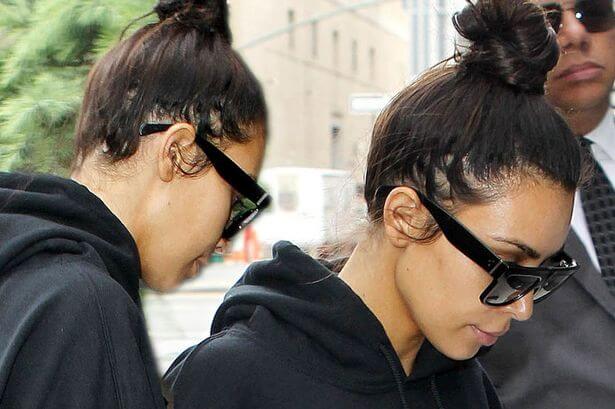
Recent photos of Kim Kardashian leaving a gym in New York City have sparked speculation, as noticeable thinning can be seen along her frontal hairline as well as in other areas of her scalp.
With her hair pulled back into a bun, the reality star looked quite different from the image we’re used to seeing—typically styled with voluminous curls and thick extensions, giving the impression of dense, full hair.
International media outlets suggest that her hair loss may be linked to postpartum shedding, a common condition that affects women after pregnancy. This type of hair loss is usually temporary, and hair density tends to return to normal over time.
Postpartum Hair Loss or Damaged Hair from Styling?
Since Kim Kardashian’s case reflects a common concern among thousands of women, we reached out to Dr. Konstantinos Anastassakis, MD, PhD — Head and Neck Surgeon, Medical School PhD, specialized in hair restoration surgery, active member of the International Society of Hair Restoration Surgery (ISHRS), and the only Greek Diplomate of the American Board of Hair Restoration Surgery (ABHRS) — to shed some light on the matter.
Q: Is hair loss after pregnancy common? Is it reversible?
Dr. K. Anastassakis:
Yes, it’s actually quite common for women to experience hair shedding after giving birth. During pregnancy, estrogen levels rise significantly — and this is actually beneficial for the hair! Estrogen increases the number of hairs in the anagen (growth) phase, reduces sebum production, and even thickens the hair shaft by up to 10%. Almost every woman will tell you that their hair looked fuller, shinier, and more vibrant during pregnancy — almost like teenage hair again!
However, after delivery, when estrogen levels rapidly return to normal, many of those hair follicles — which had been kept longer in the growth phase — suddenly enter the telogen (resting and shedding) phase all at once, leading to what can feel like intense hair loss. This condition is known as postpartum hair loss (telogen effluvium). In a sense, it’s as if all the hair that should have shed during pregnancy is now falling out in a short window.
This typically starts 2 to 6 months after childbirth and usually lasts around 3 to 4 months. In most cases, hair grows back and any thinning corrects itself naturally. However, if hair loss persists well beyond the postpartum period, it may indicate an underlying hormonal imbalance, and you should consult your doctor.
Q: Can styling habits lead to hair loss? Hair extensions have become very popular in recent years — do they damage the hair?
Dr. K. Anastassakis:
Yes, in several ways.
It’s important to understand that the hair shaft itself is not a living tissue — it doesn’t have a metabolism. So, any damage it suffers can’t be “healed” by the body; it can only be cosmetically masked using treatments or haircare products. Fortunately, new hair continuously grows from the root — the hair follicle — which is very much alive and has one of the highest metabolic rates in the human body.
Heat styling (blow drying, flat irons), coloring, and chemical treatments damage the hair shaft. Over time, this leads to weakened, brittle strands that break easily and fall out. However, this is not true hair loss in the medical sense — it’s more about hair breakage.
The good news? As long as the follicle remains healthy, new hair will continue to grow. So even if a woman damages the strands with styling or extensions, nature tends to forgive — the hair will regrow, as long as the root (follicle) remains intact and nourished.
Q: Many women who regularly wear tight buns or ponytails seem to have thinning hair along their hairline. Can this be corrected?
Dr. K. Anastassakis:
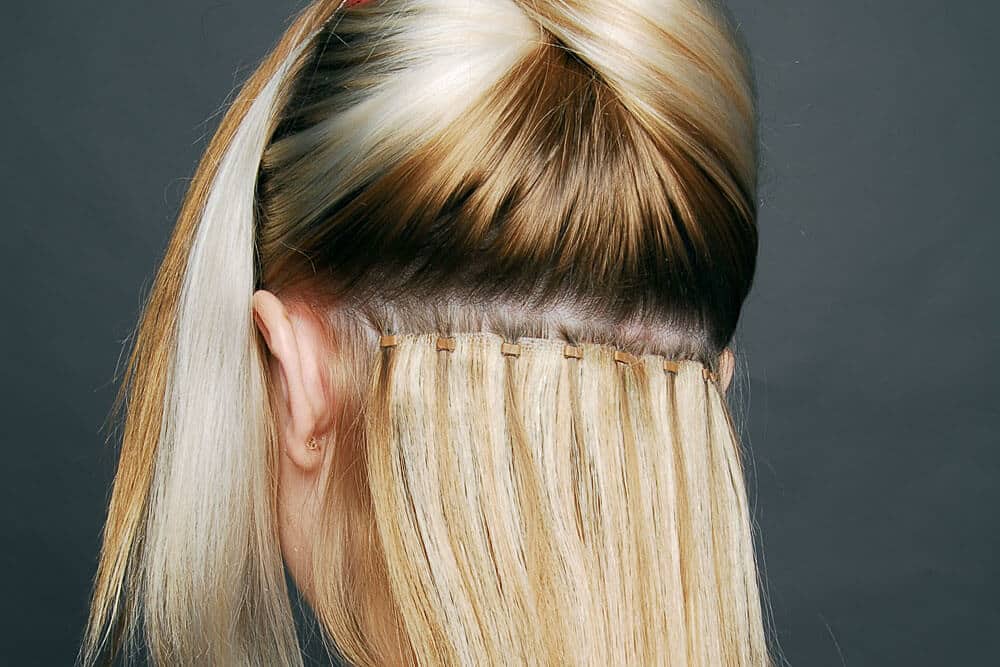
Yes, this is quite common, especially in ballerinas, dancers, athletes, or anyone who frequently wears hairstyles that pull on the hair. These tension-based styles, as well as hair extensions, can cause a condition known as traction alopecia.
Traction alopecia is caused by chronic pulling on the hair, and it usually presents along the frontal hairline, where hair starts at the forehead, or in the areas where extensions “hang” from. The constant tension or even the light but continuous weight of the extensions causes the hair to be pulled out from the root. Over time, this can lead to scarring of the follicles and permanent hair loss in those areas.
Q: Can hair transplantation be performed on women with hairline or temple thinning?
Dr. K. Anastassakis:
With older hair transplant techniques, women were rarely considered suitable candidates. Fortunately, modern hair transplant technologies now allow us to achieve dense, natural-looking results even in female patients — and treat many women who were previously seen as ineligible for hair restoration surgery.
However, we must keep in mind that while 99 out of 100 men with hair loss suffer from androgenetic alopecia, the causes of female hair loss are far more diverse — as with most things related to female health!
The underlying causes can range from Female Pattern Hair Loss (FPHL) (which accounts for ~70% of female hair loss cases), to scalp conditions, stress, nutritional deficiencies, and hormonal or systemic disorders.
Only after we rule out all reversible causes, do we consider Hair Transplant Surgery for a woman experiencing hair loss.
Q: Is hair transplantation different in women compared to men?
Dr. K. Anastassakis:
Yes — in many ways. Performing a successful hair transplant in a female patient requires significant expertise and a tailored approach.
The most important difference is that most women with hair thinning don’t have completely bald areas, as men often do (think typical male-pattern baldness). Instead, they experience diffuse thinning throughout the scalp, while often maintaining a relatively dense frontal hairline.
However, in cases where a woman does lose hair at the hairline, often due to tension-based hairstyles, the first step is to stop those styling habits. If regrowth does not occur naturally after a few months, hair transplantation can then be considered.
There are also many women who are born with a naturally high hairline, deep temples, or a wide forehead — not always due to hair loss. These features can give the face a more “masculine” appearance, which some women find unflattering.
Thankfully, with advanced modern techniques, we can restore the hairline with natural density and precision — and it’s not uncommon for patients to tell me:
“I can’t believe I didn’t do this sooner!”
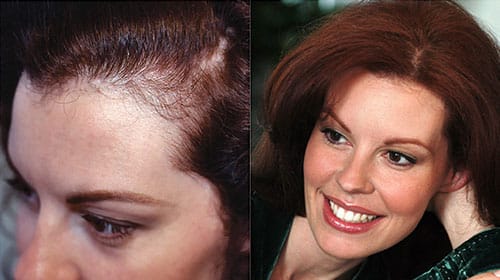
Q: So, is it an exaggeration for a woman to undergo a hair transplant for thinning or a more masculine-looking forehead?
Dr. K. Anastassakis:
Absolutely not — quite the opposite! The most important step is for the doctor to determine whether the patient is a suitable candidate for hair transplantation.
While hair loss and baldness in men are often considered an undesirable but normal and expected condition, in women, even in older age, hair thinning can be psychologically devastating. It significantly affects self-image, femininity, sexuality, and even a woman’s perceived role in society and within the family.
Hair transplantation can address most of these issues — but only when performed by a highly trained and experienced hair restoration surgeon, especially one with expertise in female hair transplantation, which involves specific design and anatomical challenges compared to male procedures.
Q: When should a woman consider seeing a hair transplant specialist?
Dr. K. Anastassakis:
If a woman is experiencing hair loss, her first visit should be to a dermatologist, who may then refer her to a gynecologist or endocrinologist, depending on the underlying cause.
If medical treatments or hormonal regulation do not resolve the issue, then it’s time to consult with a hair transplant surgeon.
In the past two years alone, according to official data from the International Society of Hair Restoration Surgery (ISHRS) — of which I have been an active member since 2014 — more and more women are seeking consultations with specialized hair transplant surgeons to learn what modern techniques can offer them.
Of course, technology alone is not enough to achieve great results — just as owning a fine brush doesn’t make someone a great artist!
Proper planning, honest and thorough consultation, adherence to medical indications, and meticulous technique are the key factors that allow us to achieve excellent results, regardless of the cause of the hair loss — and significantly improve a woman’s quality of life.
In addition to women who come to our clinic for density restoration in the frontal and top areas of the scalp, I also treat many women who are bothered by a naturally high or wide forehead, as well as those who suffer from scarring and permanent hair loss due to cosmetic facial surgeries, such as facelifts, which may distort the hairline or temples.
As the results from our clinic show, such scars can be perfectly and naturally concealed through modern hair transplantation.
🔹 For more information or a personalized hair transplant cost estimate, book a consultation with Dr. Konstantinos Anastassakis, MD, PhD, at his clinic located at 57 Alexandras Avenue, Athens, by appointment at +30 210 8011000.
 0
0