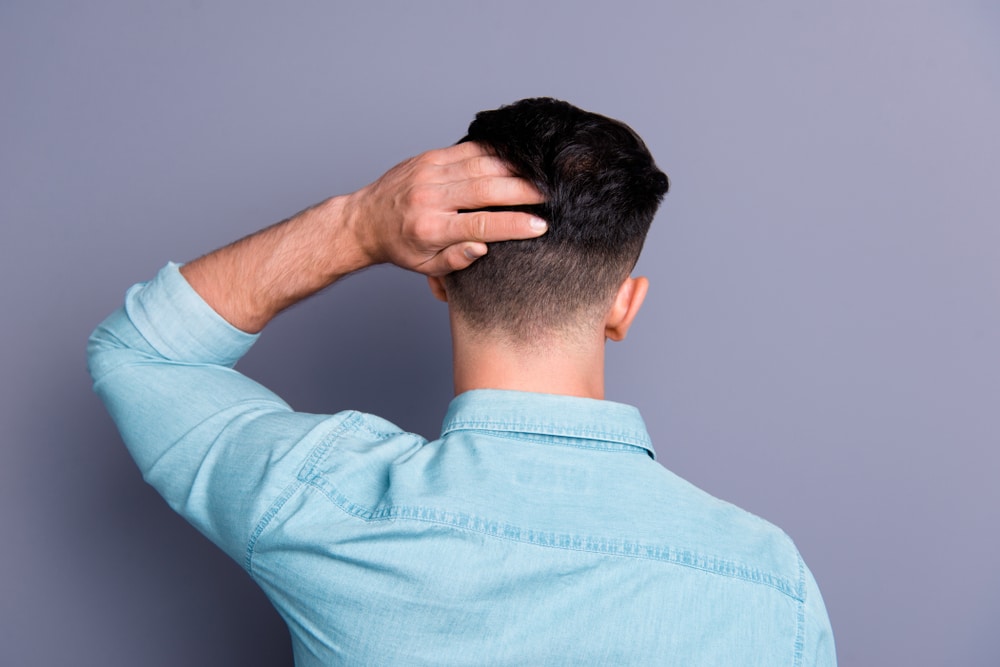


As the summer holidays approach, many are already thinking about their destination. At the same time, those quick glances in the mirror become more frequent, as we feel the urge to improve our appearance ahead of our summer outings.
While most people focus on losing a few kilos and enhancing their physique, quite a few are also concerned about their hair—since swimming in the sea often makes thinning even more noticeable.
For many, a hair transplant is the ideal choice for a dramatic improvement in appearance. In particular, summer offers several advantages for undergoing follicular unit implantation.
To begin with, most candidates have already scheduled their vacation time, which means they don’t need to make major changes to their plans in order to have a hair transplant during the summer.
Although the procedure is very mild and does not require time off work or a break from daily activities, most patients choose to stay home for the first 3–4 days in order to protect the newly implanted grafts, which need special care.
The process itself is based on the transplantation of follicular units—the roots of the hair. From the moment the transplant is performed, the body begins to produce new hairs, which will continue to grow naturally in the future without any risk of loss. These hairs can be cut and styled normally, and will turn gray or be dyed just like the rest of the patient’s natural hair.
For the first results to appear, it is necessary to wait 2–3 months. After that, the transplanted hairs will gradually gain volume, length, and density.
Preferred Technique for Hair Transplantation in Summer
Worldwide, only two techniques of follicular unit implantation are officially recognized: FUE hair transplantation and FUT hair transplantation.
In the FUT method, the grafts are removed in a strip and the area is closed using the trichophytic closure technique, which allows new hairs to grow through the scar line. The result is a very fine scar—thinner than a pen line—at the donor site.
On the other hand, in the FUE method, follicular units are extracted one by one, leaving behind tiny circular scars. In both techniques, once the follicular units are harvested, the following steps are identical. Moreover, with hair longer than 7–8 mm, neither scars nor thinning are visible.
Therefore, there is no single “preferred” technique for hair transplantation in the summer. The choice of method depends on the patient’s individual hair characteristics and parameters (such as thickness, density, and length of the hair), the number of grafts required, as well as social and professional considerations (for example, whether or not short haircuts are acceptable).
Special Instructions for Hair Transplantation in the Summer
In general, our clinic provides patients with specialized written guidelines to address any possible questions, thereby preventing any concerns before or after the hair implantation procedure. At the same time, Dr. Anastassakis is available to patients for telephone communication throughout the day for any issue that may arise.
The main difference when undergoing a hair transplant in the summer is that the factors of sun and sea must be taken into account. During the first 3–4 days, it is essential to wear a protective hat to safeguard the “anchoring” of the grafts and protect them from sun exposure.
It is also advisable to avoid swimming in the sea during the first 3–4 days for the same reasons. After this period, there is no risk, and in fact, seawater can help promote natural healing and strengthen the hair.
Take Advantage of the Summer Holidays to Have a Hair Transplant
Although a hair transplant is a specialized and demanding procedure for the surgeon and medical staff, it is a very comfortable and patient-friendly experience. Hair transplantation hardly affects the patient’s daily routine and does not confine them to their home. From the very next day after the procedure, patients can return to their everyday activities and work.
The only restriction set by our clinic is the strict adherence to the post-operative instructions provided by the specialist surgeon during the first three days after follicular unit transplantation, in order to ensure the best possible results.
It is quite common for many international patients who choose to undergo a hair transplant in the summer to have already scheduled a follow-up appointment at our clinic right after their vacation in Greece.
You can rest assured that every step and stage after the hair transplant has been carefully planned. For this reason, Anastasakis Hair Clinic provides a complete after-care kit, ensuring that your summer holidays remain comfortable and relaxing, while at the same time the transplanted follicles are activated and begin to grow in their new position.
Why Have a Hair Transplant in the Summer?
Most patients who choose to undergo a hair transplant in the summer have a busy professional schedule that does not allow for changes.
Typically, this is the period when such procedures are chosen by people working in television who cannot be absent from their shows, by artists and singers with no free time, and by athletes who train and compete professionally for 11 months a year.
Finally, many professionals who work at an intense pace throughout the year only have the month of August available for holidays and relaxation.

What to Keep in Mind if You Choose to Have a Hair Transplant in the Summer
The best decision anyone can make when considering a hair transplant is not to rush, but to carefully choose the right doctor for their needs—based on experience and expertise. It is also very important to insist on meeting the actual doctor who will perform the procedure and to request to see their medical specialty certification.
Lately, several patients have visited our clinic who, unfortunately, had previously chosen a clinic based solely on the cost of a hair transplant and ended up with poor results.
The lack of proper transplant design, insufficient or incorrect patient information, and absence of direct communication with the doctor are all issues that lead to disappointing outcomes. Unqualified—and often uncertified—doctors may simply offer an extremely attractive price, trapping patients in this “bargain.”
At Anastasakis Hair Clinic, our core belief is that anyone considering a hair transplant in the summer—or at any other time of year—should carefully evaluate and compare different clinics, both in terms of services and quality standards.
It is then that one will realize we are the only Greek certified clinic operating under international medical standards, offering services fully personalized to each patient’s needs and expectations.
 0
0