


Follicular Unit Excision Hair Transplant
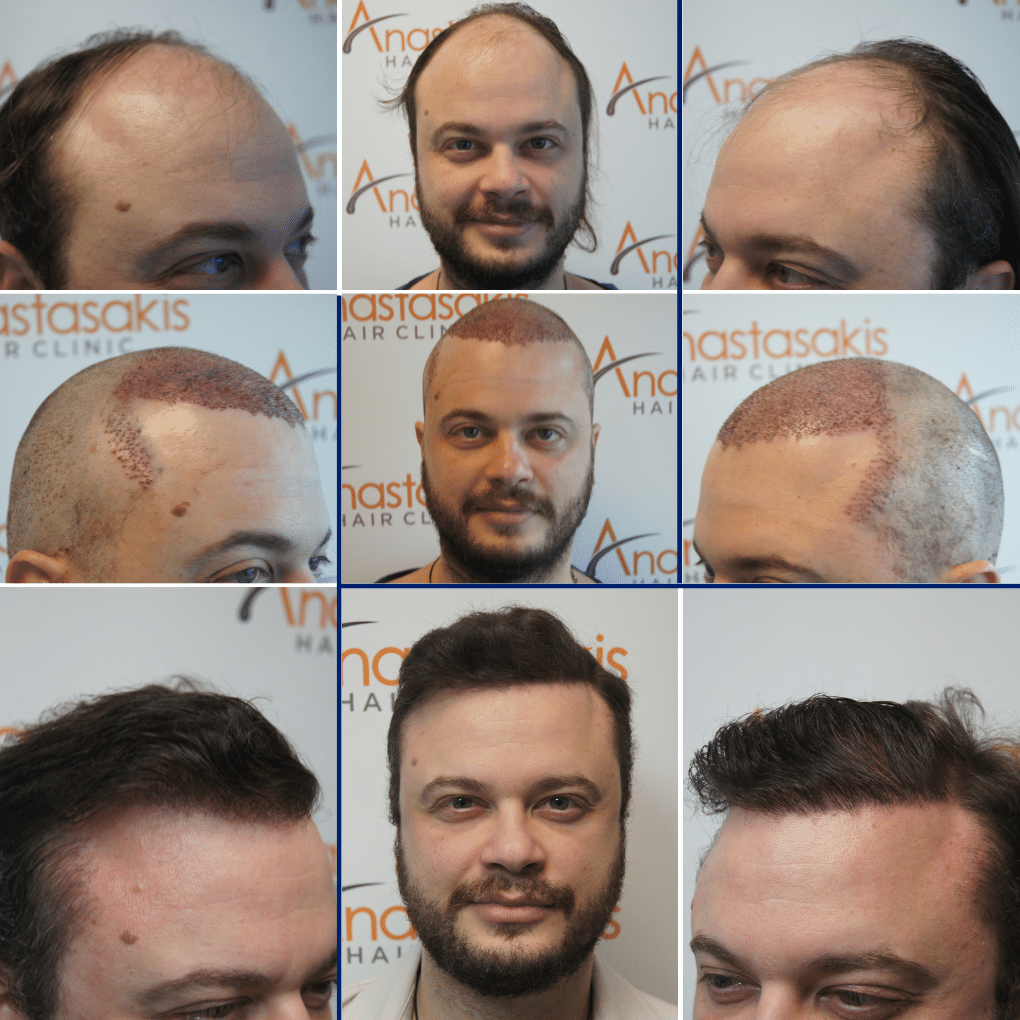
Follicular Unit Excision (FUE Hair Transplant)
Follicular Unit Excision (FUE Hair Transplant) is a modern, advanced form of hair restoration surgery that focuses on the precise harvesting of individual hair follicles from the donor area. In this surgical procedure, the surgeon uses manual, motorized, or robotic micro-instruments to perform follicular unit extraction of natural groupings of 1–4 hairs (called follicular units) directly from the scalp. Unlike traditional Linear Strip Excision (LSE), also known as FUT or strip surgery, FUE does not leave a single long linear scar on the back of the head. Instead, it leaves only tiny micro-incisions that heal as very small, diffused marks.
This refined hair transplant procedure is especially appealing to patients who prefer short hair, want to minimize visible scarring, and wish to return quickly to their normal routine. Over the last two decades, global demand for the FUE hair transplant method has surged, making it one of the leading options in modern hair transplantation for men and women with hair loss, including male pattern baldness and other forms of alopecia.
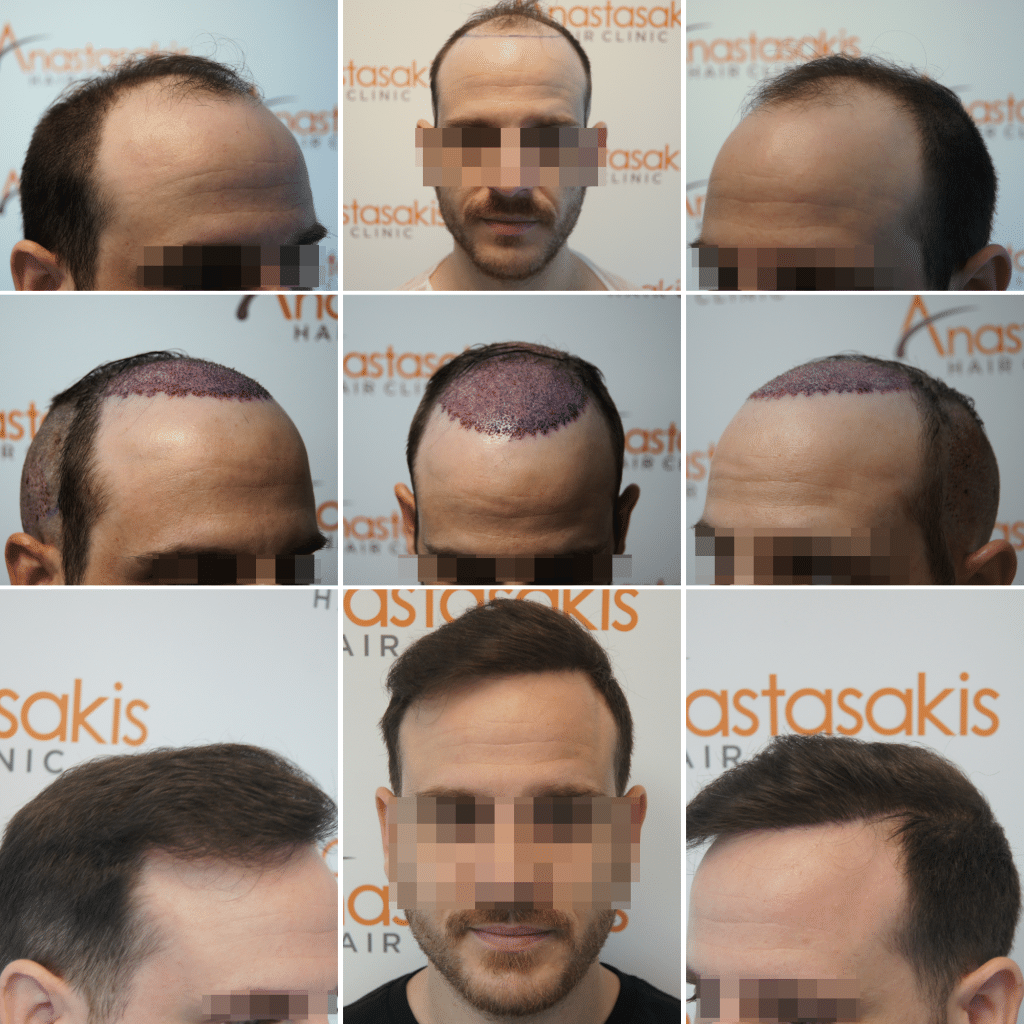
FUE Hair Transplant Technique: When Applied Correctly
When performed lege artis (that is, according to the highest medical and artistic standard), the FUE hair transplant technique offers:
- natural-looking results,
- high graft survival,
- healthy, long-term hair growth,
- excellent healing in both the donor and recipient areas.
However, the popularity of FUE hair transplant surgery has also created myths. You may see marketing terms like “scarless,” “not even surgery,” “non-invasive,” or “no downtime.” This is misleading. FUE is absolutely a surgical procedure, performed under local anesthesia, that requires skill, precision, and anatomical understanding of hair follicles, the scalp, and tissue healing.
Unfortunately, these misleading claims are often promoted by illicit or so-called “black market” hair transplant clinics offering extremely low-cost FUE transplants. In those environments, unlicensed or minimally trained technicians often perform critical steps of the hair transplant procedure on unsuspecting patients. This can result in poor hair transplant results, overharvested donor areas, and long-term damage
Risks and Pitfalls of the FUE Hair Transplant Technique
At first glance, FUE hair transplant can appear deceptively simple: you just “punch out hairs and move them,” right? In reality, that is dangerously false.
The FUE technique has a steep learning curve. It is a blind, microsurgical process in which the surgeon advances a tiny, cylindrical punch around the hair shaft beneath the skin. If this is done incorrectly, the punch can cut or amputate the follicle below the surface. This is called follicular transection.
High transection rate = fewer viable grafts = weaker new hair growth = visibly lower density in the recipient area.
Beyond the recipient site, damage can also occur in the donor area. Overly aggressive follicular unit extraction can cause patchy, moth-eaten thinning and permanent depletion of the donor site. This can leave the back and sides of the scalp with reduced hair density, obvious “holes,” and long-term cosmetic problems that are extremely difficult to repair, even with advanced hair restoration techniques.
In short: FUE, when done improperly, can create permanent and irreversible damage to both the recipient area and the donor area.
Requirements and Training for the FUE Hair Transplant Technique
To consistently deliver safe, natural, high-quality FUE hair transplant results, the surgeon must fully understand:
- hair and scalp anatomy,
- the angle and direction of emerging hair follicles,
- how to preserve graft integrity,
- how to distribute extraction to protect long-term donor area health,
- how to design a hairline with natural-looking results.
True mastery of FUE hair transplantation requires scientific knowledge, surgical dexterity, visual precision, refined hand–eye coordination, stamina, and judgment. It is not enough to simply “have the machine.” A qualified hair transplant surgeon must apply medical reasoning and artistic planning to every single graft.
FUE is a powerful technique in the hands of an expert in hair restoration, but it should be used thoughtfully. This article explores its evolution, technical challenges, indications, patient selection, and best practices in modern hair transplant surgery.
KEY WORDS:
FUE technique, donor harvest, scarless, graft transection, FUE megasession, donor area depletion, overharvesting, graft injury, manual punch, motor-FUE, manual-FUE, surgery delegation
Hair Transplantation: History & Evolution of Hair Restoration Surgery
Hair restoration surgery has traveled a long and sometimes difficult road. In the 1960s–1990s, many early hair transplant procedures produced pluggy, obvious, artificial results. Patients were left with large “doll’s hair” grafts and extensive scarring. This damaged public trust and gave “hair transplant” a bad reputation for decades.
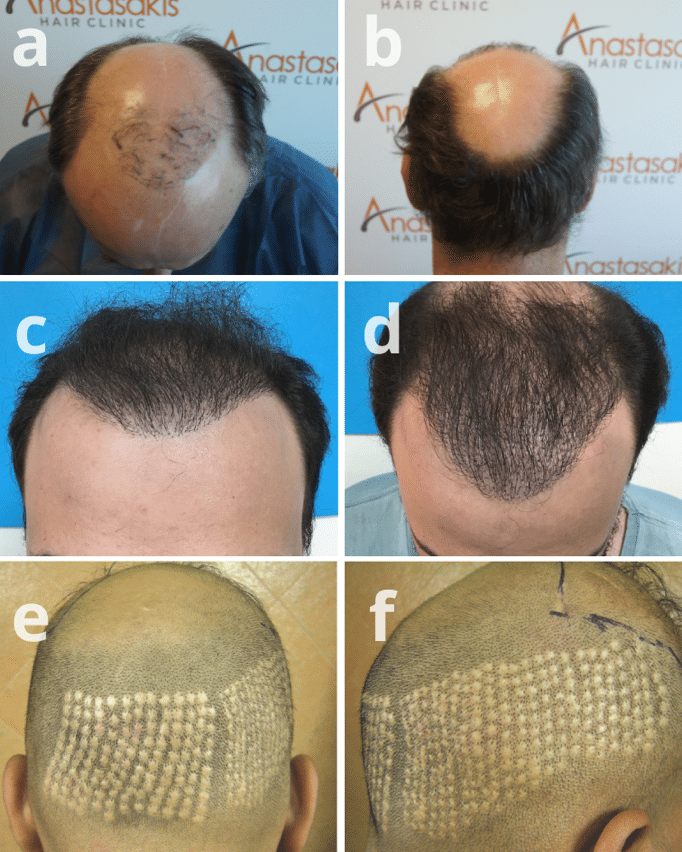
Failed Techniques and Major Mistakes of the Past
For years, poor surgical judgment and outdated methods caused permanent damage. Surgeons sometimes prioritized speed or marketing over aesthetics, long-term planning, and donor preservation. Patients paid the price.
But over time, ethical surgeons began to challenge these harmful “dogmas.” They focused on creating natural hair growth with realistic density, appropriate hairline design, and less tissue trauma. This shift toward ethical, patient-first hair restoration laid the foundation for modern hair transplant surgery.
FUT Hair Transplantation as a Milestone
A crucial breakthrough was the development of FUT (Follicular Unit Transplantation), also known as strip harvesting or Linear Strip Excision (LSE). In FUT hair transplantation, the surgeon removes a thin ellipse of scalp from the donor area, then dissects it under magnification into true follicular units. These are then placed into the thinning or balding areas.
Key advantages:
- Natural groupings of hairs are preserved.
- Survival rate is high.
- A large number of grafts can be prepared efficiently in one session.
When performed properly, FUT leaves a very fine linear scar, often only around 1 mm wide, easily hidden under even moderate-length hair. FUT set the stage for the modern era of hair transplantation by proving that you could achieve refined, age-appropriate, natural-looking implantation using true follicular units, not big plugs.
Ethical Surgery & Scientific Progress
Over the past decades, leading surgeons emphasized evidence-based technique, anatomy, graft survival, and donor conservation. The goal shifted from “just adding hair” to delivering natural-looking results with intelligent long-term planning.
The mindset changed:
- Fewer large, traumatic grafts
- More precise use of individual hair follicles
- Focus on natural hair growth patterns and realistic density
- Respect for the patient’s donor capacity over their entire lifetime
This evolution in hair restoration surgery was essential for the rise of today’s FUE.
The Discovery of FUE: A New Era in Hair Transplant Surgery
The next frontier was clear: could we perform a hair transplant procedure without creating a strip incision? Could we avoid sutures and still deliver excellent results?
The answer was Follicular Unit Excision (FUE).
In 2002, Bernstein and Rassman described extracting intact follicular units one by one with tiny circular punches instead of a scalpel. This marked the birth of true FUE hair transplant surgery.
What Makes FUE Different?
In FUT, the follicular units are dissected from a strip.
In FUE, each follicular unit is harvested directly from the scalp via tiny incisions, typically less than 1 mm, using a micro-punch.
All other steps—graft handling, site creation, implantation —are similar. The critical difference between FUE vs FUT is just the method of harvesting grafts from the donor area.
FUE Today: Innovation and Competition
From that point onward, surgeons raced to perfect the FUE hair transplant method. Punch design improved; motorized handpieces emerged; depth control became more refined; magnification and illumination improved; and survival of transplanted hair grafts increased dramatically.
Today, FUE hair transplantation is widely considered a state-of-the-art, minimally invasive form of hair restoration with:
- minimal scarring,
- better comfort,
- fast healing process,
- and very natural hair transplant results.
It is also the technique most patients ask for by name when they seek treatment for hair loss and male pattern baldness.
The Popularity of FUE: Smaller Scars, More Candidates for Hair Transplantation
The number-one reason patients choose FUE hair transplant is to avoid a visible linear scar and maintain the option of wearing very short hair in the future.
But patients soon learned there were more benefits:
- Minimal discomfort after surgery
- No sutures and no suture removal
- Quicker return to work and social life
- The ability to harvest grafts from a wider donor “zone,” not just a narrow strip
- The chance to use beard or body hair in advanced cases (also known as Body Hair Transplant or BHT)
- The potential to restore density even in severe hair loss cases
In other words, FUE made hair transplantation possible for people who were previously considered borderline candidates.
Who Is the FUE Hair Transplantation Technique For?
FUE hair transplant is especially beneficial for:
- Younger patients who might be prone to noticeable scarring from FUT and want to avoid a linear scar.
- Patients who only need a small number of grafts (e.g. eyebrows, mustache, beard, eyelashes).
- Individuals with localized alopecia (not only classic male pattern baldness) such as scars from trauma or surgery.
- Patients who already had FUT / strip surgery and want to camouflage that existing linear scar.
- Patients with hyper-elastic or poor-healing skin.
- Patients with visible scars from neurosurgery or dermatological conditions.
- Individuals who feel anxiety about stitches, sutures, and linear incisions.
- Candidates with depleted scalp donor area who may benefit from Body Hair Transplantation (BHT) using beard or chest hair.
- Men and women who want natural-looking results with real, permanent growth in thinning zones.
These advantages prove how powerful and versatile FUE hair transplantation has become in modern hair restoration.
See Before-and-After Results of FUE Hair Transplantation at Anastasakis Hair Clinic.
FUE Hair Transplantation and Scarring: The Reality
Let’s clarify an extremely common misconception:
FUE is not truly “scarless.”
Instead of leaving one straight linear scar, FUE creates many tiny circular tiny incisions—each less than 1 mm in diameter—across the donor site. After the healing process, these typically appear as very small, pale dots (tiny white scars) that are usually not noticeable unless the hair is shaved to the skin.
For this reason, the International Society of Hair Restoration Surgery (ISHRS) has explicitly warned clinics not to advertise FUE as:
- “scar-free”
- “no incision”
- “no cutting”
- “non-invasive”
- “no-touch”
Because those claims are scientifically incorrect and can mislead patients.heir informational brochures or advertising messages terms such as: ‘scar-free procedure’ (‘No scars’), ‘incision-free procedure’ (‘No incision’), ‘no-touch procedure’ (‘No touch’), ‘cut-free procedure’ (‘No cutting’), and ‘non-invasive procedure’ (‘Non-invasive’).
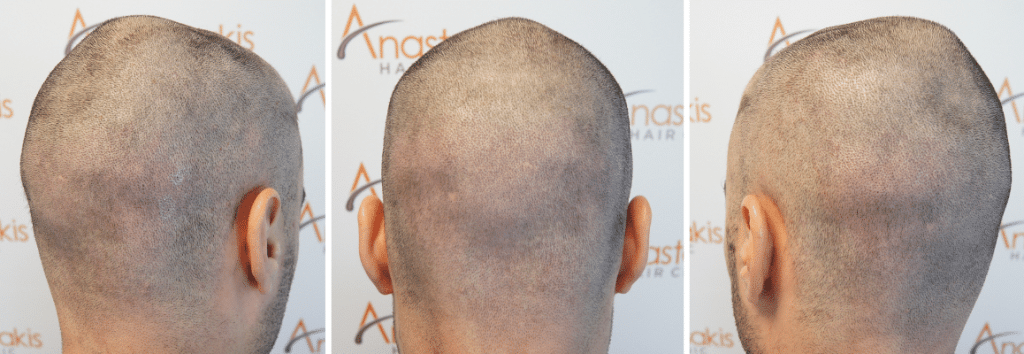
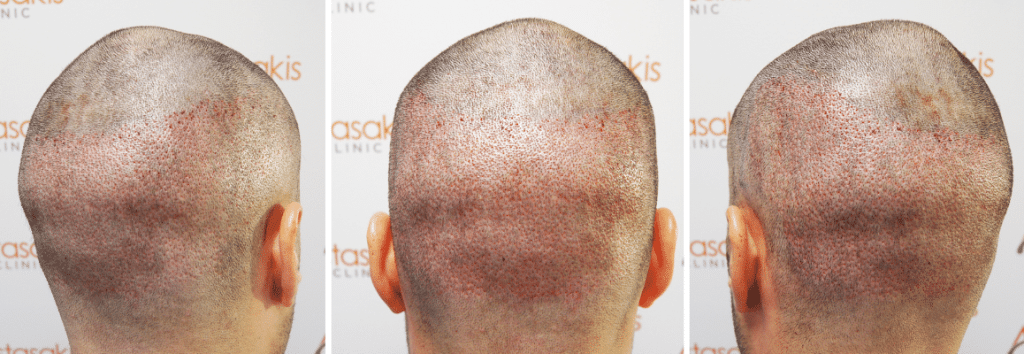
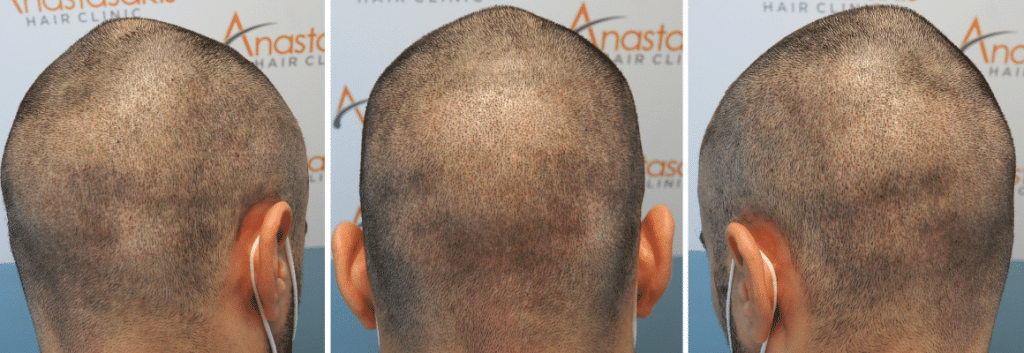
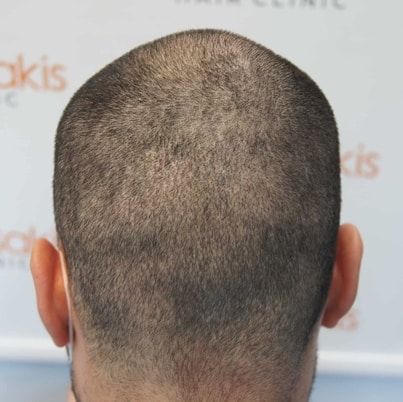
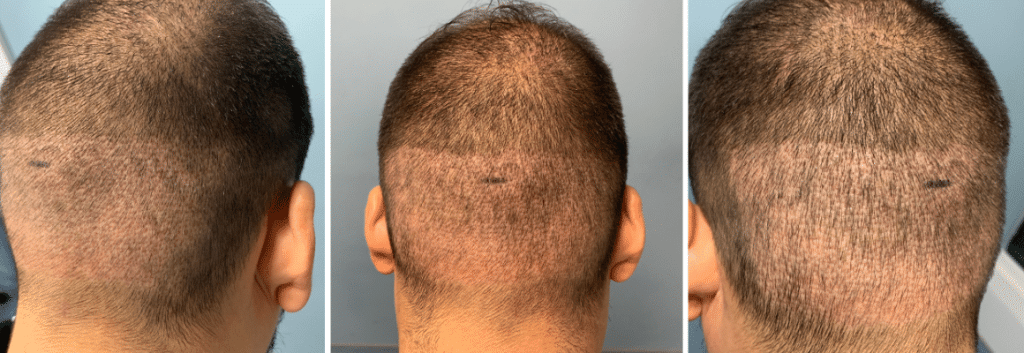
So yes—scar tissue does form. The difference is that with proper planning, experienced technique, and controlled donor hair management, the visible scarring is extremely minimal and blends into the surrounding short hair.
The human eye easily follows a straight line (like a FUT scar) but struggles to “read” thousands of tiny scattered points. That’s why a well-executed FUE hair transplant allows many patients to comfortably keep relatively short hairstyles with no obvious sign of surgery.
Advantages of the FUE Hair Transplant Technique for Patients
When an experienced hair transplant surgeon performs FUE transplant surgery correctly:
- You can usually return to daily life quickly. The healing process in both donor and recipient areas is fast (often within 7–10 days).
- There are no stitches to remove.
- Most patients report only mild discomfort and rarely need anything stronger than basic pain relief.
- The tiny extraction sites crust and close rapidly, creating minimal downtime.
- Patients with active lifestyles usually resume light activities almost immediately and normal training within about a week.
- There is typically very low risk of nerve injury or vascular complications when performed by a trained surgeon.
- In advanced hair loss or male pattern baldness, multiple FUE sessions can be performed on consecutive days to maximize coverage efficiently.
- Body Hair Transplantation is possible: beard, chest, abdomen, back, arms, and legs can sometimes serve as additional donor sources in selected cases. This can be life-changing for patients with limited scalp donor capacity.
- Over time, transplanted hair follicles continue to produce permanent new hair growth in the recipient area.
You also gain aesthetic freedom: many patients love that they can wear their hair short after FUE hair transplant, thanks to the absence of a long, linear strip scar.
Watch real FUE Hair Transplant Results in Videos from Anastasakis Hair Clinic.
Disadvantages / Limitations of the FUE Hair Transplant Technique
No technique is perfect, and responsible hair restoration surgery must explain limitations honestly:
- Donor Capacity Management
Because FUE removes grafts diffusely from the donor region, there is a limit to how many follicular units can be safely harvested without creating thin, see-through patches. Responsible planning is critical to avoid long-term donor depletion or a “moth-eaten” look. - Longer Procedure Time
An FUE hair transplant procedure can take longer than a FUT session because each hair graft is removed individually. This can lead to fatigue for both patient and surgical team, especially in high-count sessions. - Higher Cost per Graft
The individualized nature of follicular unit extraction and the need for expert microsurgical control often make FUE more expensive per graft than FUT. - Shaving Requirements
Standard FUE usually requires shaving the donor area down to 1–2 mm to clearly see the exit angle of each hair follicle. For some patients—especially high-profile professionals or women—this temporary cosmetic exposure can feel uncomfortable. - Risk of Overharvesting
If the surgeon is inexperienced or careless, too many hair grafts can be removed from the same region, causing visible donor thinning, decreased hair density, and long-term cosmetic issues. - Challenging Hair Types
Very curly or coily hair, or hair that curves sharply under the skin, increases the risk of follicular transection during FUE. This demands even more experience and precision from the surgeon.
Despite these limitations, in expert hands FUE hair transplant remains the gold standard for discreet, natural, long-lasting hair restoration.
How the FUE Hair Transplantation Technique Is Performed
An FUE hair transplant procedure has two main surgical steps:
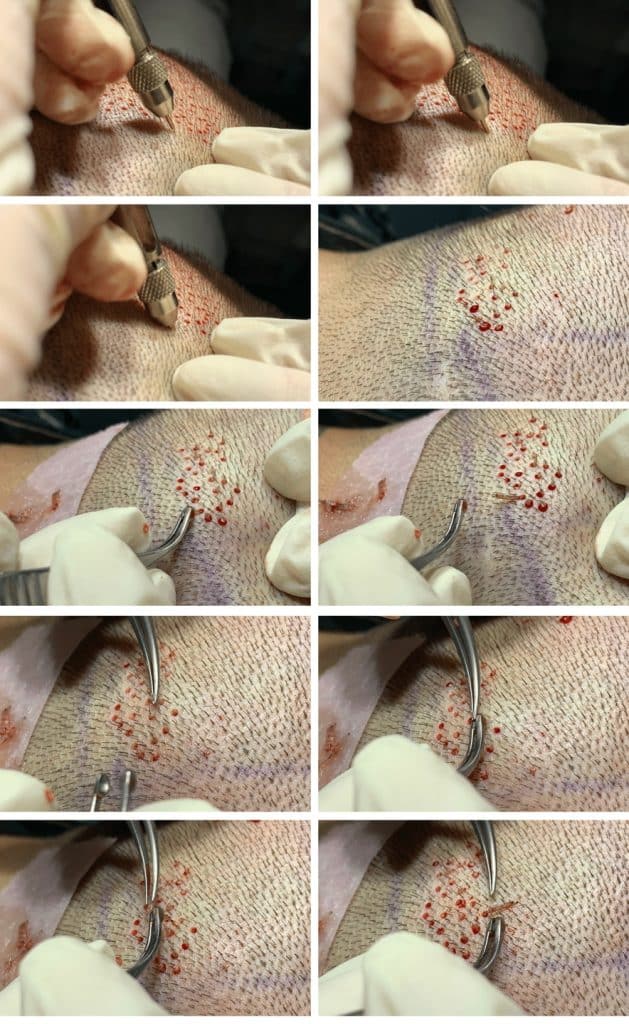
- Follicular Unit Excision (Harvesting / Extraction)
The surgeon identifies a target follicular unit (a natural bundle of 1–4 hairs).- The punch is aligned to match the angle and direction of the hair follicle.
- A controlled, shallow circular motion scores around the follicle.
- The goal is to free the follicular unit without cutting through it.
- Collection of the Hair Grafts
Using delicate forceps, the surgeon gently lifts each loosened hair graft from the scalp. The graft is kept hydrated, cooled, and protected to preserve viability for new hair once implanted.
Donor Area Characteristics in FUE
The micro-incisions created during follicular unit extraction usually close rapidly and heal without sutures. After the healing process, the area is typically covered naturally by the remaining donor hair, even when cut relatively short.
However, to protect long-term appearance, the surgeon must avoid concentrated removal in one spot. Strategic spacing preserves overall hair density in the donor site and prevents visible “windows” of thinning.
FUE vs FUT: The Key Difference
Many patients ask: “Which is better, FUE or FUT?”
Here is the honest answer from a medical and aesthetic standpoint:
- FUT Hair Transplantation (Strip / LSE):
Removes a narrow strip of skin and then prepares many grafts at once under a microscope. Leaves a fine linear scar but preserves more of the surrounding donor density. - FUE Hair Transplantation:
Removes individual follicular units one by one with tiny incisions, leaving tiny dot-like marks instead of a line. Allows short hair styles and avoids sutures.
All other steps of hair transplant – recipient site design, graft handling, density planning—are essentially the same. The difference is purely in how grafts are harvested from the donor. Both techniques can create excellent, natural hair transplant results when performed by an expert hair transplant surgeon.
Application of the FUE Technique at Anastasakis Hair Clinic
At Anastasakis Hair Clinic, FUE hair transplant surgery is performed exclusively by medical professionals using:
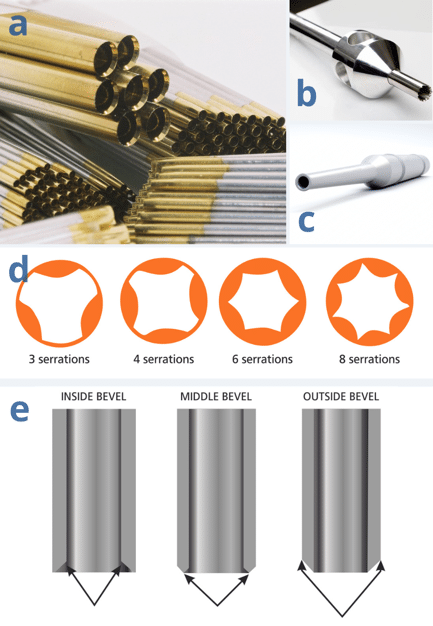
- Precision titanium manual punches for controlled, gentle follicular unit extraction
- Advanced mechanical MAMBA systems (e.g. Trivellini) with flared and edge-out punch designs
- SAFE System (blunt punch methodology) to further reduce trauma to the hair follicles
This approach prioritizes graft integrity, donor preservation, and long-term, natural hair growth.pplication of the FUE Technique at Anastasakis Hair Clinic
At Anastasakis Hair Clinic, hair transplantation with FUE is performed with:
- Extraction of follicular units one by one from the donor area, using FUE titanium manual punches or
- Mechanical MAMBA punches (Trivellini ‘flared’ and ‘edge-out’)
- Alternatively, blunt punches are used (Harris S.A.F.E™ hexagonal punch).
Protecting the Graft: Why Gentle Handling Matters
The single most important rule in hair transplant is: protect the graft.
The hair follicle is delicate. Crushing, twisting, overheating, drying, or tearing the graft will lower survival and weaken your final hair transplant results.
So, during the FUE hair transplant procedure, every harvested follicular unit must remain intact. Avoiding graft transection and mechanical trauma is essential for strong, permanent new hair growth.
Because of this, graft extraction, handling, storage, and placement should never be handed off to unqualified, non-medical personnel. Surgical delegation to unlicensed technicians is a major red flag in this industry.
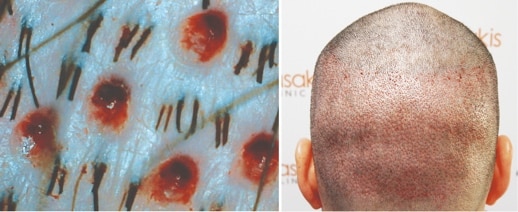
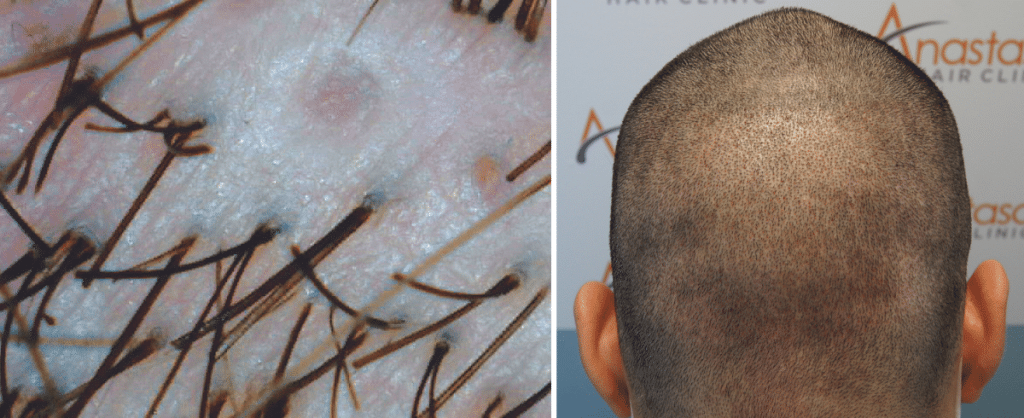
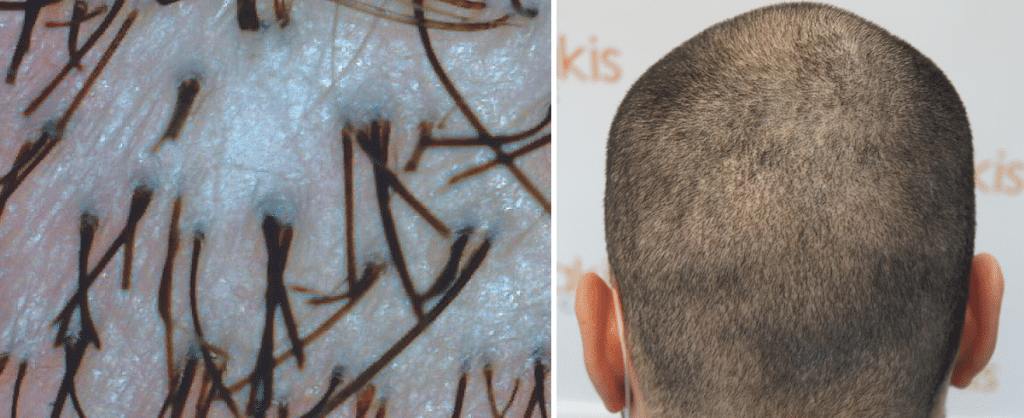
The extremely delicate nature of the FU renders it susceptible to various forms of harm during the harvesting process, giving rise to a multitude of challenges inherent in extracting individual FUs with tiny punches while avoiding follicular transection or amputation
Fundamental Steps in Successful FUE Extraction
In summary, the successful extraction of FUE grafts involves specific
0niversal steps:
- Targeting
- Incision / Scoring
- Extraction
- Collection
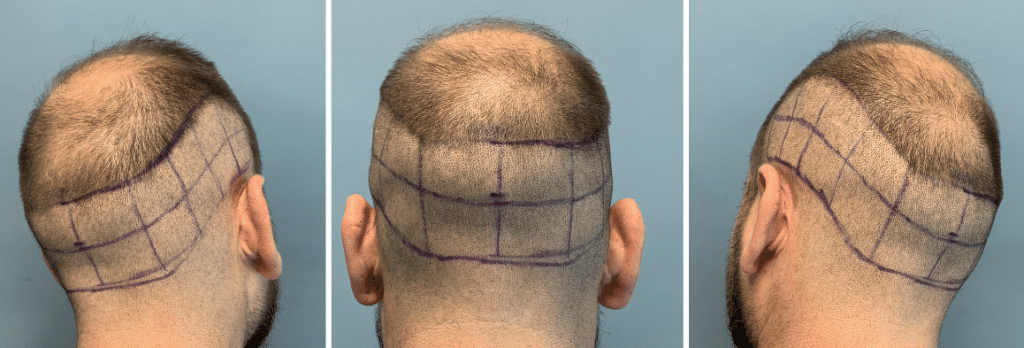
The evolution and Refinement of the FUE Hair Transplant Method. Since 2002, collaborative innovation by specialized surgeons has dramatically improved:
- Punch design and depth control
- Motorized systems for smoother, more accurate follicular unit extraction
- Cooling and storage techniques for hair grafts
- Hairline design for more natural-looking results
- Donor management to protect lifetime donor capacity
Today, with proper expertise, nearly every suitable patient can undergo a successful FUE hair transplant or a combined approach using both FUE and FUT for maximum coverage.
Why Shaving of the Donor Area Is Required in FUE
To safely and accurately perform FUE hair transplantation, the donor area is usually shaved down to around 1 mm. This allows the surgeon to clearly visualize the exit angle and direction of each hair follicle during follicular unit extraction.
For most patients, this is a small short-term inconvenience compared to the lifelong benefit of restoring density and achieving natural-looking results.
Some patients—executives, public figures, people with high visibility—are more self-conscious about appearing in public with a shaved donor. Some older men who never plan to buzz their hair may also feel that the “freedom” of no strip scar is less relevant to them than avoiding any obvious sign of recent work.
Others hesitate because previous FUT surgery left a linear scar that would become visible if the area were shaved.
Alternative Donor Shaving Techniques and “Long-Hair FUE”
To address these concerns, alternative methods exist:
- Microstrip / Partial Shaving (“tunnels”): Narrow bands, 2–3 cm wide, are trimmed in hidden zones while the surrounding longer short hair conceals the work.
- Selective / Individual Follicle Trimming: Only the hairs planned for extraction are trimmed.
- Long-Hair FUE: In very select cases, longer hair is left in place and individual grafts are removed with minimal trimming.
These solutions are helpful in special cases, but they are slower, technically demanding, and more prone to cosmetic pitfalls if done poorly.
If partial shaving is repeated in the same exact zones, it can create a “window effect” or “zebra effect,” where certain patches become visibly thin compared to surrounding hair. That thinning can actually look worse than a fine FUT scar.
For large sessions with many grafts, a full donor shave is still the safest, cleanest, and most efficient approach.
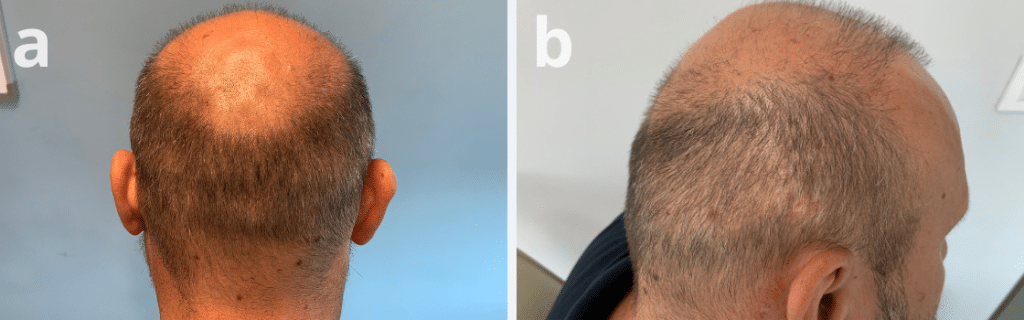
Body Hair-to-Scalp FUE (Body Hair Transplant / BHT)
One of the biggest advantages of the FUE hair transplant method is that it opened the door to Body Hair Transplantation (BHT).
In BHT, the surgeon performs follicular unit extraction not only from the scalp, but also from areas like the beard, chest, abdomen, or back. Those hair follicles are then placed into the scalp to rebuild density.
This is a critical advancement for patients with severe hair loss, depleted scalp donor supply, or multiple previous surgeries.
Beard and body hairs are not identical to scalp hair in terms of caliber, texture, color, and growth cycles. But interestingly, once transplanted to the scalp, many of these hairs adapt over time, lengthening their growth phase and contributing to coverage and visual density.
Body Hair Transplantation is typically reserved for:
- Severe male pattern baldness or advanced alopecia where scalp donor supply is limited.
- Camouflaging scars (strip scars, surgical scars, burn scars) without spending precious remaining scalp grafts.
- Mixing beard hair with scalp hair (“combination grafting”) to improve coverage in high-demand areas like the crown.
- Delicate reconstruction of areas where thinner hair is preferred, such as temple points, the frontal hairline feathering zone, eyebrows, or eyelashes.
- Restoring beard zones for facial hair aesthetics.
BHT is technically challenging:
- Non-scalp hair can be harder to extract without follicular transection.
- Healing in body areas can be slightly slower.
- Predictability of growth can vary.
For these reasons, BHT should be performed only by highly experienced hair transplant surgeons with a proven track record in FUE hair transplantation and repair work.
Female Alopecia and FUE Hair Transplantation
Women with female pattern hair loss (FPHL), scarring alopecia, or localized thinning can also benefit from hair transplant — but with special conditions.
Most women are understandably reluctant to shave the entire donor area, which makes large FUE “mega sessions” difficult. Instead, surgeons often perform smaller, carefully planned sessions using:
- Microstrip shave methods
- Camouflage-to-go harvesting (strategic selective trimming)
Because the session size is smaller, FUT hair transplantation (strip) is often still the preferred approach for women. However, in women whose donor shows a mix of strong and miniaturized hairs, FUE can “cherry-pick” only the healthiest follicular units for the best possible cosmetic refinement in visible areas.
In other words: for female patients, FUE can be a precision tool, even if FUT remains the main volume strategyplained to these specific female candidates.
Challenges in FUE Application: Overharvesting
With the worldwide boom in “cheap FUE,” we are seeing a dramatic rise in overharvesting. This means extracting far too many hair grafts from the same donor zones, leaving large areas thinned out, patchy, or even resembling diffuse alopecia in the back and sides
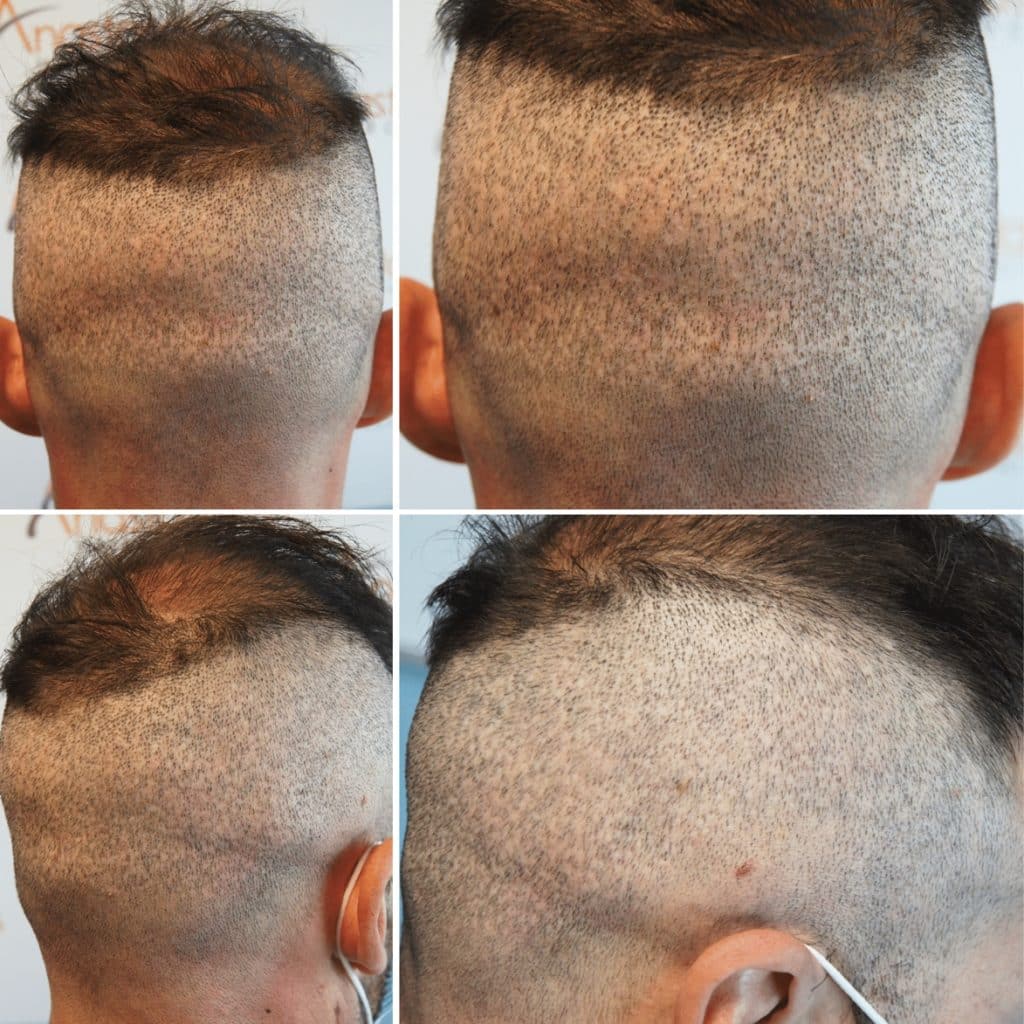
Once the donor site is depleted, there is often no way to fully reverse this cosmetically, even if additional transplants are done later. This is why donor planning is one of the most critical aspects of ethical hair restoration surgery.
Evaluating how many follicular units can safely be removed without creating visible imbalance depends on:
- baseline hair density,
- shaft thickness,
- hair-to-scalp contrast,
- head size,
- progression of hair loss / male pattern baldness,
- and future needs.
There is no single universal mathematical formula. Good decision-making still relies on the experienced judgment of a qualified hair transplant surgeon.
Hair Follicle Trauma and Transection in FUE
Not all FUE hair transplants are equal. The quality of your final hair growth depends heavily on how gently the grafts are harvested and handled.
One of the biggest threats is follicular transection—cutting across the root of the follicle during extraction. High transection means fewer viable grafts, lower density in the recipient area, and possible permanent thinning in the donor area (because damaged follicles don’t grow back properly).
Minimizing transection requires:
- Excellent eyesight and magnification,
- Fine motor control,
- An understanding of how each individual patient’s hair follicles curve below the skin,
- Appropriate punch size, punch angle, and depth.
This is why true FUE hair transplant must be performed by a surgeon with extensive training and proven experience in hair restoration, not by an assembly-line team of anonymous technicians.
FUE Mega Sessions
In recent years, clinics have advertised FUE mega sessions (sometimes 1,500–3,000+ grafts per day) as fast-track solutions for full coverage.
With the right patient, donor capacity, and team, high-graft-count sessions can be safe and effective. But in the wrong hands—especially in unregulated environments—ultra-large same-day extractions of 5,000–6,000+ grafts can destroy the donor permanently. day.
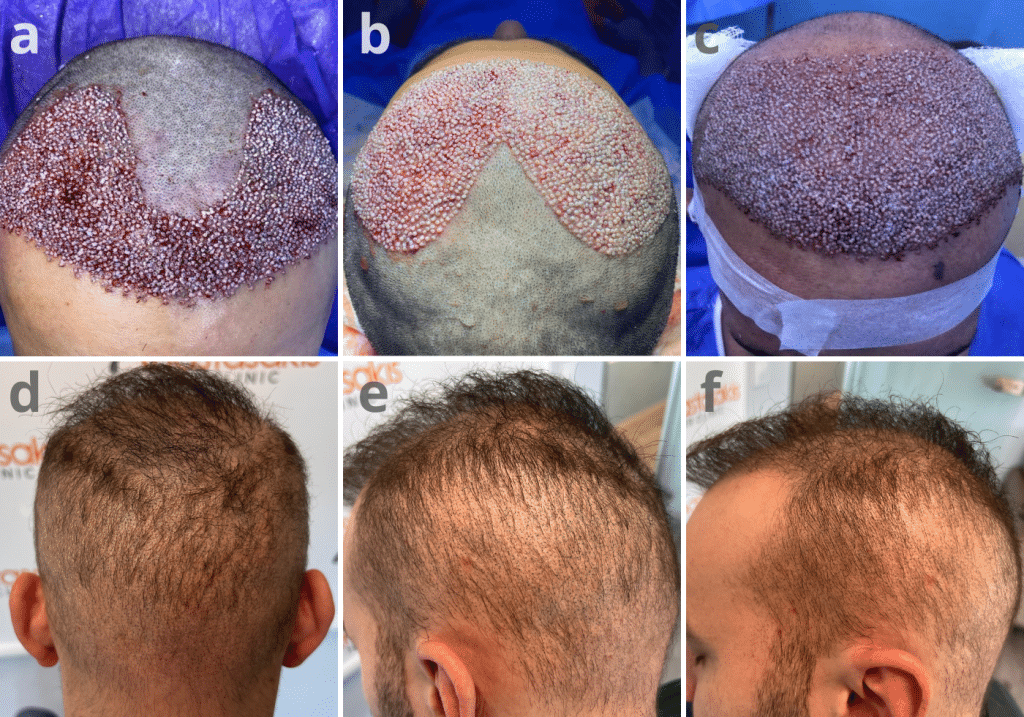
Extremely large punches used to rip out thousands of grafts in one marathon day.
To an untrained eye, it looks like “a lot of grafts,” but the reality is devastating.
The donor area ends up decimated, see-through, and scarred with a “moth-eaten,” almost disease-like pattern. Even scalp micropigmentation may fail to hide the damage

The lesson: bigger is not always better. Safe planning, staged treatment, and donor preservation are more important than chasing headline numbers like “6,000 grafts in one day.”
How to Choose the Right Clinic and Surgeon for FUE Hair Transplant
Because the FUE hair transplant method is in high demand worldwide, the market is full of clinics with very different standards. Some clinics are built around medical ethics, artistry, and long-term donor management. Others are “money mills” that overharvest, delegate surgery to non-doctors, and make fake promises of “scar-free,” “no downtime,” or “guaranteed density.”
To protect yourself, evaluate the following:
1. Authority – Credentials, Experience, Knowledge
Before trusting any clinic with your hair transplant, research the surgeon.
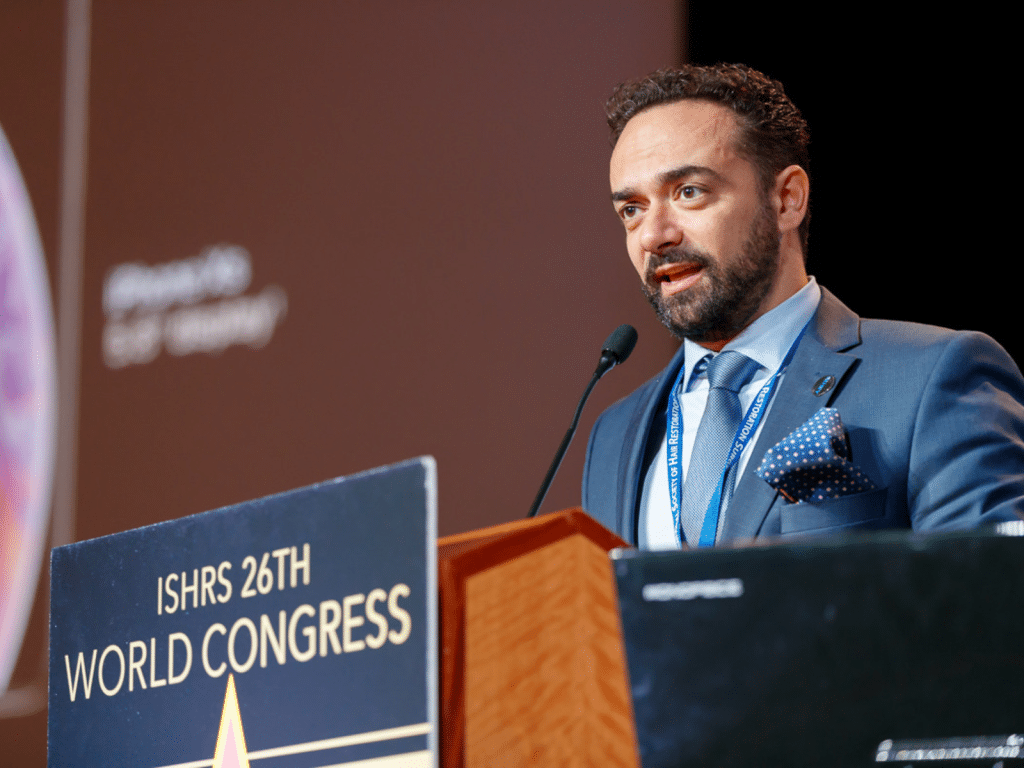
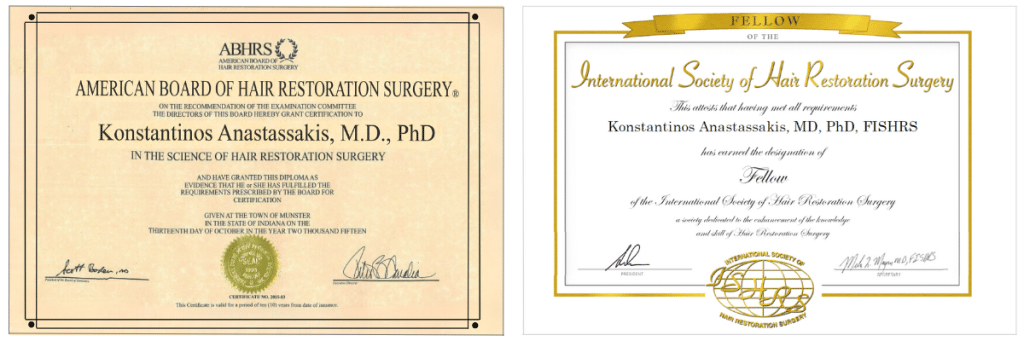
At Anastasakis Hair Clinic, Dr. Konstantinos Anastasakis (MD, PhD) is a Diplomate of the American Board of Hair Restoration Surgery (ABHRS) and a Fellow of the International Society of Hair Restoration Surgery (ISHRS). He has served in leadership and educational roles and teaches other surgeons advanced FUE hair transplant planning, donor management, and repair of previous failed work.
This level of certification means you are being treated by a true hair transplant surgeon, not a technician.
2. International Recognition
A clinic with international recognition in hair restoration surgery demonstrates consistent standards.
3. Safety and Licensing
Always confirm that the clinic operates legally as a medical facility. Anastasakis Hair Clinic complies with medical licensing standards and performs all FUE hair transplant procedures under proper surgical protocols, sterile conditions, and direct physician supervision.
Never allow your scalp to be used in an illegal setup where non-medical staff perform a surgical procedure on multiple patients at once.
4. Patient–Doctor Relationship
You should feel heard. Your concerns about hair loss, aesthetic goals, lifestyle, haircut preferences (for example, wanting short hair without obvious visible scarring), and future progression of male pattern baldness must be part of the discussion.
At Anastasakis Hair Clinic, Dr. Anastasakis takes time to explain every step, including donor planning, realistic expectations, the healing process, and long-term maintenance.
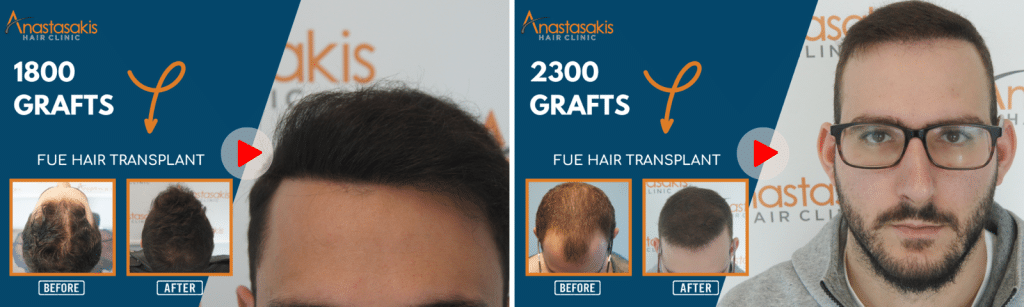
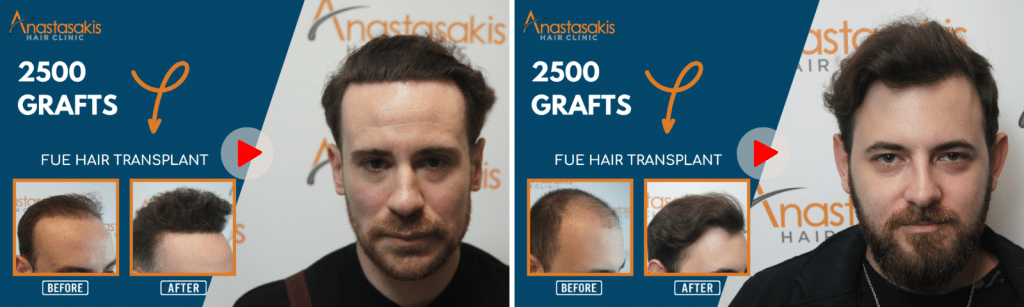
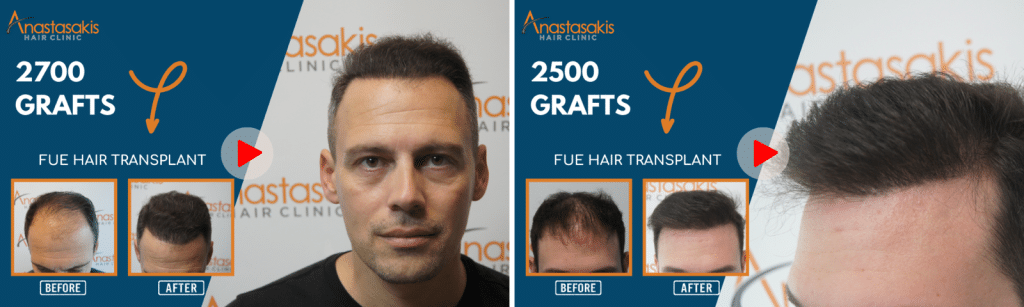
5. Real Results — Not Stock Photos
Ask to see authentic before-and-after videos of real patients at 6, 12, 18 months post-op. Look for:
- consistent new hair growth,
- natural hairline design,
- stable hair density,
- a donor that still looks healthy.
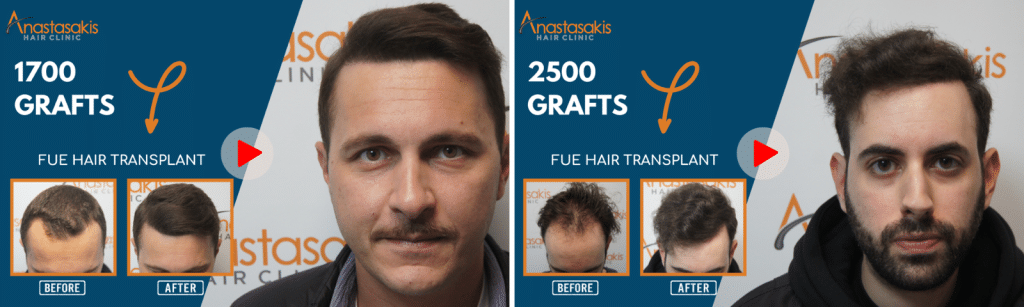
Anastasakis Hair Clinic maintains a large video library of real patient journeys and hair transplant results, demonstrating long-term outcomes after FUE hair transplantation.
Watching these cases is the best way to judge if a clinic truly delivers natural-looking results.
Watch FUE Hair Transplant Results on VIDEO by Anastasakis Hair Clinic.
Why Choose Anastasakis Hair Clinic for Your FUE Hair Transplant
At Anastasakis Hair Clinic, we do not treat FUE as a product. We treat it as individualized medical care. Every hair transplant procedure is planned around:
- Your pattern and stage of hair loss
- Your donor limitations (how many usable hair follicles you actually have)
- Your long-term goals for hair restoration
- Your preferred hairstyle (including whether you like short hair)
- Your age and progression of male pattern baldness
Dr. Konstantinos Anastasakis’s credentials — ISHRS Fellow, ABHRS Board-Certified, ABHRS Board of Governors — reflect not only technical mastery in FUE hair transplant surgery, but also international recognition in teaching safe, ethical, high-standard hair restoration surgery.
Personal Assessment for Your Hair Transplant – Start today
At Anastasakis Hair Clinic, we are committed to delivering these outstanding results by combining expertise, experience, and dedication in FUE hair transplantation. Contact us today and take the first step toward a new, improved appearance with the FUE hair transplant technique!
To determine which hair transplant technique is right for you, contact us for a personal consultation and evaluation appointment. Send us your photos along with some basic information and your goals using the free hair transplant design form, and we will provide you with an assessment, usually within 3 working days.
Transparency and Proof of Our Exceptional Hair Transplant Results
We believe in transparency.
Unlike clinics that promise “guaranteed density” without evidence, Anastasakis Hair Clinic documents our FUE hair transplant results with hundreds of real patient videos. These are not stock photos. These are actual outcomes, with authentic new hair growth and visible improvement in hair density after the healing process.
When you choose Anastasakis Hair Clinic, you’re not only choosing a clinic that understands hair transplantation, donor planning, and long-term strategy — you’re choosing a medical team dedicated to artistry, safety, and life-changing, natural-looking outcomes.
Conclusion: The Role of FUE Hair Transplantation in Modern Hair Restoration
Follicular Unit Excision (FUE) has transformed the landscape of FUE transplant by combining science, precision, and aesthetics. It allows surgeons to restore growth with minimal visible scarring, using your own hair follicles to create a thick, natural result. It also offers personalized solutions for male pattern baldness, scarring alopecia, facial hair reconstruction, and complex repair cases.
But FUE is not a gadget. It is a technique that demands years of focused surgical training, discipline, ethics, and respect for the patient’s limited donor resource. It is, and will always be, a true surgical procedure.
When performed by an experienced, certified hair transplant surgeon, FUE hair transplantation can permanently rebuild confidence, restore natural framing of the face, and deliver dense, natural-looking, age-appropriate coverage.
Personal Assessment for Your Hair Transplant – Start Today
At Anastasakis Hair Clinic, we provide individualized medical evaluation for every patient experiencing hair loss or thinning. During your consultation, we assess:
- your current pattern of hair loss,
- donor quality and hair density,
- future progression of male pattern baldness,
- realistic goals for hair restoration,
- and whether you’re a better candidate for FUE hair transplant, FUT hair transplantation, a combination approach, or supportive non-surgical therapies.
We design your hair transplant procedure around long-term stability, not just short-term coverage.
To find out which hair restoration plan is right for you, send us clear photos and some basic information about your goals. Our team will review your case and provide a personalized assessment.