

Why Choose Hair Transplantation with the FUE Method?
In recent years, hair FUE hair transplant (Follicular Unit Excision) has become an extremely popular technique in the field of hair restoration. It is a modern method that, when performed by a highly specialized and certified physician, can offer a permanent and natural-looking solution to hair loss.
However, if the procedure is carried out by someone lacking the necessary expertise, or worse, by a non-physician, it can lead to a wide range of complications and unsatisfactory results.
Dr. Konstantinos Anastassakis, MD, PhD, is a board-certified hair restoration surgeon, ISHRS member, and President of ELAMAT (Hellenic Academy of Hair Transplantation & Restoration). He is also the only Greek physician serving on the Board of Directors of the American Board of Hair Restoration Surgery (ABHRS).
We spoke with Dr. Anastassakis to gather valuable insights and clear, reliable information about the FUE technique—and everything prospective patients need to know before deciding on this method.
Q: Why should someone choose the FUE technique for a hair transplant?
Dr. Anastassakis:
The decision to undergo an FUE procedure must be based strictly on medical criteria.
In my view, individuals with thick follicular units and relatively small graft requirements—up to 1,500 grafts—are the most suitable candidates for the following reasons:
- Thicker follicular units can better withstand the physical stress involved in the FUE technique.
- A lower graft requirement means fewer micro-incisions in the donor area, reducing trauma and scarring.
Additionally, FUE is an excellent option for younger male patients, because:
a) their typically aggressive healing response can lead to more noticeable scarring if the FUT method is used, and
b) they often prefer to keep their hair cut shorter, which is more feasible with FUE than with FUT.
FUE is also a preferred solution for patients with low donor area elasticity, whether due to skin type or previous transplants.
Moreover, it’s an ideal choice for professional athletes, who need to resume intense training shortly after surgery.
Lastly, the FUE technique is especially well-suited for transplanting follicular units to non-scalp areas, such as beards, eyebrows, and more.
👉 Watch Dr. Konstantinos Anastassakis, MD, PhD, explain the FUE method in this video:
Q: Is it possible for someone not to meet the criteria for FUE?
Absolutely. While a candidate may appear suitable, there are cases where I must decline to perform a hair transplant using the FUE method.
This applies even to individuals who are relatives or who are at the exact same stage of hair loss.
Each case is unique and must be evaluated based on medical, anatomical, and long-term planning criteria—not just the visible extent of hair loss
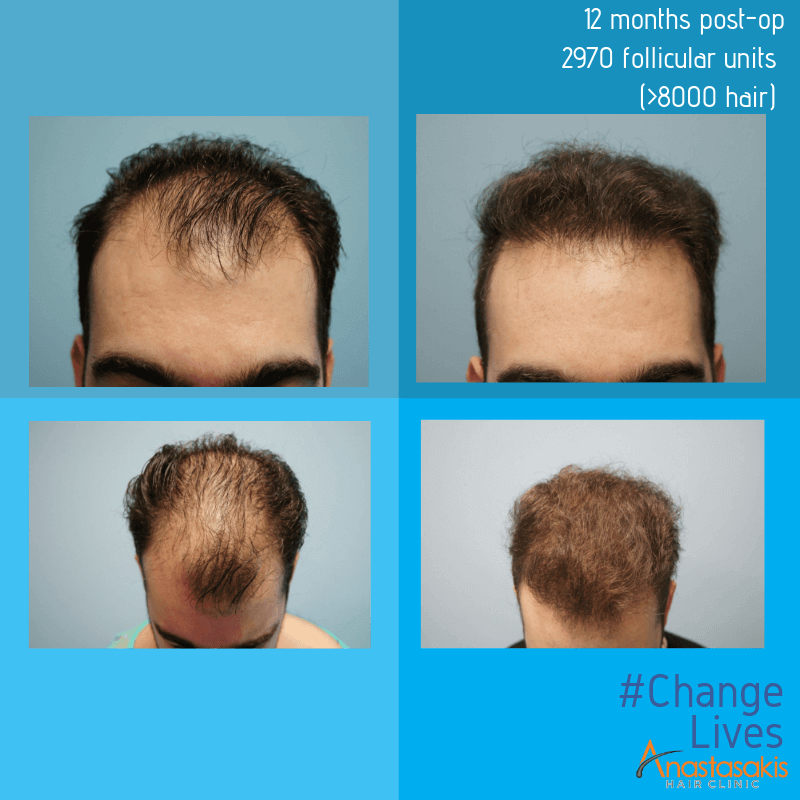
It’s extremely important to understand that every case is entirely unique.
Some individuals may have fine or fragile hair, which may not withstand the mechanical stress of follicular extraction using the FUE technique.
In other cases, the natural arrangement of follicular units may be such that extracting one graft could risk damaging neighboring ones.
By contrast, other patients may have naturally grouped follicular units, like small “bouquets,” making it easier to extract them safely using FUE while preserving their integrity and ensuring long-term graft survival.
The key to a successful hair transplant lies in a personalized diagnosis, based on the specific characteristics of each patient—and in providing thorough and transparent information.
Even more important is the concept of personalized hair restoration, tailored to the individual.
Unfortunately, the majority of so-called “clinics” fail to focus on any of these critical aspects.
Even worse, in many of these clinics, the only “information” patients receive comes from salespeople.
It is both unacceptable and dangerous for a patient to enter an operating room without knowing whether the person administering local anesthesia, using surgical instruments, or performing the procedure is even a licensed physician.
At my clinic, our approach is fundamentally different.
Both the consultation and the procedure itself are carried out exclusively by me, and only if I determine that the patient meets the strict criteria required for the selected method.
I am fully trained in all three hair transplant techniques—FUE, FUT, and Body Hair FUE.
With my specialized knowledge and many years of experience, I am uniquely positioned to recommend the most appropriate technique—or combination of techniques—for each patient, ensuring a result that is dense, natural-looking, and of the highest quality.
Together with the patient, we discuss all the clinical and aesthetic parameters that have led me to recommend a particular technique—something I find is greatly appreciated by those I work with.
My goal is always to educate patients throughout the process, helping them understand not only what we’re doing, but why.
I’ve never believed in the model of the “doctor as unquestioned authority.”
On the contrary, I deeply believe that a responsible physician must always explain, justify, and guide.
Q: Is it true that the FUE technique is a scar-free, minimally invasive procedure?
Dr. Anastassakis:
This widespread belief is a myth, fueled by false advertising from clinics operating without licensed physicians—believe it or not, I’ve come across cases where even hairdressers were performing procedures!
Every day I come across advertisements for FUE hair transplants that claim to be “bloodless,” “no shaving required,” or “completely scar-free.”
While it’s true that a well-performed FUE procedure may allow a patient to wear their hair slightly shorter than with other methods, none of these results can be realistically expected from such unregulated, unsafe clinics—whether in Greece or abroad.
In fact, in most of these cases, the thousands of tiny extraction scars left behind by poorly executed FUE procedures result in a visibly moth-eaten appearance in the donor area, which is both unsightly and often irreversible.
Worse still, because the staff performing these procedures are untrained and lack any surgical qualifications, they mishandle the grafts—and as a result, the vast majority of transplanted follicles fail to grow at all.
I see failed FUE transplants like these in my clinic on a daily basis: donor areas that are irreparably damaged, and recipients who are left with little to no visible hair growth on the scalp.
So, is the FUE technique itself to blame?
Absolutely not.
When performed correctly and on carefully selected candidates, FUE is an exceptionally effective technique that can deliver natural, dense, and permanent results
Q: Could you explain the term “No-Shave FUE,” which we’ve been hearing a lot in recent years?
Dr. Anastassakis:
Indeed, “No-Shave FUE” has been heavily marketed lately. Many clinics claim to perform full FUE sessions involving thousands of grafts without shaving the donor area—often touting “incredible results.” However, these claims are completely misleading, especially when a large number of grafts needs to be harvested. Allow me to explain why.
In a standard FUE procedure, the entire donor area must be shaved. This allows follicular units to be extracted evenly and with adequate spacing, which helps minimize visible scarring and avoids creating an overly depleted appearance.
In so-called “No-Shave FUE sessions,” some clinics only shave a narrow strip of the donor area—specifically the part that can be hidden by the hair above it. Because this small area has limited surface, follicles are extracted too close together, resulting in severe thinning of that region.
To avoid an obvious contrast between the thinned strip and the denser areas above and below, patients are forced to keep their hair long to hide the visual damage.
Now, there are a few highly specialized clinics abroad where genuine full No-Shave FUE is performed across the entire scalp. In these cases, the results can indeed match those of standard FUE, without the patient needing to shave any part of the head.
However, these procedures are 2 to 3 times more expensive—and rightly so. The process is significantly more demanding and time-consuming for the surgeon, requiring exceptional skill and precision.
Unfortunately, the majority of clinics promoting “No-Shave FUE” are simply shaving hidden strips of the donor area. The final aesthetic outcome in these cases is often visually unappealing or even disastrous.
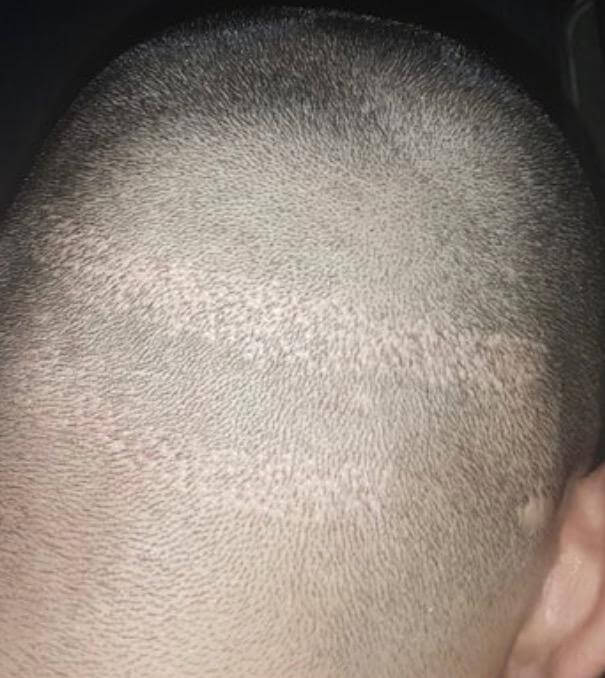
The technique that these clinics promote as “No-Shave FUE” is, in reality, only appropriate for harvesting 100–200 grafts—sufficient for minor restoration cases such as eyebrow reconstruction or filling in the edges of a mustache.
At my clinic, we do not use this approach for any other indication.
I would strongly advise anyone considering this method to investigate exactly how the clinic performs it.
If the clinic uses the so-called “strip shaving” method—shaving narrow bands within the donor area to hide scarring—then I would not recommend proceeding with the procedure.
➡️ See the true effectiveness of properly performed No-Shave FUE here:
Q: How can a patient make the right choice when it comes to hair transplant technique?
Dr. Anastassakis:
Making the right choice starts with selecting the right doctor. The physician must be able to confidently perform all three major hair transplant techniques—FUE, FUT, and Body Hair FUE. Otherwise, they will neither be able to properly advise the patient on their options, nor deliver the natural result that should always be the goal.
If you notice that a clinic persistently promotes one method only, without providing a sound medical rationale, consider it a red flag. Why? Because in many such cases, that clinic may only be equipped—or trained—to perform just one technique.
When a doctor’s sole priority is delivering excellent, natural-looking results, they must be able to apply all available techniques of modern hair restoration and tailor the approach to the patient’s individual characteristics.
Let’s not forget that a hair transplant is not an emergency nor a life-saving procedure. It’s a choice. Therefore, it must be performed in a way that ensures the outcome is optimal—not something that leaves the patient worse off than before.
So, to anyone considering a hair transplant:
Take your time. Do not rush your decision.
Consult with physicians who specialize in hair restoration, and choose the one who demonstrates a clear understanding of your needs, and who takes the time to explain every step of the procedure in detail.
Dr. Konstantinos Anastassakis, MD, PhD, Head and Neck Surgeon, is a certified Hair Restoration Surgeon, Board Member of the ABHRS, an active ISHRS member, and President of the HAHRS (Hellenic Academy of Hair Restoration Surgery).
📍 Clinic Address: Leof. Alexandras 57, Athens
📞 Appointments: +30 210-8011000 (by prior arrangement)
 0
0